Tools, Materials, and Prep Checklist
Conducting reliable radon testing for your home requires selecting the right testing equipment and strictly preparing your living environment to guarantee accurate data.
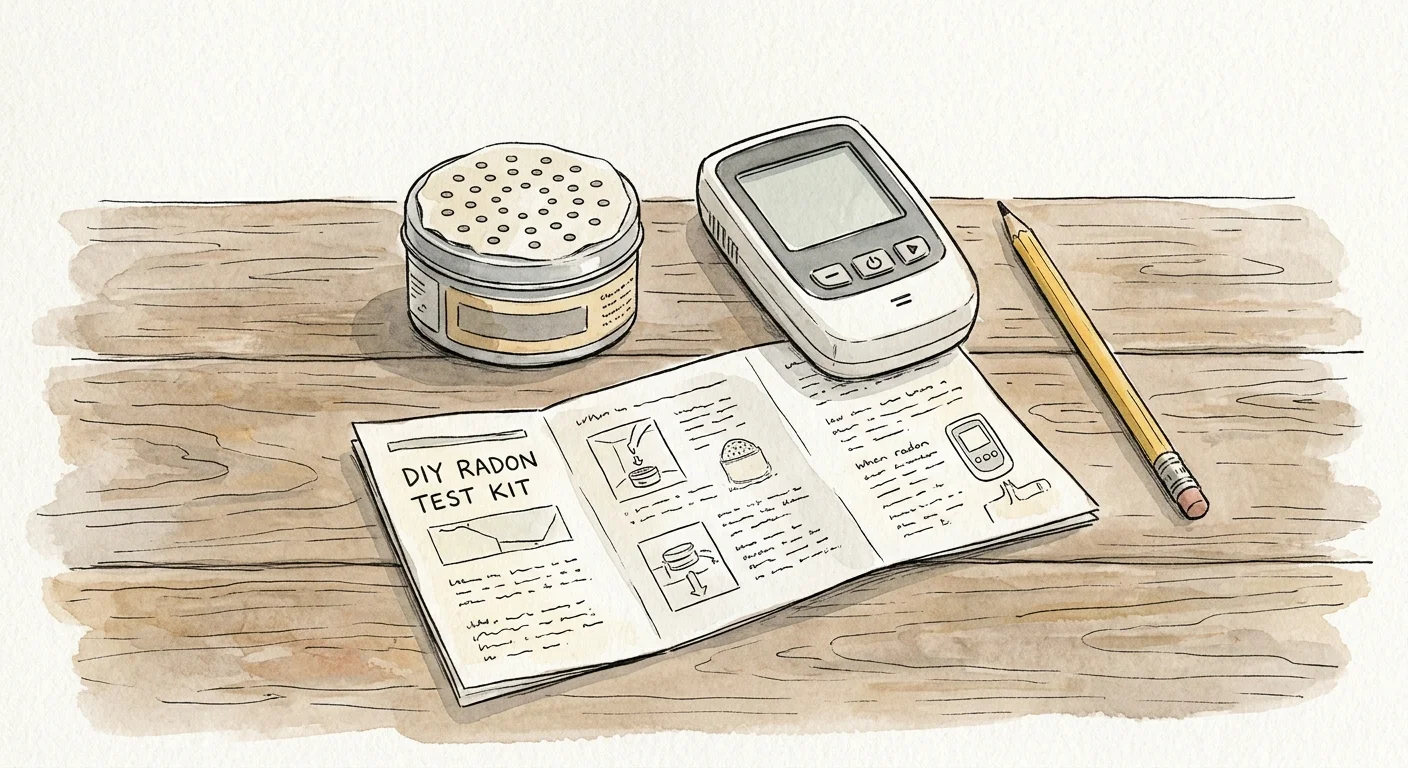
Short-Term DIY Charcoal Test Kits: These activated charcoal canisters or liquid scintillation vials cost between $15 and $40, an amount that usually includes laboratory processing fees. They gather data across 48 to 96 hours and serve as an ideal first-stage screening tool.
Continuous Digital Radon Monitors: Plug-in or battery-operated digital monitors range from $100 to $250. These advanced devices provide real-time, hour-by-hour readouts and track seasonal fluctuations, making them an outstanding long-term investment for ongoing tracking.
Certified Professional Radon Inspections: Hiring a certified residential radon measurement technician costs between $150 and $300 as a standalone service, or $125 to $200 when bundled with a standard pre-purchase home inspection. Professionals utilize calibrated continuous radon monitors (CRMs) equipped with anti-tamper sensors.
Closed-Building Preparation Protocol: Accurate testing requires closed-house conditions. Keep all exterior windows, storm doors, and exterior access doors closed for a minimum of 12 hours before starting a short-term test, and maintain this closed status throughout the entire testing window. Normal entry and exit through exterior doors are acceptable, but you must avoid leaving doors propped open. Operate heating and air conditioning systems normally, but keep whole-house ventilation fans, attic fans, window air conditioner fresh-air dampers, and wood-burning fireplaces completely turned off.