Testing your home for radon protects your family from an invisible, radioactive gas that causes serious long-term health risks, and discovering your home’s levels costs very little time or money. You cannot smell, see, or taste radon, yet radioactive decay in soil beneath your foundation drives this hazardous vapor straight through structural pores and cracks into your living space. The Environmental Protection Agency estimates that one in every fifteen American residences carries elevated radon concentrations, making proactive evaluation crucial for every property owner. Whether you plan to remodel your basement, finalize a real estate purchase, or update drafty insulation, running an accurate radon screening gives you total peace of mind.
Project Overview & Why It Matters
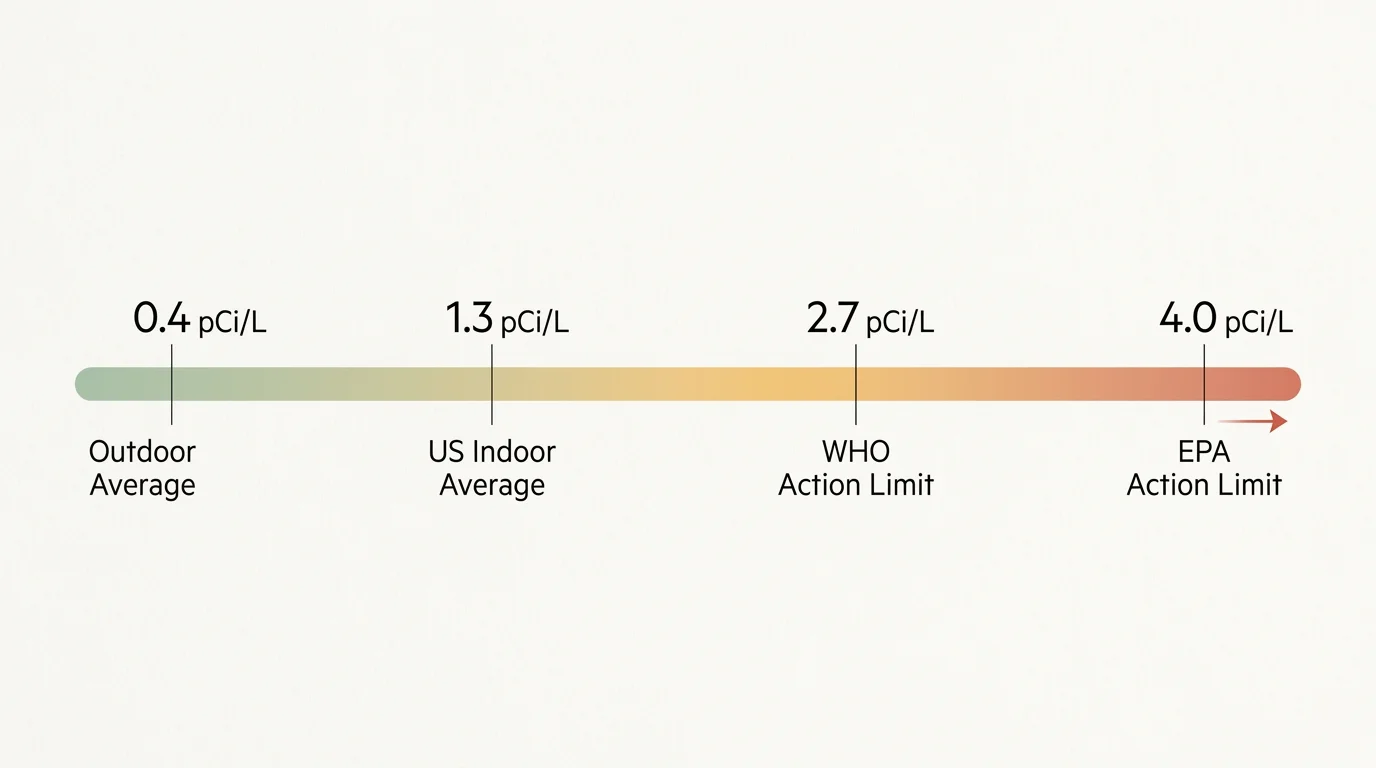
Understanding why radon testing matters begins with the basic geology beneath your slab. Uranium breaks down naturally in soil, rock, and groundwater, producing radioactive radon gas that migrates upward through building foundations. Outdoor ambient air dilutes radon to a harmless baseline average of roughly 0.4 picocuries per liter (pCi/L), but enclosed residential structures trap and concentrate the gas. The national average indoor concentration hovers around 1.3 pCi/L; however, millions of American homes register far higher. Exposure to elevated radon causes approximately 21,000 lung cancer deaths each year across the United States, representing the leading cause of lung cancer among non-smokers and the second-leading cause overall according to the U.S. Environmental Protection Agency.
Because radon produces zero physical warning signs—no eye irritation, chemical odor, coughing, or discoloration—homeowners often assume their indoor air remains pristine. Federal standards establish clear thresholds for residential action: the EPA strongly recommends installing an active radon mitigation system when indoor levels reach or exceed 4.0 pCi/L, while advising homeowners to consider mitigation between 2.0 and 4.0 pCi/L. Meanwhile, the World Health Organization sets an even stricter action reference level of 2.7 pCi/L (100 Bq/m³) to minimize cumulative lifetime radiation risks. Identifying specific home radon risk signs helps you take prompt protective action before prolonged exposure occurs.
Sign 1: You Have Never Tested or Exceeded the Two-Year Window
If you have never evaluated indoor radon, or if two full years have elapsed since your last screening, your property requires immediate attention. Official radon test recommendations from environmental health agencies specify testing every two years because geological shifts, ground settling, and soil moisture variations alter the rate at which gas enters your foundation over time.
Sign 2: You Are Buying, Selling, or Refinancing Real Estate
Property transactions represent the most common trigger for comprehensive air quality assessments. A certified radon screening clarifies property condition, protects buyer health, and prevents last-minute closing delays. Mortgage lenders and municipal real estate disclosure statutes increasingly require clear documentation of radon levels prior to title transfer.
Sign 3: You Are Finishing a Basement or Converting Lower-Level Space
Radon concentrations are consistently highest on the lowest habitable level of any structure because that level sits closest to the surrounding soil. Converting an unfinished basement into a primary bedroom, home theater, playroom, or home office dramatically increases your family’s daily exposure hours. You must always test the space before framing walls and installing finished flooring.
Sign 4: You Completed Energy-Efficiency Upgrades and Weatherization
Air sealing, spray foam insulation, modern double-pane replacement windows, and exterior house wraps significantly lower utility bills, but they also seal the building envelope. Tightening your home prevents indoor air from venting naturally; if radon penetrates the foundation, these high-efficiency building upgrades trap the gas inside and cause indoor levels to spike rapidly.
Sign 5: Neighboring Homes Showed Elevated Test Results
While foundation designs and soil permeability vary from lot to lot, elevated radon levels in adjacent properties indicate high radium and uranium content in your neighborhood’s underlying bedrock. If a neighbor installs an active mitigation system or reports high readings, your home shares the same soil conditions and warrants immediate testing.
Sign 6: Your Property Sits in an EPA Zone 1 Geological Area
The EPA classifies every county across the United States into three distinct radon potential tiers. Zone 1 counties have the highest potential, with predicted average indoor screening levels exceeding 4.0 pCi/L. In these high-risk areas, up to one in three homes exceeds federal action thresholds, making regular testing an absolute necessity for every homeowner.
Sign 7: Your Foundation Exhibits Settling Cracks, Sump Pits, or Earth-Contact Floors
Radon follows the path of least resistance through structural entry points. Open crawl spaces with dirt floors, unsealed sump pump basins, gaps around utility plumbing penetrations, cold joints between poured concrete slabs and foundation walls, and expanding structural settling cracks create direct vacuum channels that draw soil gas straight into your living space.
Sign 8: Your Household Relies on Untreated Private Well Water
Municipal water treatment aeration strips radon gas from public water supplies, but private residential wells pull water directly from deep underground aquifers surrounded by radon-producing bedrock. Running showers, dishwashers, and washing machines agitates well water, releasing dissolved radon gas directly into your indoor breathing zone.
Sign 9: You Recently Added Major HVAC Systems or Performed Excavation Work
Installing powerful exhaust hoods, whole-house attic fans, or unbalanced HVAC air returns creates negative indoor pressure, turning your basement into a powerful suction pump that pulls gas through soil pores. Similarly, extensive backyard regrading, nearby blasting, or building foundation additions disturbs subterranean pathways and alters soil gas dynamics.