Tools, Materials, and Prep Checklist
Assessing your windows requires a blend of simple diagnostic tools and basic safety gear to pinpoint energy efficient window upgrade signs accurately. Most diagnostic tasks take less than an hour per room and require minimal expenditure.
Diagnostic Tools and Equipment:
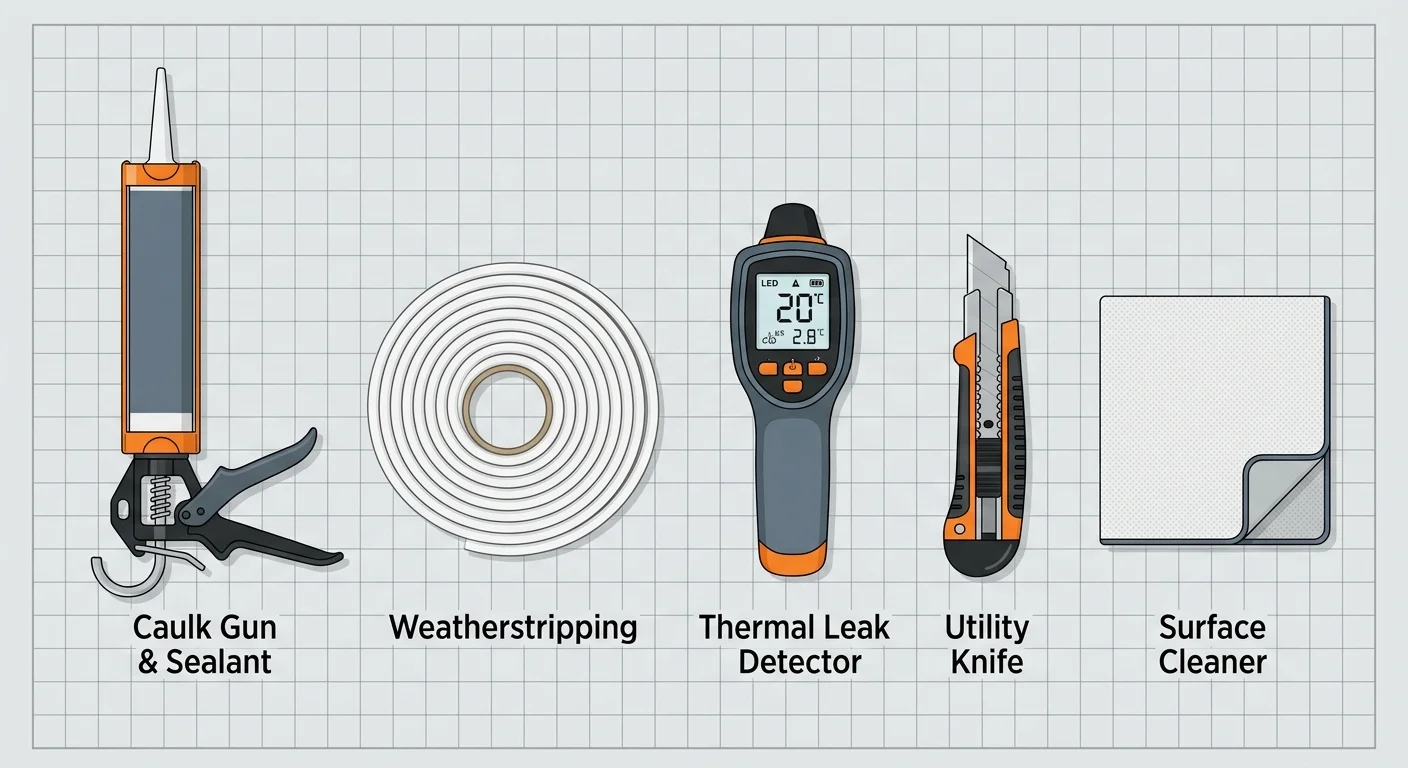
An infrared laser thermometer ($25 to $45) measures surface temperature differentials across glass, sash frames, and surrounding drywall. A smoke pencil, incense stick, or thermal leak detector ($10 to $30) tracks active air infiltration paths along sash perimeters. A standard feeler gauge or crisp paper dollar bill ($1) checks weatherstripping compression around the sash perimeter. A digital moisture meter ($25 to $40) checks for hidden moisture inside wood frames and drywall jambs. A heavy-duty tape measure ($10 to $15) records sash dimensions for replacement planning.
Remediation Materials and Safety Gear:
High-grade elastomeric exterior sealant or polyurethane caulk ($8 to $12 per tube) seals perimeter framing gaps. Self-adhesive V-strip or high-density foam weatherstripping ($10 to $18 per roll) restores mechanical seal contact. Closed-cell foam backer rod ($4 to $7 per pack) fills deep gaps prior to caulking. Polycarbonate safety glasses, work gloves, and a sturdy step ladder provide fall protection and eye safety during close inspections.
Preparation Procedures:
Turn off your central heating, ventilation, and air conditioning system fifteen minutes before conducting smoke or draft tests to eliminate artificial indoor air currents. Close all exterior doors and windows throughout the home. Remove interior blinds, heavy drapes, and valances to expose the entire window frame, casing, and glass perimeter for unobstructed visual and thermal evaluation.