
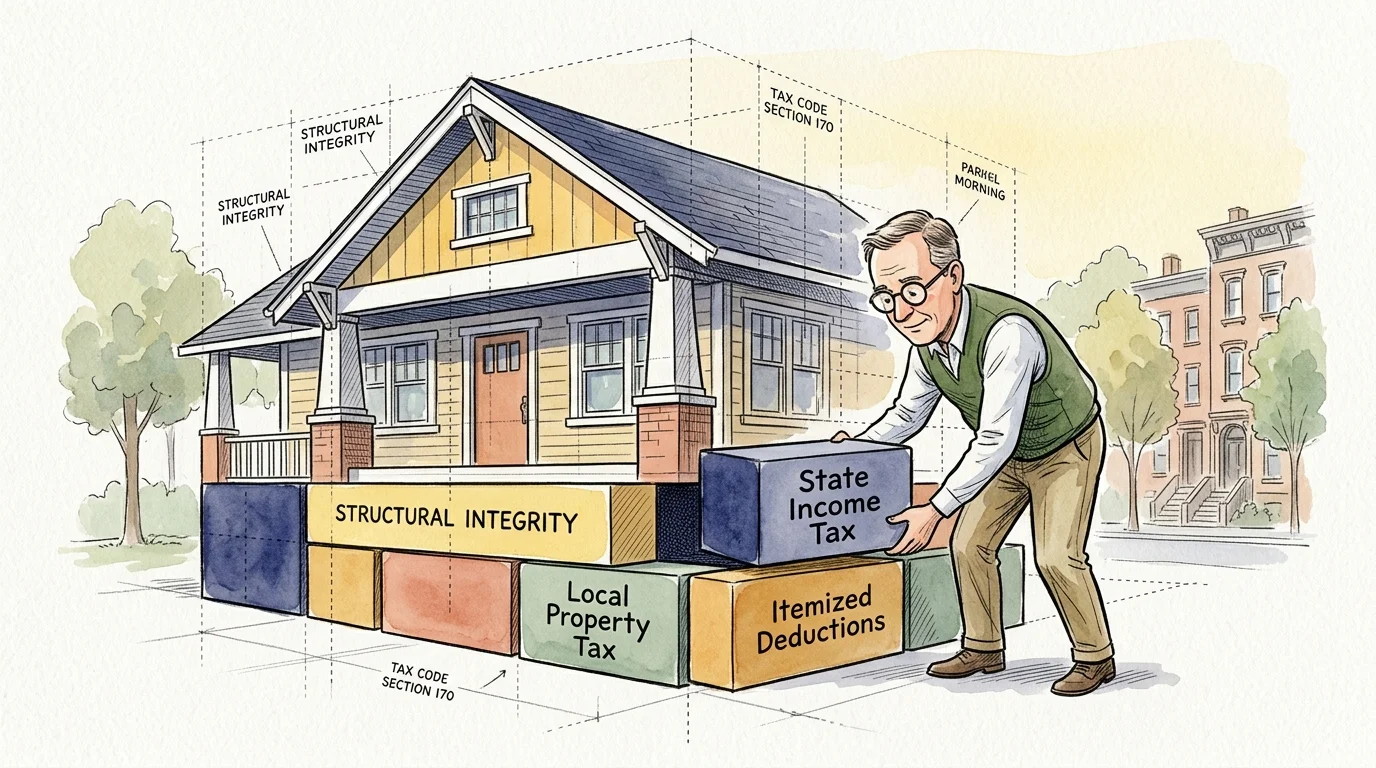
Step-by-Step Instructions
Claiming your state and local tax deduction involves a methodical process. Follow these structured phases to audit your real estate expenses, choose the right calculation paths, and safeguard your return against common filing errors.
Phase 1: Tally Your Qualifying Property and Local Taxes
Begin by calculating all qualifying taxes paid across your residential properties. Qualifying taxes include real estate property taxes paid on your primary residence, secondary vacation homes, and raw residential land. You can also include personal property taxes, such as annual vehicle registration fees that depend directly on your vehicle’s assessed market value.
Ensure that you strictly exclude non-deductible property expenses. The Internal Revenue Service clearly prohibits deducting homeowners association (HOA) monthly dues, condominium maintenance assessments, municipal transfer taxes incurred during real estate sales, utility connection fees, and private homeowner insurance premiums. Furthermore, you cannot deduct special assessments levied by local governments for permanent neighborhood infrastructure improvements, such as new civic sidewalk installations or regional municipal sewer line tie-ins.
Phase 2: Evaluate State Income Tax Versus General Sales Tax
Federal tax regulations allow you to deduct either state and local income taxes or state and local general sales taxes; you cannot claim both in the same tax filing year. For most homeowners living in states with moderate-to-high income tax rates, deducting state income tax yields the largest deduction.
However, if you reside in a state with no individual income tax—such as Texas, Florida, Washington, Tennessee, or Nevada—or if you executed an extensive DIY home renovation involving tens of thousands of dollars in construction materials, the sales tax option may prove far more profitable. Calculate your total material receipts or use the official IRS sales tax calculation tables published on IRS.gov to determine which path provides the larger write-off.
Phase 3: Complete Schedule A and Compare Deductions
To take advantage of this itemized deduction update, you must file Form 1040 and attach Schedule A. Combine your verified real estate taxes and state income (or sales) taxes, ensuring the cumulative sum does not exceed the $40,400 threshold ($20,200 for married couples filing separately).
Next, add your other eligible Schedule A deductions to this total. These include qualifying home mortgage interest on loans up to established acquisition limits, eligible out-of-pocket medical expenses exceeding 7.5% of your adjusted gross income, and verified charitable donations. Compare this aggregate itemized sum against the standard deduction. If your itemized total is higher, claim Schedule A to minimize your taxable income.
Phase 4: Establish a Reinvestment Strategy for Your Savings
Once you calculate your tax savings or receive your refund, direct those funds back into your home. Rather than absorbing the tax savings into everyday discretionary spending, establish a dedicated renovation escrow account. This strategy allows you to self-fund major home updates, eliminate high-interest renovation financing, and build instant equity in your property.