Tools, Materials, and Prep Checklist
You can identify most plumbing issues using straightforward diagnostic tools before calling a licensed professional. Assemble these items to inspect your home thoroughly:
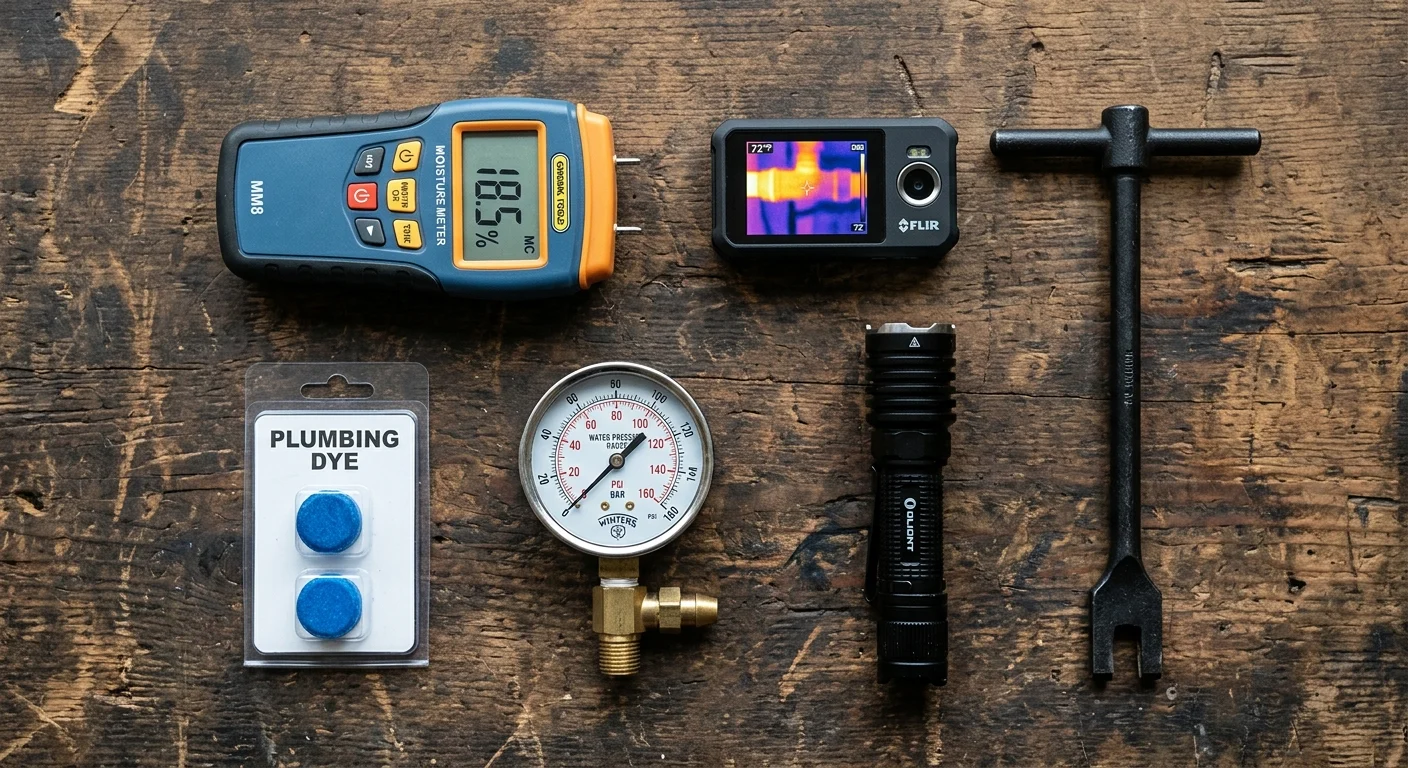
Pinless Moisture Meter ($35 to $60): A non-invasive digital moisture meter detects relative dampness behind drywall, plaster, and baseboards up to 0.75 inches deep without marring your painted surfaces.
Thermal Imaging Camera ($150 to $300, or local tool rental): Handheld infrared scanners reveal subtle surface temperature drops caused by evaporative cooling or hot-water pipe discharge concealed behind wall assemblies.
Acoustic Listening Disc or Mechanic Stethoscope ($15 to $25): Amplifies the faint hissing, spraying, or dripping sounds generated by pressurized supply line leaks inside stud bays.
Food-Grade Dye Tablets or Liquid Food Coloring ($5): Essential for testing silent toilet flapper valve leaks without introducing toxic chemicals to your fixtures.
Water Meter Curb Key and High-Lumen Flashlight ($20 to $30): Grants quick access to exterior water meter vault boxes and illuminates dark crawl spaces.
Water Pressure Test Gauge ($12 to $18): Screws onto an exterior hose bibb or laundry spigot to evaluate municipal incoming static water pressure.
Preparation Protocol: Before beginning your investigation, shut off all automatic water-using appliances. Disable your refrigerator ice maker, turn off bypass valves on whole-home humidifiers, pause water softeners, and ensure your washing machine and dishwasher remain completely idle. Instruct all household occupants to avoid running faucets or flushing toilets during the testing window.