
The American House
  • Home
  • DIY
  • Garden
  • Tips & Tricks
  • Expert Tips
Home / Expert Tips

9 Signs Your Plumbing Has a Hidden Leak

August 14, 2026 · 12 min read

A concealed plumbing leak can quietly destroy structural framing, rot subfloors, and trigger toxic mold growth long before pooling water ever appears on your living room floor. Spotting the earliest plumbing leak warning signs protects your home from catastrophic structural failure and saves you thousands of dollars in emergency restoration bills. Approximately one in sixty insured homes files a property damage claim for water damage or freezing every year, with average claim payouts exceeding $13,900. By learning how to find a hidden leak at home using proactive inspection methods, you can catch supply line failures, pinhole copper leaks, and slow drainage seepage before they compromise your living space.
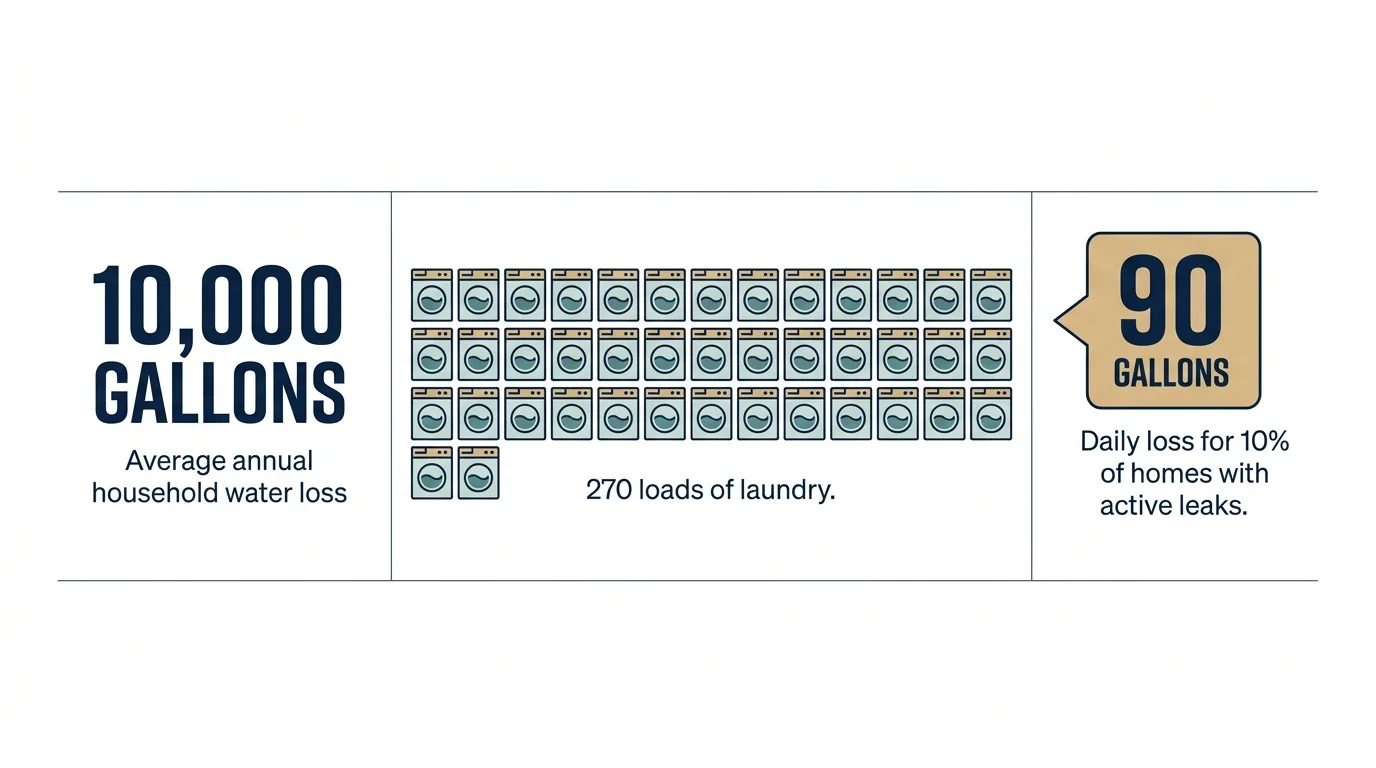
An infographic showing that the average household leaks 10,000 gallons of water annually, equivalent to 270 loads of laundry.
This infographic shows how hidden leaks waste ten thousand gallons of water, or 270 laundry loads.

Project Overview & Why It Matters

Pressurized residential plumbing systems constantly operate under 40 to 60 pounds per square inch (PSI) of force. When a joint weakens, a pipe corrodes, or a fitting loosens inside a wall cavity, water escapes continuously under pressure. According to data from the EPA WaterSense program, the average household loses nearly 10,000 gallons of water every year to plumbing leaks—a staggering volume equal to roughly 270 loads of laundry. Nationwide, household leaks waste more than one trillion gallons annually, and roughly 10% of homes maintain hidden or unaddressed leaks that squander 90 gallons or more each day.

Seasonal benchmarks offer a reliable diagnostic baseline for your home. If a family of four consumes more than 12,000 gallons of water per month during the winter—a period when outdoor lawn irrigation systems remain completely inactive—your residential system almost certainly suffers from an active, concealed leak. Ignoring these issues leads to compounded structural damage. The Environmental Protection Agency notes that mold and mildew colonies begin colonizing damp drywall, insulation, and subflooring within just 24 to 48 hours of initial moisture exposure.

Detecting plumbing leaks early shields your wallet from structural repair bills, preserves indoor air quality, and prevents catastrophic foundation settlement. When you know what sensory and mechanical clues to watch for, you can diagnose hidden moisture problems before tearing out drywall or calling in expensive emergency remediation crews.


Pages: 1 2 3 4 5 6 7

Share this article

Facebook Twitter Pinterest LinkedIn Email

Leave a Comment Cancel reply

You must be logged in to post a comment.

Search

Latest Posts

  • Close-up of hands placing a digital radon detector on a wooden shelf in a sun-drenched, cozy living room. 9 Signs Your Home Needs a Radon Test
  • A close-up photo of a hand touching a fogged-up window with condensation, inside a cozy warmly-lit room. 7 Signs Your Windows Are Losing Energy Efficiency
  • A warm gouache illustration of a backyard wooden deck in late spring with a small bucket of tools, evoking home prep before summer. 8 Signs Your Deck Needs Repairs Before Summer
  • A homeowner using a digital moisture meter to inspect a faint water stain on a living room baseboard. 9 Signs Your Plumbing Has a Hidden Leak
  • 7 Signs Your Foundation Needs a Professional Look
  • 8 Signs Your Home's Insulation Needs an Upgrade
  • 9 Signs Your Water Heater Is Nearing the End of Its Life
  • 7 Home Maintenance Tasks Worth Hiring Out
  • 8 Signs Your Roof Needs a Professional Inspection
  • 9 Signs Your HVAC System Needs Servicing Before Winter

Newsletter

Get the latest posts delivered to your inbox.

Related Articles

Refrigerator Lifespan Mistake

12 Innocent Refrigerator Lifespan Mistakes You’re Making Without Realizing It

Avoid ruining your appliance by not making these refrigerator lifespan mistakes! Could there be some…

Read More →
fragrant

Dreaming of a Fragrant Garden? Here Are 9 Ways to Achieve It

A fragrant garden will not only continuously appeal to all of your senses, but it…

Read More →
Minimalist screenprint illustration of a two-story home showing warm and cool air currents circulating through the rooms.

6 Signs Your Home Has Poor Airflow (And How to Fix It)

Stuffy rooms, stubborn odors, and soaring electric bills often point to broken atmospheric movement inside…

Read More →
fire pit

How to Build a DIY Fire Pit: 5 Easy Steps

Did you think it was impossible to build a fire pit by yourself? Maybe you…

Read More →
tools, tool kit, declutter your garage

8 Useful Tools You Need For Most DIY Projects

What is a DIY project exactly? Frankly, there are a lot of answers to that…

Read More →
lawn care

Here Are 5 Lawn Care Services That Are Worth All the Fuss

As you probably know already, a healthy lawn will require an adequate amount of care.…

Read More →
kitchen

41 DIY Ideas to Update Your Kitchen

Are you ready to update your kitchen? Because we’re definitely ready to help you out…

Read More →
outside clothes in bed

Is It Okay to Wear Outside Clothes in Bed? Find Out Here!

Have you ever worn your outside clothes in bed? After a terrible pandemic and a…

Read More →
West coast vibe

8 Awesome Tips For Getting That West Coast Vibe in Your Home

There’s something about Los Angeles’ breezy, warm climate that creates a cozy and cool west…

Read More →
The American House

Inedit Agency S.R.L.
Bucharest, Romania

contact@theamericanhouse.com

Explore

  • Contact
  • Editorial Policy
  • Advertiser Disclosure
  • FAQ
  • Subscribe
  • Unsubscribe
  • Privacy Policy
  • Terms and Conditions
  • Disclaimer
  • Do not sell my personal information
  • Request to Know
  • Request to Delete
  • CA Private Policy

Categories

  • DIY
  • Expert Tips
  • Garden
  • Home
  • Tips & Tricks

© 2026 The American House. All rights reserved.