Step-by-Step Instructions
Phase 1: Disassembly and Workspace Setup
Never paint kitchen cabinets while the doors hang on their boxes. Remove all cabinet doors, drawer fronts, and hinges using a cordless drill or manual screwdriver.
Assign a unique identification number to each cabinet opening using painter’s tape. Place corresponding numbered tape inside the hinge mortise of each door to ensure perfect realignment later.
Empty all cabinet boxes and cover countertops and floors with thick builder’s paper. Tape all seams tightly to create a clean, protected workstation inside your kitchen.
Phase 2: Degreasing and Surface Cleaning
Cooking vapors and hand oils prevent primer from bonding to wood finishes. Mix your TSP cleaner in warm water according to package instructions, wearing protective gloves.
Scrub all doors, drawer faces, and cabinet face frames thoroughly using an abrasive scouring pad. Sponge down the surfaces twice with clean water, then let them dry for two hours.
Safety Warning: Ensure continuous cross-ventilation by opening windows and running exhaust fans while working with chemical degreasers. Review ventilation guidelines from the U.S. Environmental Protection Agency to safeguard indoor air.
Phase 3: Scuff Sanding and Priming
Scuff all surfaces lightly using 120-grit sandpaper to dull the existing clear coat. Always sand in the direction of the wood grain to prevent cross-grain scratches.
Vacuum away all loose sanding dust and wipe down every surface with a fresh microfiber tack cloth. Apply wood filler to any deep gouges, allowing it to dry before sanding flush.
Apply one uniform coat of bonding primer using an angled sash brush for detailed trim and a mini-roller for panels. Allow the primer coat to dry undisturbed for four hours.
Phase 4: Topcoating and Reassembly
Sand the primed surfaces lightly using 220-grit sandpaper to remove dust nibs. Wipe clean with a tack cloth before opening your warm mushroom cabinet enamel.
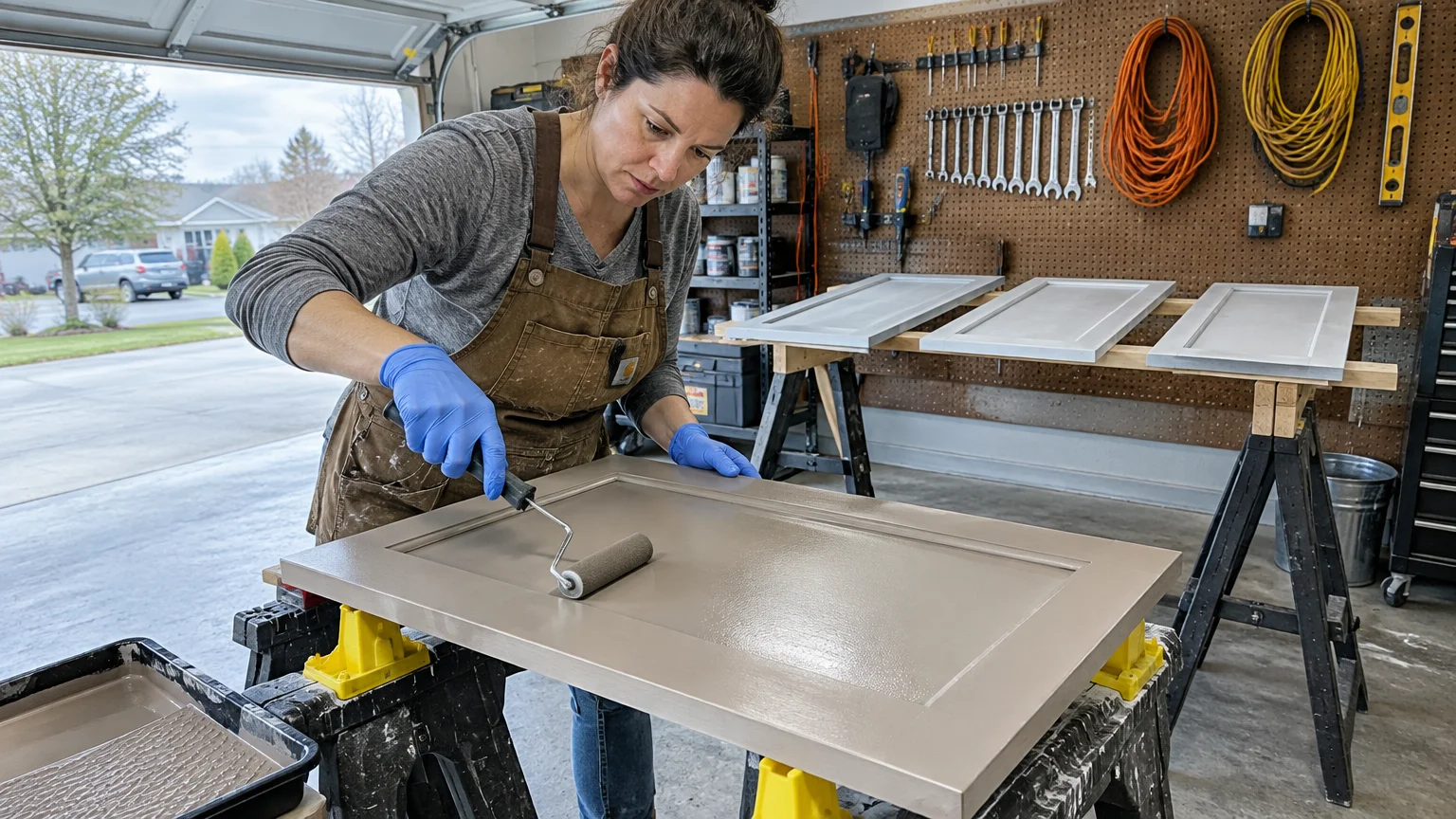
Roll the first topcoat in smooth, uniform passes across the primed cabinet faces. Allow the first coat to dry for 24 hours, sand lightly with 220-grit paper, and apply your final coat.
Let the finished doors dry flat on drying racks for 48 hours before handling. Reattach hinges and remount the doors onto their matching numbered cabinet openings.
Troubleshooting Common Finish Defects
If you notice paint runs or sags, resist the urge to wipe them while wet. Let runs dry completely, then slice them flat with a razor blade and sand smooth with 320-grit paper.
If paint separates into small craters known as fisheyes, residual grease remains on the wood. Allow the area to dry, sand back to primer, wipe with denatured alcohol, and recoat.