Tools, Materials, and Prep Checklist
Proper surface preparation accounts for 80% of your cabinet painting success. Gathering the correct supplies beforehand guarantees an ultra-durable finish that resists daily wear.
DIY material investments generally range from $200 to $600 for a standard kitchen. If you hire a professional crew instead, expect costs between $2,100 and $6,500, or roughly $30 to $60 per linear foot.
Renters seeking the same aesthetic without jeopardizing deposits can turn to architectural vinyl. Removable peel-and-stick cabinet wraps in mushroom tones cost only $40 to $120 for typical apartment layouts.
Cleaning and Safety Supplies
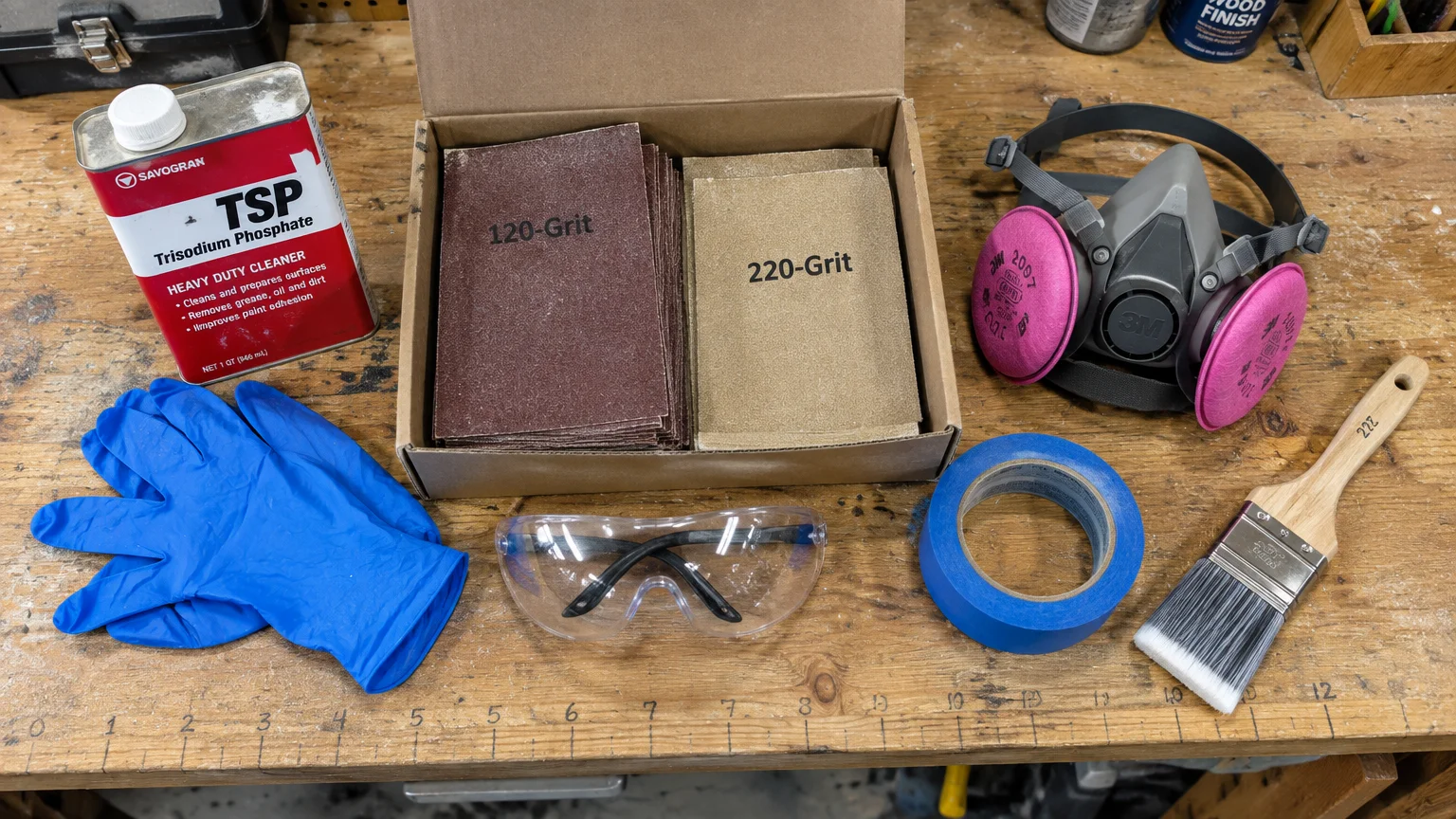
Trisodium Phosphate (TSP) cleaner: Purchase one 16-ounce container of heavy-duty TSP or phosphate-free substitute ($8 to $12). It cuts through years of grease and cooking residues effortlessly.
Personal protective equipment: Wear chemical-resistant nitrile gloves and splash goggles while cleaning ($10). Secure an OSHA-rated dual-cartridge respirator ($25 to $40) to filter sanding dust and solvent vapors.
Abrasives and Primer
Sandpaper assortments: Gather 120-grit sandpaper for initial scuffing and 220-grit sheets for between-coat smoothing ($15). Never use steel wool, which leaves rust-prone metallic fibers in wood grain.
Bonding primer: Secure one gallon of premium shellac-based or waterborne bonding primer ($45 to $65). Shellac provides superior tannin-blocking power over oak, cherry, and knotty pine.
Enamel Paint and Applicators
Cabinet enamel paint: Purchase two gallons of waterborne urethane alkyd enamel in warm mushroom ($70 to $110 per gallon). This chemistry levels like oil paint yet cleans up easily with water.
Brushes and mini-rollers: Invest in two 2-inch angled synthetic sash brushes and 4-inch microfiber mini-rollers with 3/8-inch nap ($30). These applicators eliminate brush drag marks across wide door panels.
Hardware organization: Gather sealable plastic sandwich bags, painter’s tape, and a permanent marker ($15). Systematically catalog every hinge, screw, and bracket during disassembly to prevent lost parts during reinstallation.