Tools, Materials, and Prep Checklist
Achieving a durable factory-like finish on your cabinetry requires proper tools and thorough surface preparation. Skipping prep steps leads to flaking paint and uneven grain absorption. Budgeting accurately for supplies helps you execute the project efficiently without mid-renovation delays.
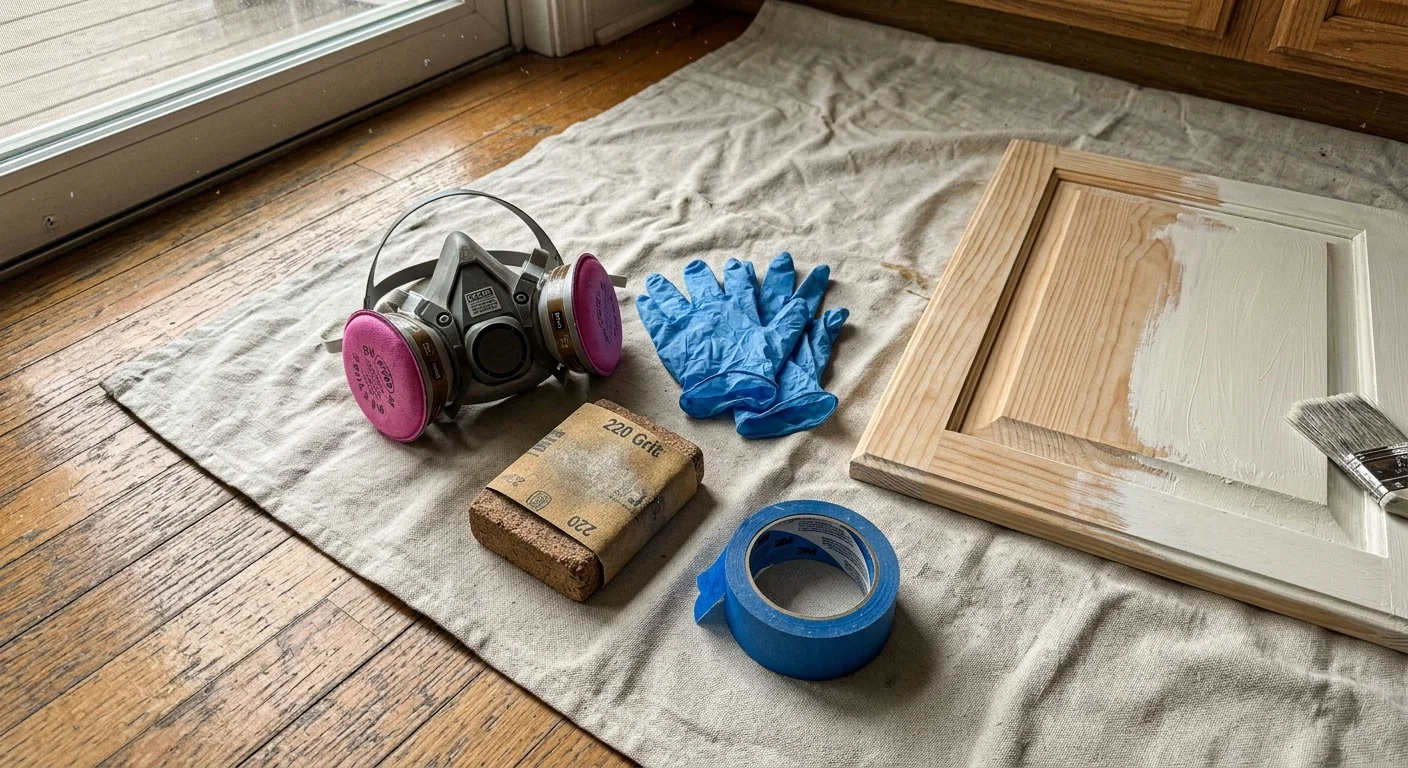
Safety Equipment: Wear safety glasses, heavy-duty nitrile gloves, and a NIOSH-approved dual-cartridge respirator rated for organic vapors and fine dust. Proper ventilation protects your lungs from aerosolized paint particulates and solvent fumes during cleaning and sanding.
Cleaning and Repair Supplies: You will need trisodium phosphate (TSP) cleaner or a heavy-duty degreaser ($10 to $15), clean microfiber rags, a flexible putty knife, and two-part epoxy wood filler ($12 to $20) to patch gouges or fill old hardware holes if you plan to change hardware spacing.
Abrasives and Tape: Purchase 120-grit aluminum oxide sandpaper for initial scuffing and 220-grit sandpaper for smoothing between coats ($15 to $25 total). Stock up on high-tack blue painter’s tape ($12) and rosin paper or drop cloths ($20 to $35) to protect flooring, countertops, and appliances.
Primers and Paints: A high-adhesion shellac-based or oil-modified acrylic bonding primer ($45 to $65 per gallon) blocks wood tannins and bonds to old finishes. Select premium waterborne alkyd enamel cabinet paint ($70 to $110 per gallon). Most kitchens require one gallon of primer and two gallons of topcoat enamel paint.
Application Tools: Gather high-density micro-felt foam rollers (2-inch and 4-inch sizes), a 2-inch synthetic angled sash brush for cutting into cabinet door profiles, paint trays, and plastic buckets ($35 to $50 total).
Cost Comparison: Tackling this project as a DIY effort costs between $180 and $350 in materials. Hiring a professional refinisher for an average 200-square-foot kitchen ranges from $3,000 to $6,000, depending on door details and regional labor rates.