Step-by-Step Instructions
Creating your batch requires no special background—just accurate measuring and careful ingredient ordering. Follow these four phases to formulate a balanced, shelf-stable cleaner.
Phase 1: Sanitize and Prep Hardware
Wash your glass bottle, spray nozzle, and funnel in warm soapy water. Rinse every component thoroughly to eliminate residual dish soap or dust. Allow all parts to air dry completely on a clean towel to prevent bacteria from contaminating your fresh batch.
Phase 2: Blend the Liquid Base
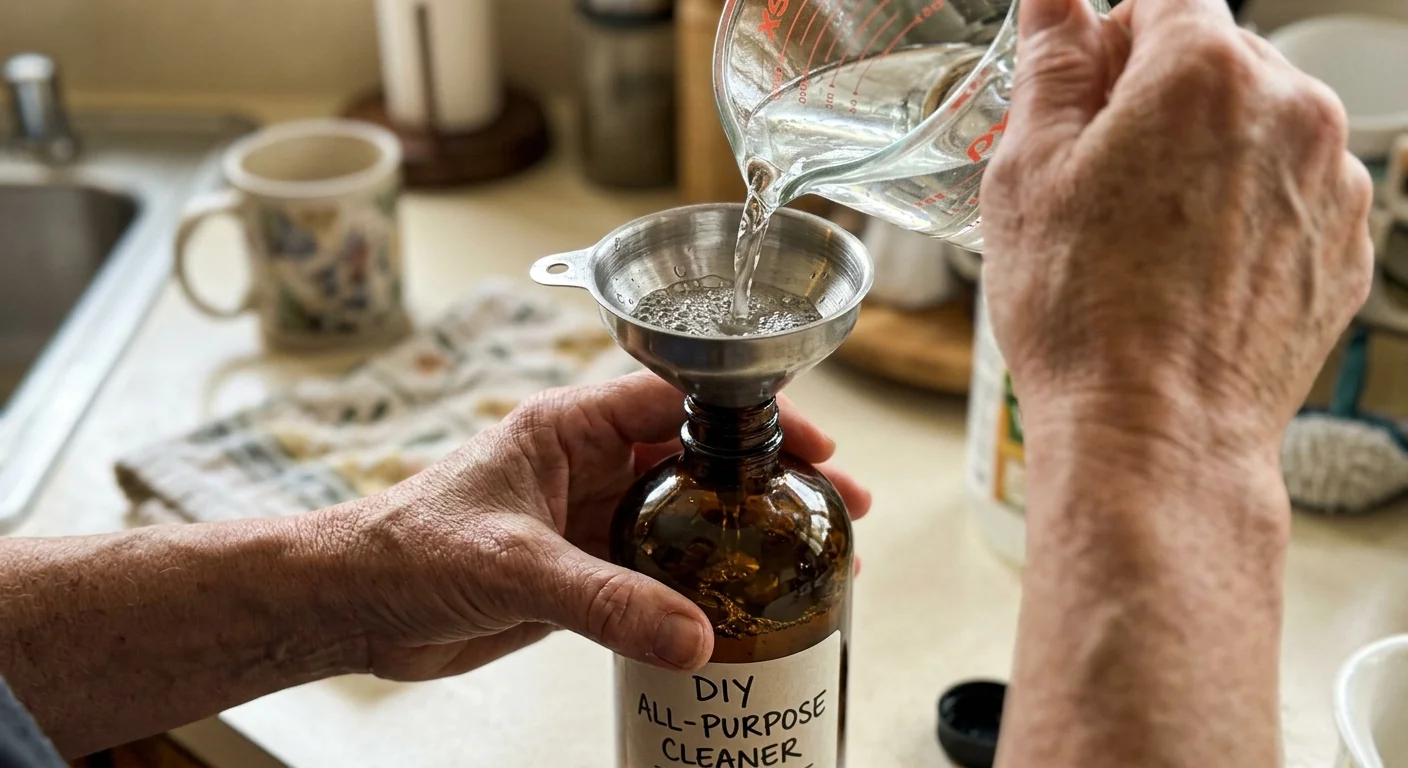
Insert your funnel into the neck of the glass bottle. Measure exactly one cup (8 fluid ounces) of distilled water and pour it through the funnel. Next, measure one cup (8 fluid ounces) of 5 percent white distilled vinegar and pour it slowly into the bottle. A strict 1:1 ratio of water to vinegar provides sufficient acid concentration to dissolve film without emitting overwhelming fumes.
Phase 3: Add Surfactants and Essential Botanicals
Add half a teaspoon of liquid castile soap directly into the funnel neck. Do not exceed this amount; excessive soap leaves sticky films on polished counters. Next, add 15 to 20 drops of pure essential oils. For an effective everyday blend, combine 10 drops of lemon oil for grease cutting with 5 drops of tea tree oil and 5 drops of lavender oil.
Phase 4: Agitate, Label, and Perform Spot Testing
Remove the funnel, screw the spray trigger top on tightly, and swirl the bottle gently for 15 seconds to disperse the oils. Label your bottle clearly with the recipe ingredients and creation date. Perform a quick spot test by spraying cleaner on an inconspicuous corner of your surface and wiping it clean after thirty seconds to verify finish safety.
Critical Safety Callouts and Chemical Precautions
NEVER MIX VINEGAR WITH BLEACH OR HYDROGEN PEROXIDE: Combining vinegar with chlorine bleach creates toxic chlorine gas, which causes severe respiratory damage. Mixing vinegar with hydrogen peroxide forms peracetic acid, a hazardous chemical that burns skin and eyes. Always keep these cleaning agents completely separate.
AVOID ACIDIC CLEANERS ON UNSEALED NATURAL STONE: Vinegar contains acetic acid, which chemically reacts with calcium carbonate found in marble, travertine, limestone, and unsealed granite. Repeated exposure etches stone surfaces, leaving dull white marks. Use a pH-neutral cleaner on natural stone instead.
Troubleshooting Common Batch Issues
If your cleaner leaves streaks on glass, you added too much soap or used tap water. Remedy this by adding an extra half-cup of distilled water to dilute the soap. If essential oils float on top in a distinct layer, give the bottle a quick five-second shake before use to remix the formula.