A cluttered closet wastes valuable time every morning and shrinks your usable home footage, but smart spatial planning can double your available hanging and shelf capacity without breaking your budget. Transforming a cramped reach-in or walk-in closet requires strategic vertical expansion, dedicated zoning, and modern hardware that maximizes every square inch of vertical clearance. By implementing tested closet organization ideas—such as dual-tier hanging rods, pull-out accessories, and standardized slim hangers—you instantly reclaim hidden footprint while protecting your wardrobe investment. This comprehensive guide delivers actionable, contractor-approved closet storage solutions to help you measure, build, and optimize your closet for peak efficiency and long-term organization.
Project Overview & Why It Matters
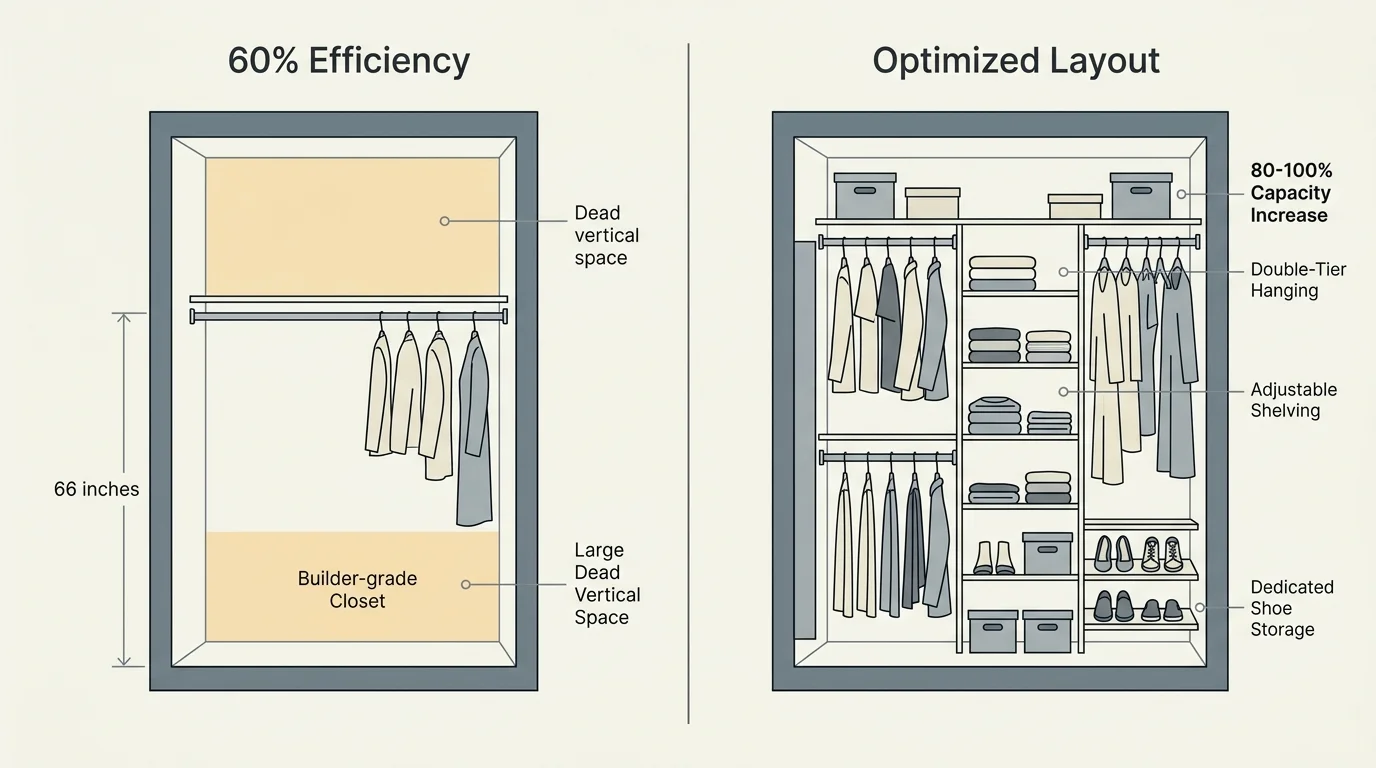
Most residential closets operate at less than 60 percent efficiency because single-rod builder installations leave massive pockets of dead vertical space. When standard home construction places a single shelf and hanging rod 66 inches above the floor, you end up with wasted air space above the shelf and underutilized floor space beneath your garments. Rethinking this layout through strategic small closet organization transforms underused alcoves into high-yielding storage hubs that keep your daily routine seamless and organized.
Maximizing storage capacity inside your current floor plan directly impacts your home equity and overall quality of life. The average cost per square foot in modern residential housing ranges from $150 to over $300; leaving closet space unorganized essentially wastes hundreds of dollars in functional real estate. By utilizing vertical geometry and space saving closet ideas, you free up bedroom square footage that would otherwise accommodate bulky dressers, chest units, or shoe racks. According to home storage studies published by the Association of Closet and Storage Professionals, well-designed closet storage solutions increase usable capacity by 80 to 100 percent without altering exterior walls.
Beyond spatial math, organized closets protect your clothing investment. Overcrowded hangers wrinkle delicate fabrics, distort shoulder seams, and hide garments from view, leading to duplicate purchases and forgotten items. Organizing clothing into defined zones with proper support keeps garments in prime condition for years. Whether you manage a small reach-in closet in an apartment or a sprawling master bedroom walk-in, learning how to organize a closet with durable hardware and intentional layout design yields daily time savings and lasting stress reduction.