
Style & Finishing Touches
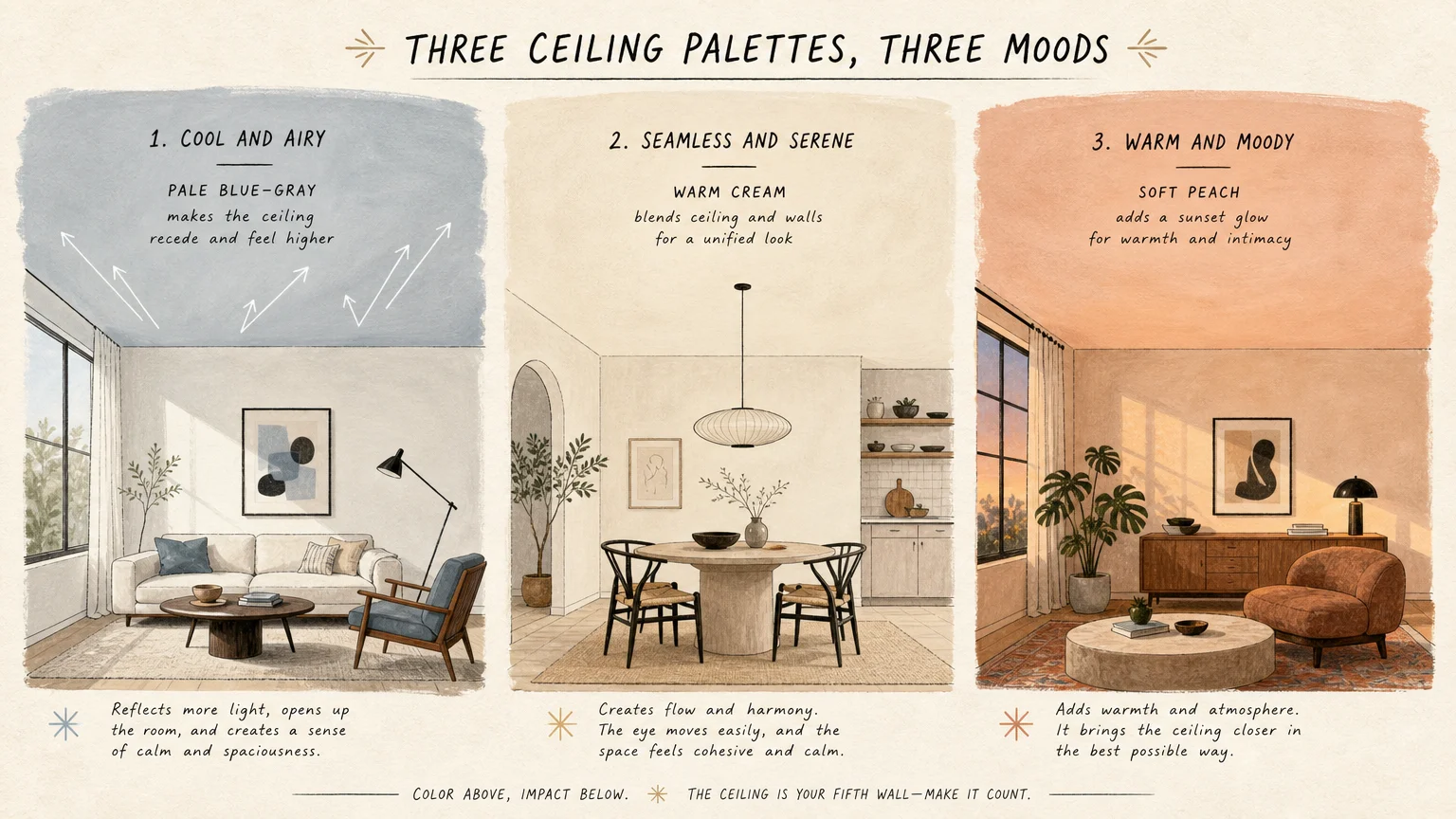
When selecting ceiling paint colors, you must factor in the room’s natural light, the height of the walls, and the mood you want to cultivate. The right shade will visually stretch the distance between the floor and the ceiling. Here are nine proven ceiling color ideas that make a room feel bigger, along with practical advice on how to execute them.
1. Crisp, Ultra-Reflective White
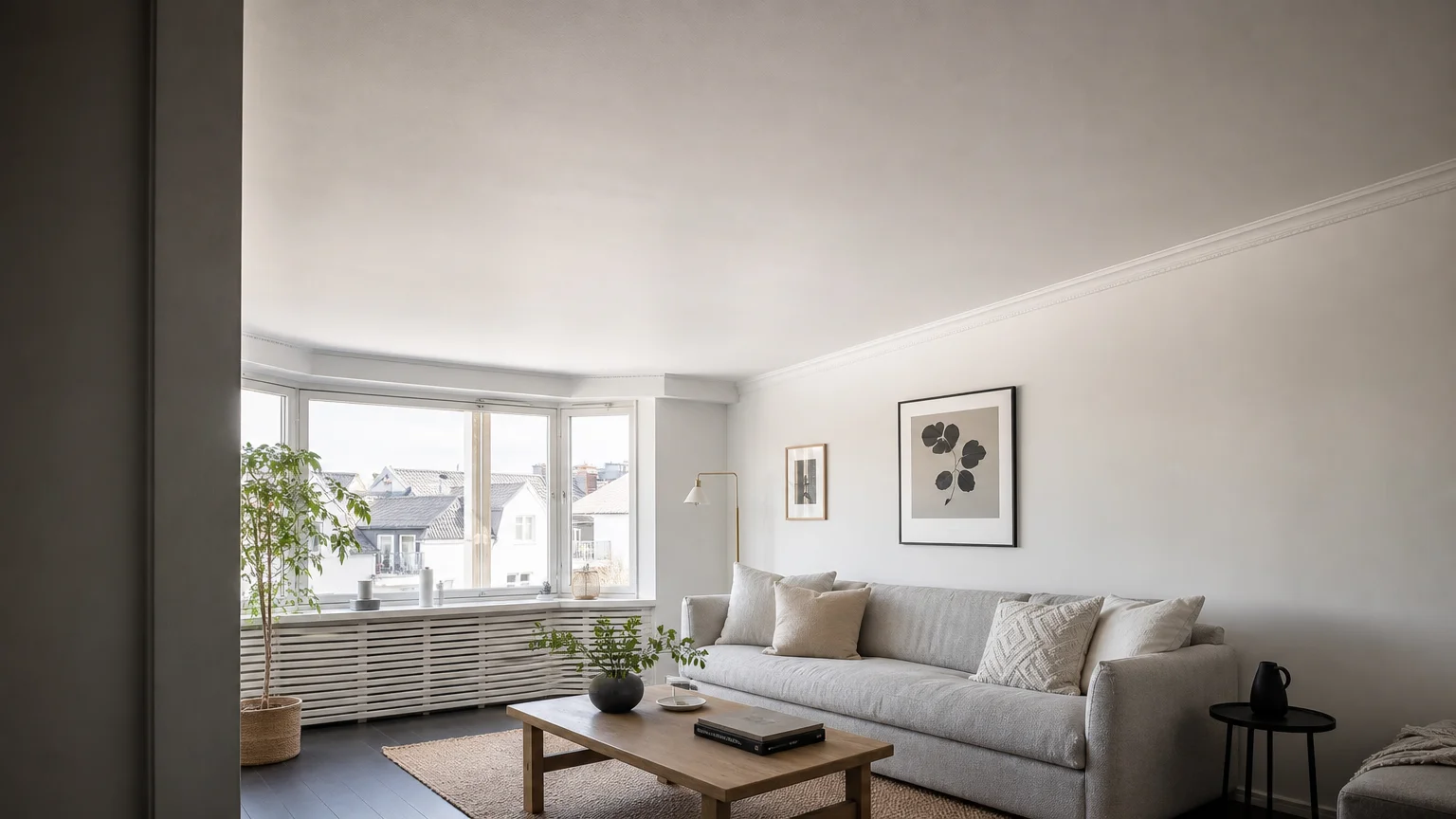
There is a distinct difference between builder-grade flat white and a deliberate, high-reflective crisp white. A pure, bright white boasts a high Light Reflectance Value (LRV), meaning it bounces maximum natural and artificial light back down into the room. This aggressive light reflection erases shadows in the corners, making the ceiling recede from view. To maximize this effect, pair a bright white ceiling with slightly darker walls. The stark contrast tricks the brain into perceiving the ceiling as significantly higher than it actually is.
2. Soft Sky Blue
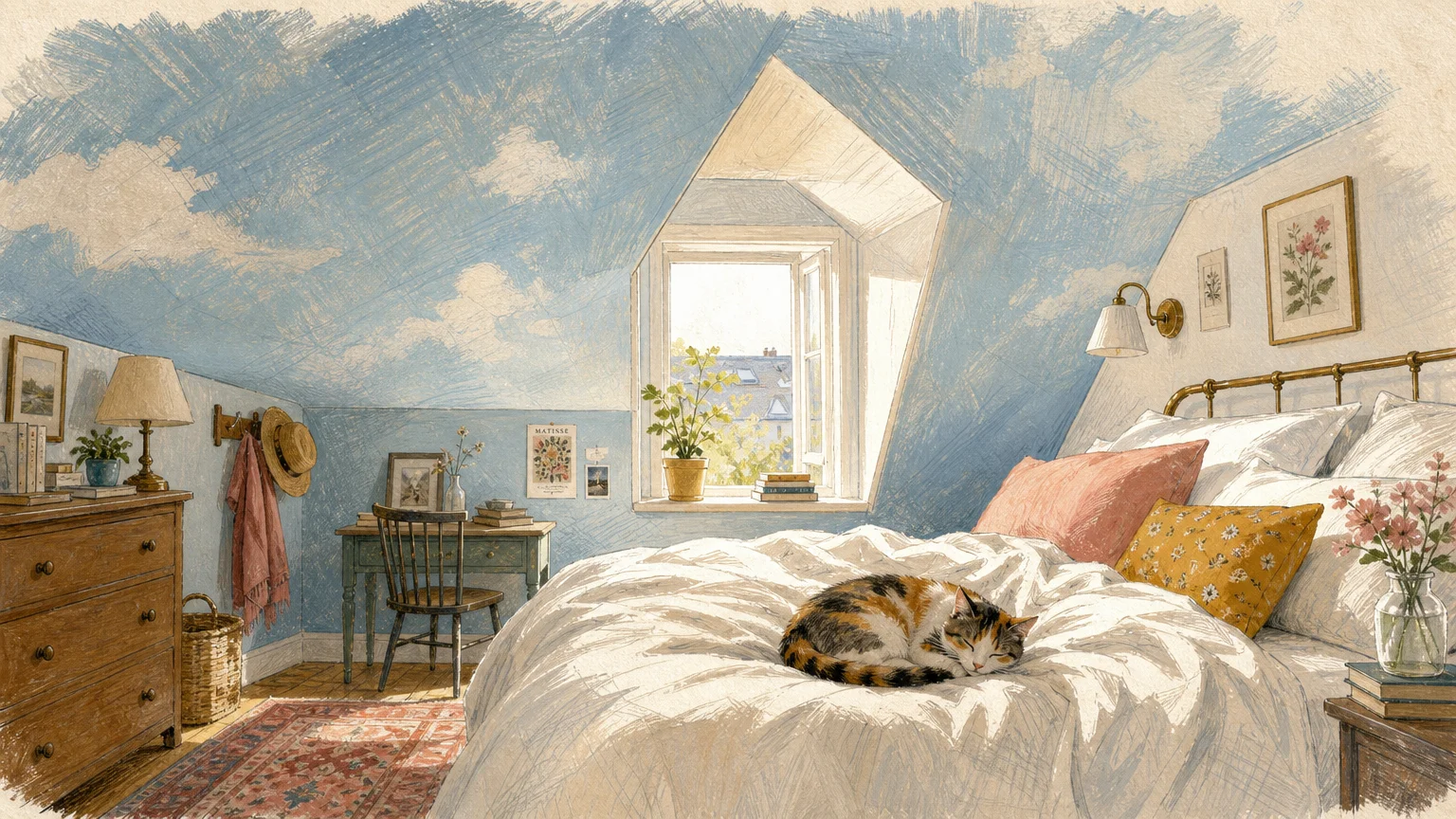
Taking inspiration from nature is one of the oldest interior design tricks in the book. A soft, pale sky blue instantly draws the eye upward and mimics the vastness of the open sky. This color works incredibly well in bedrooms, sunrooms, and bathrooms. The cool undertones of pale blue naturally recede from the viewer, giving the illusion of immense distance. For a cohesive look, pair a sky blue ceiling with crisp white crown molding and neutral gray or white walls. It provides a subtle pop of personality while keeping the space feeling airy and expansive.
3. Pale Blush Pink
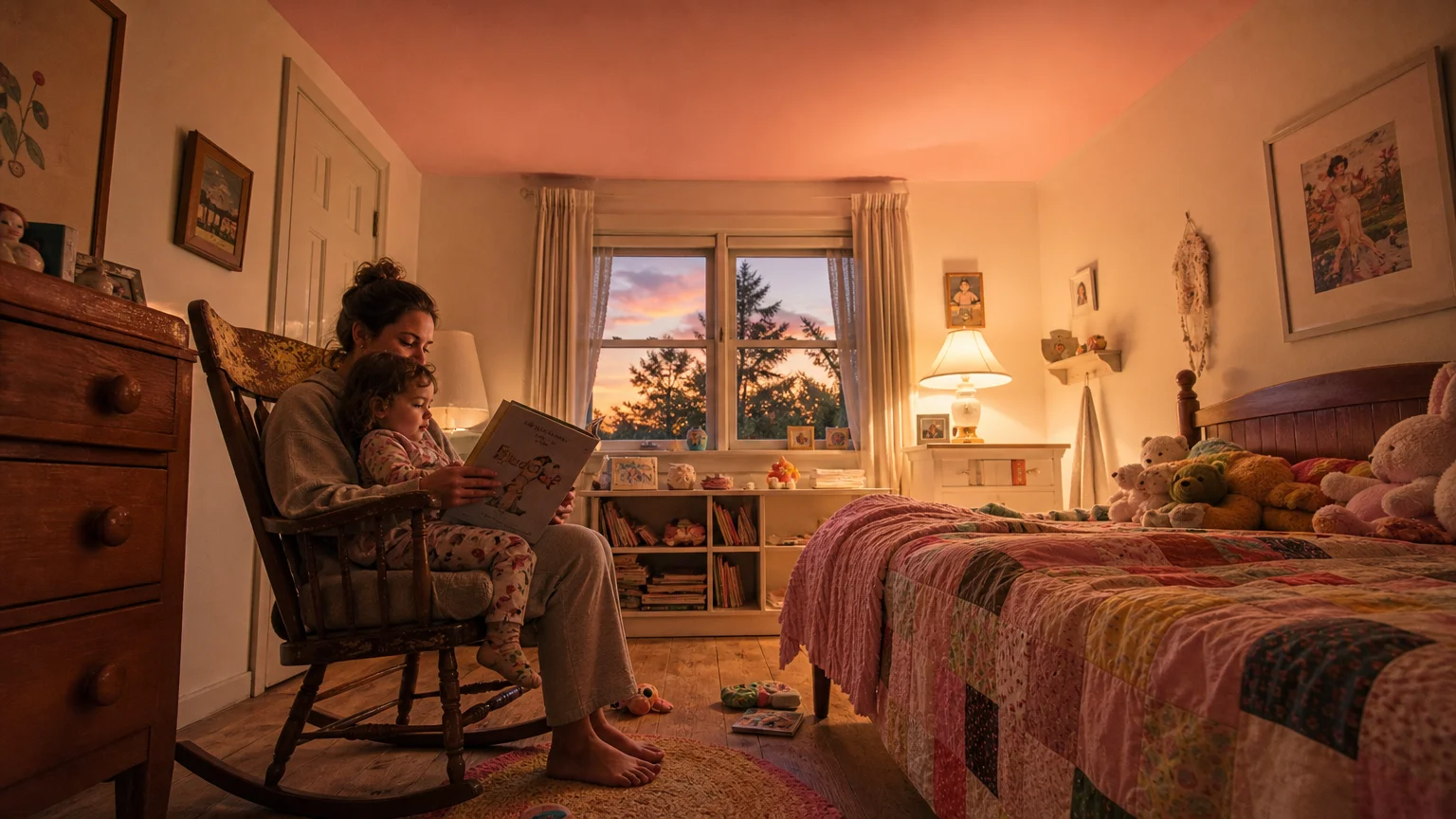
Homeowners often shy away from pink, fearing it will look childish, but a sophisticated, pale blush ceiling acts as a powerful warming agent. In north-facing rooms that receive chilly, bluish natural light, a blush ceiling warms up the entire space without shrinking the room. Pale blush reflects light beautifully and casts a highly flattering, warm glow onto the skin tones of anyone standing in the room. It makes spaces feel cozy yet vast, especially when paired with warm beige or creamy white walls.
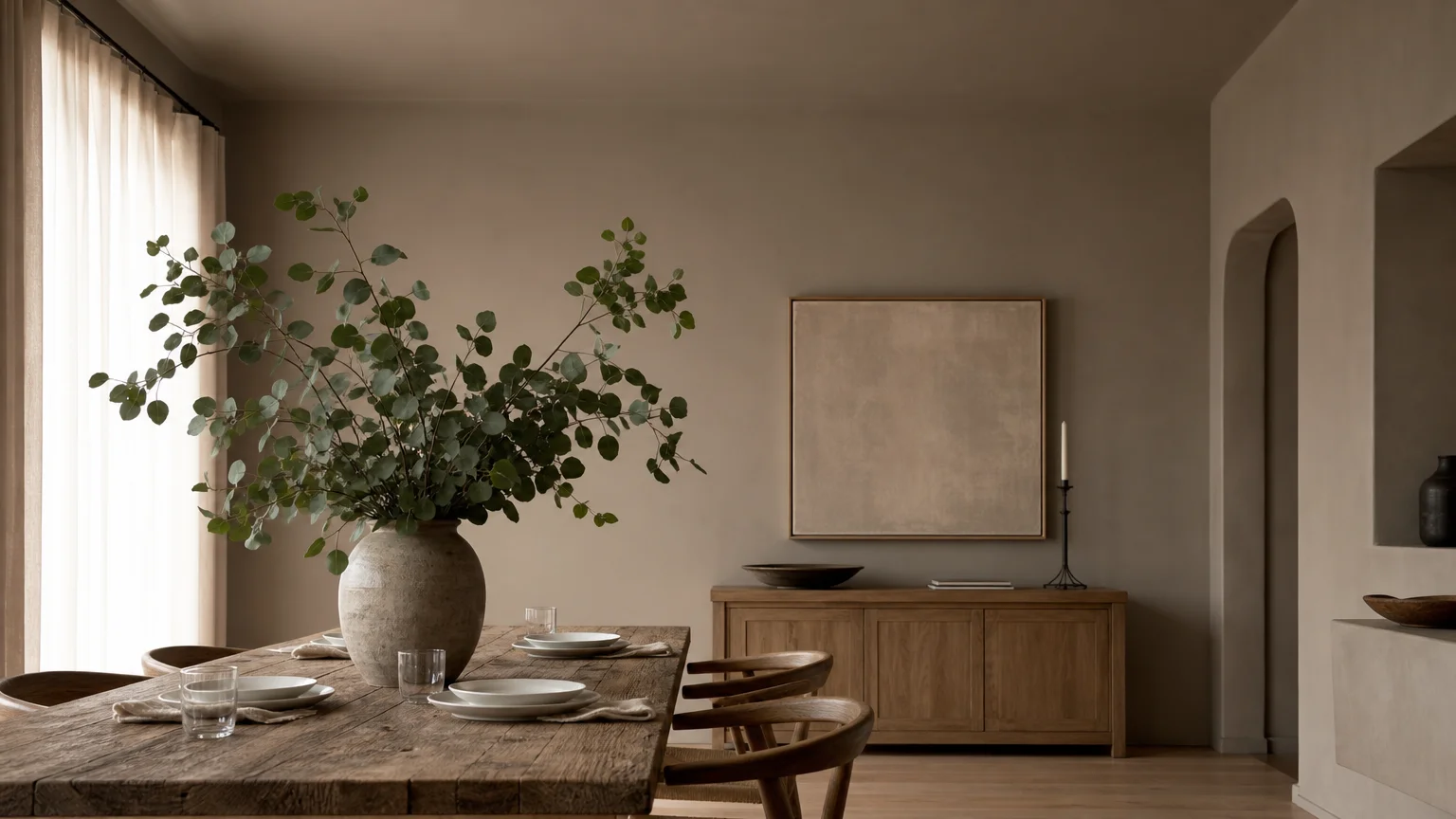
4. Color-Drenched Greige
If you want a room to feel bigger, sometimes the best strategy is to eliminate the visual boundaries entirely. Color drenching involves painting your walls, trim, and ceiling the exact same color. A warm, mid-tone greige—a perfect blend of gray and beige—works wonders here. When the wall color continues seamlessly straight onto the ceiling without a stark white break at the molding, the eye cannot easily determine where the wall ends and the ceiling begins. This optical illusion stretches the walls upward, making low ceilings virtually disappear into the surrounding architecture.

5. High-Gloss Night Sky Navy
This approach sounds completely counterintuitive when discussing small room tips, but a very dark color in a high-gloss finish can actually make a ceiling look infinitely high. Imagine looking up at the night sky; you cannot judge its distance. A high-gloss navy blue or black operates on the exact same principle. The dark color recedes, while the glossy finish acts like a mirror, reflecting the room’s light sources and furnishings. Warning: High-gloss paint highlights every single flaw, bump, and drywall seam. You must ensure your ceiling is skim-coated perfectly smooth before attempting this high-impact luxury look.
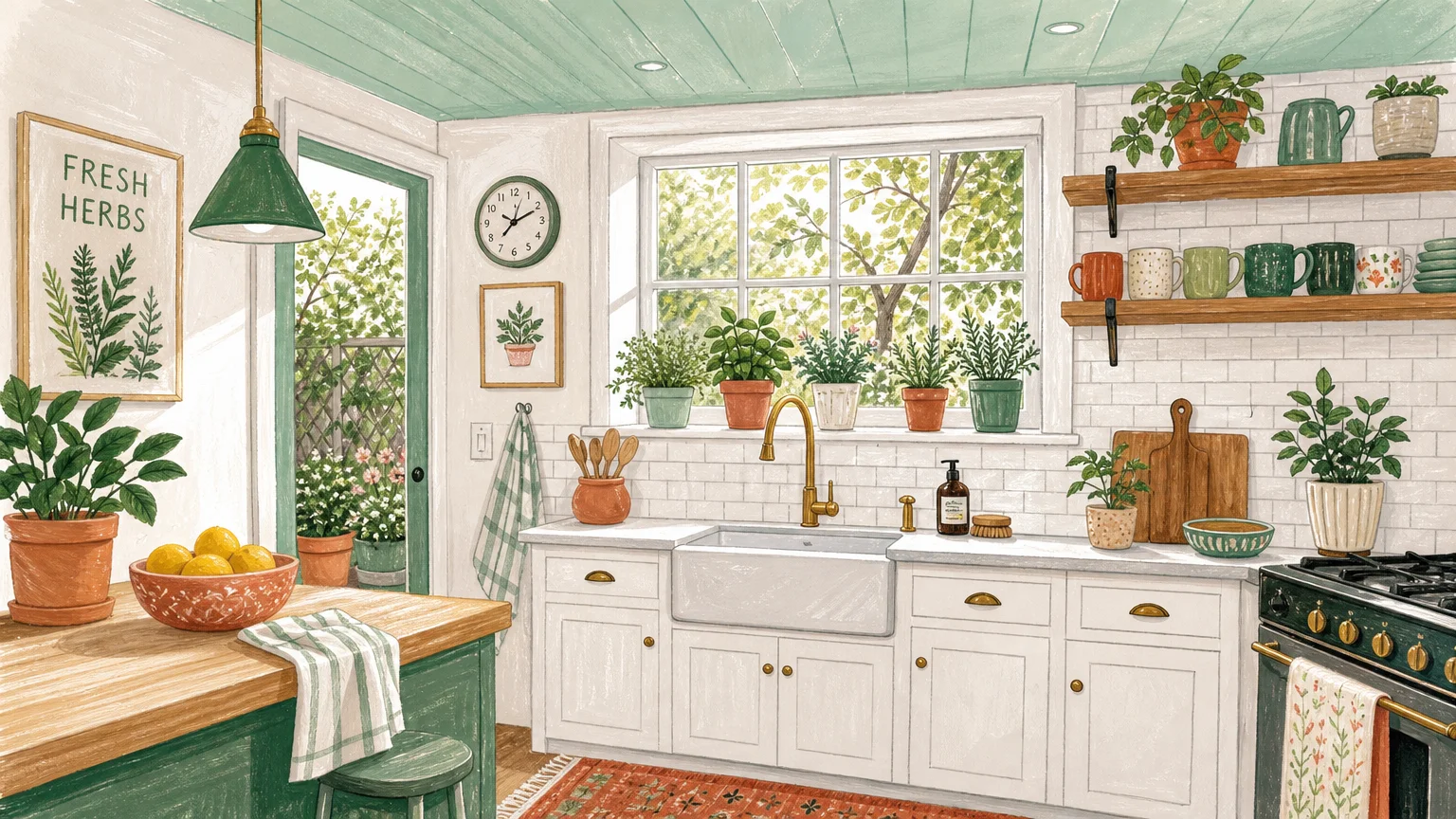
6. Mint Green
Biophilic design focuses on connecting indoor spaces with the natural environment. A soft mint green ceiling brings the freshness of spring indoors and visually opens up cramped spaces. Like sky blue, mint green is a cool color that pushes visual boundaries outward. It thrives in kitchens and laundry rooms—spaces that traditionally feature white cabinets and neutral backsplashes. A mint ceiling injects life and architectural interest into the room without closing in the walls.
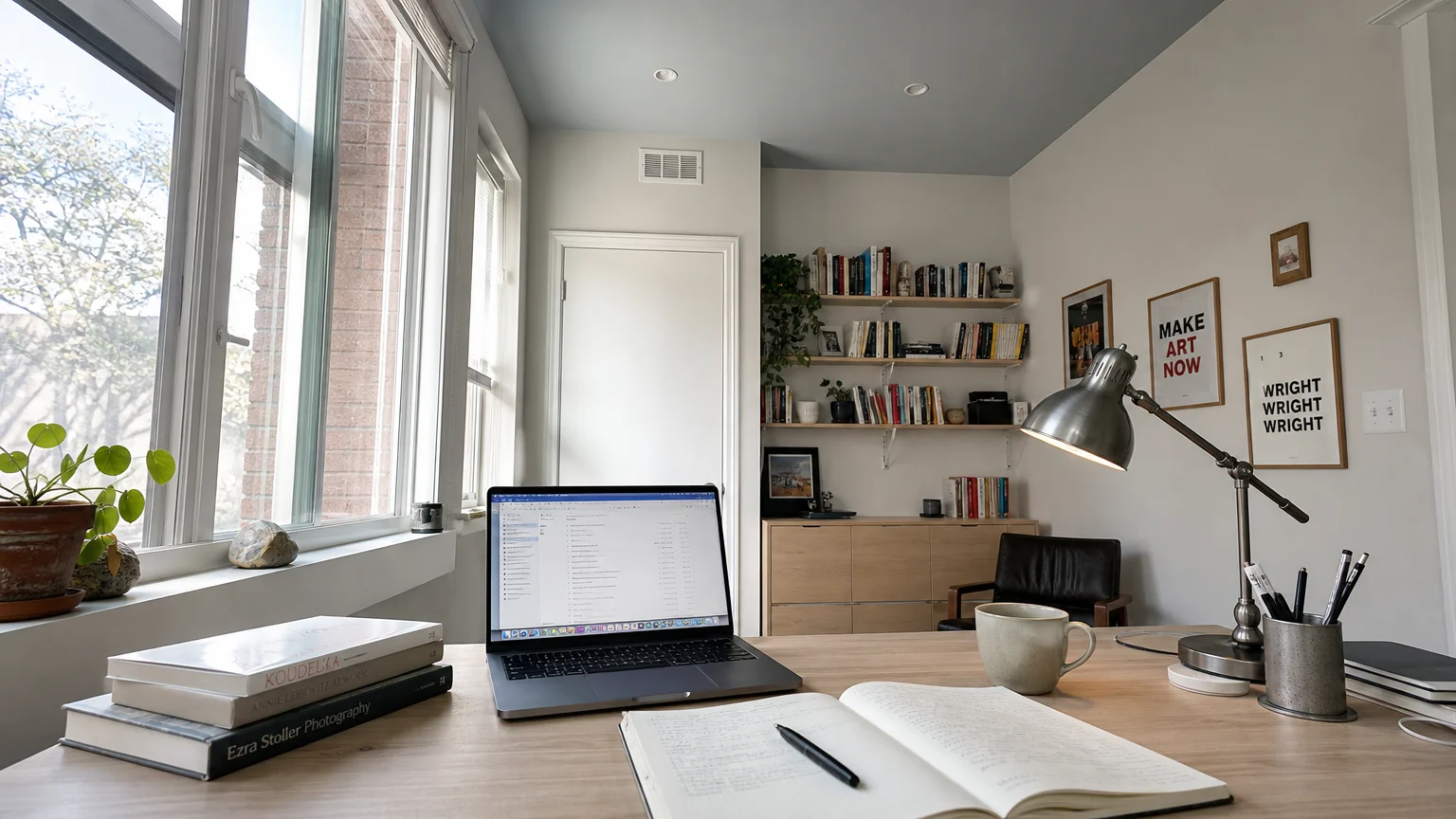
7. Cool, Barely-There Gray
For a highly modern and sophisticated aesthetic, a cool, ultra-light gray ceiling provides depth without heaviness. Pure white ceilings can sometimes feel sterile or stark against richly colored walls. A pale, cool gray provides a softer transition. Because gray contains blue and violet undertones, it shares the receding properties of those colors. It essentially creates a gentle shadow effect that pushes the ceiling higher while maintaining a beautifully understated elegance.
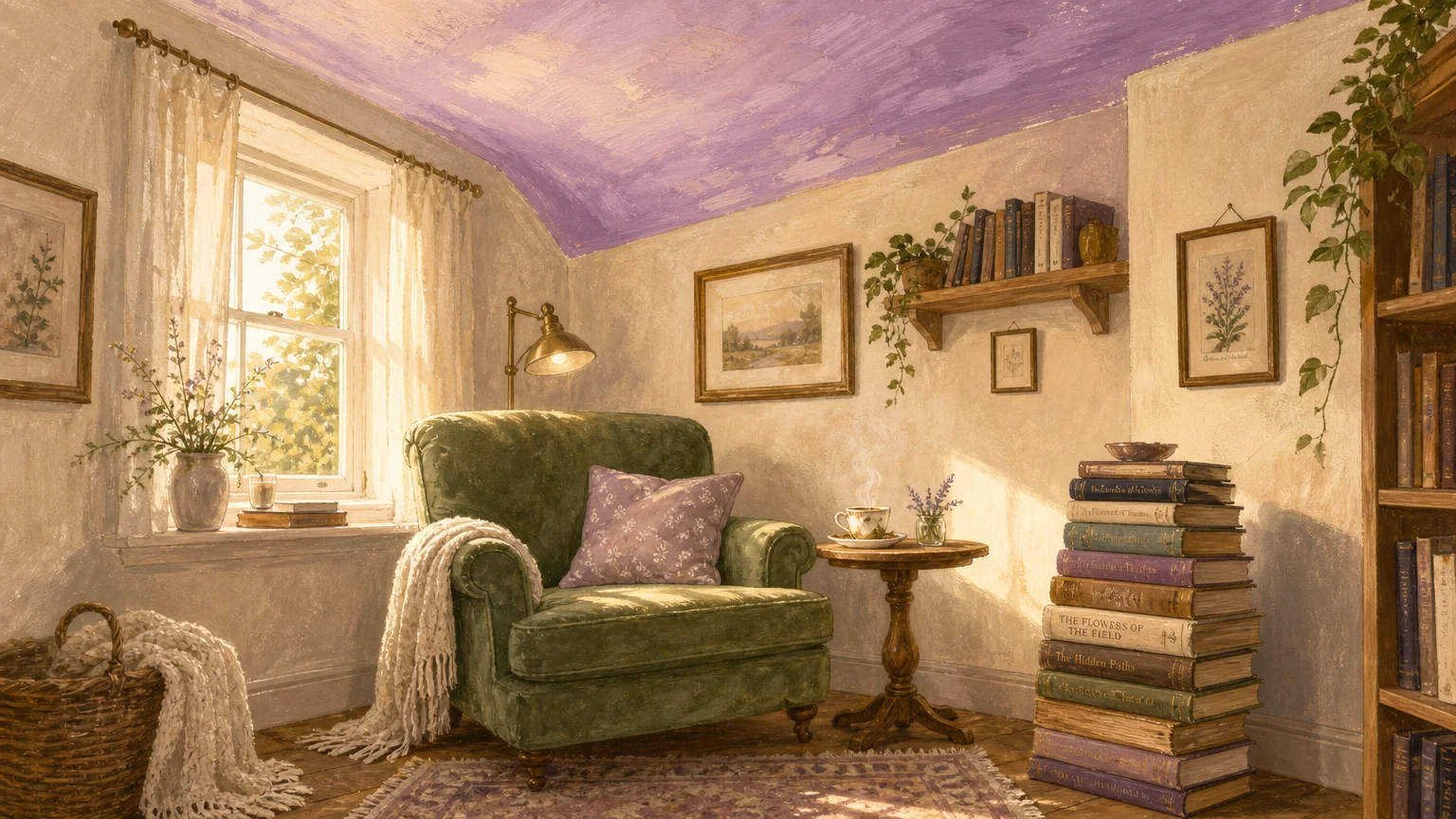
8. Soft Lavender
Lavender is an unexpected, highly designer-focused choice for ceilings. Because purple sits on the cool end of the color spectrum, a very light, desaturated lavender pushes the ceiling away from the eye. It works exceptionally well in dining rooms or bedrooms where you want to foster a calm, relaxing environment. Pair a pale lavender ceiling with silver light fixtures and cool gray walls for a space that feels whimsical, elevated, and noticeably larger than its actual footprint.
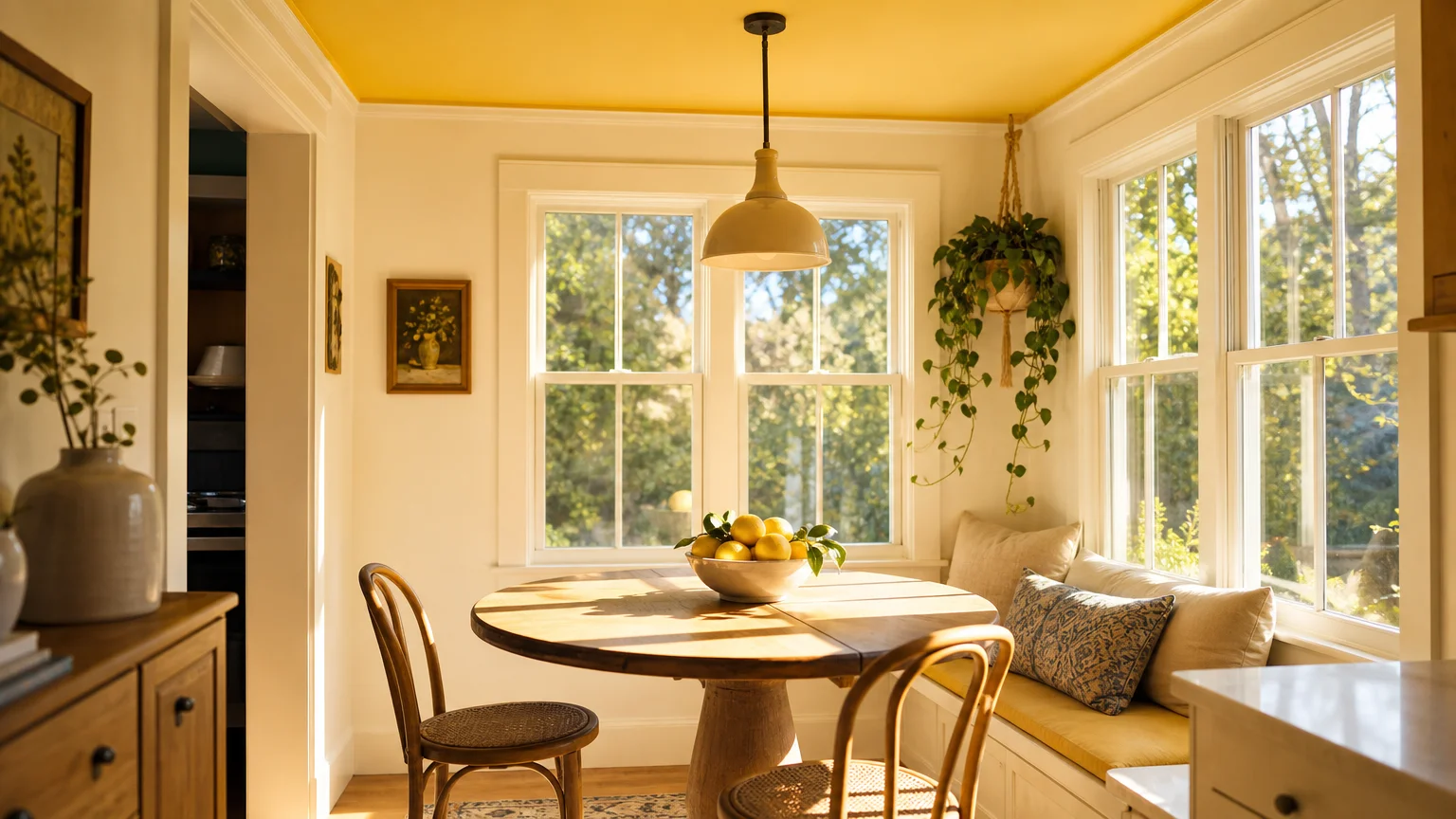
9. Buttery Sunlight Yellow
If you are working with a windowless space—like an interior bathroom or a finished basement—a pale, buttery yellow ceiling is your best defense against claustrophobia. You are essentially painting artificial sunlight onto the ceiling. The key is to keep the saturation extremely low; you want the suggestion of a sunny morning, not the bright yellow of a school bus. This warm reflection mimics the presence of a skylight, completely transforming the perceived height and volume of a dark, restrictive room.







Leave a Reply
You must be logged in to post a comment.