
Tools, Materials, and Prep Checklist
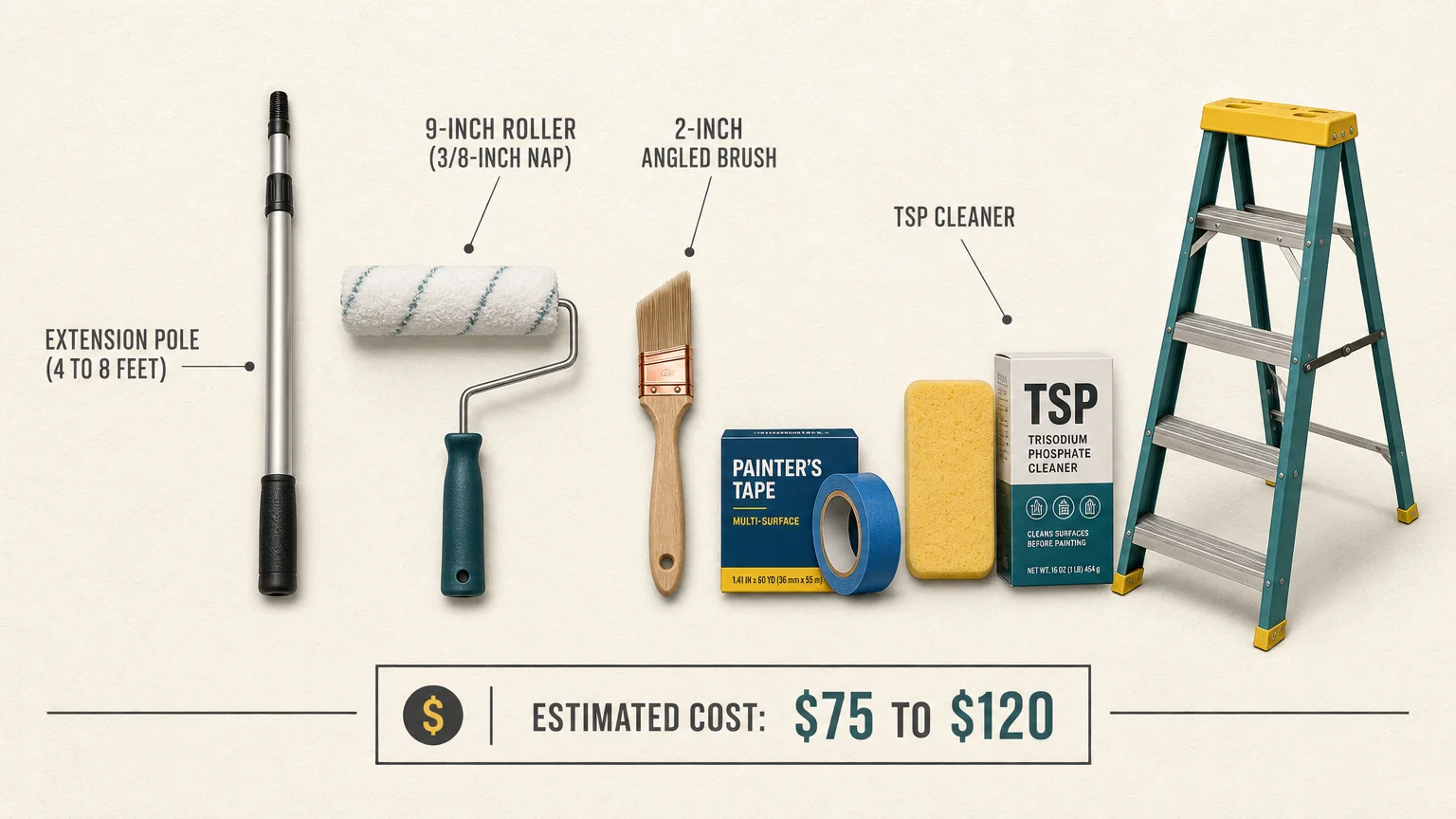
A flawless ceiling requires the right equipment; skipping the proper prep tools will leave you with lap marks, paint splatters on your hardwood floors, and a sore back. Expect to spend between $75 and $120 gathering these materials if you do not already own them.
Extension Pole (4 to 8 feet): This is non-negotiable for painting overhead. An adjustable extension pole allows you to roll the ceiling while standing firmly on the floor—saving your back and keeping you safely off a ladder during the rolling phase. Expect to pay roughly $25 at retailers like The Home Depot or Lowe’s.
Quality Paint Roller and Frame: Buy a sturdy nine-inch roller frame and a 3/8-inch nap microfiber roller cover. Microfiber holds more paint and reduces the microscopic splatter that rains down on you while you work. If your ceiling has a heavy texture, step up to a 1/2-inch nap.
High-Quality Angled Brush: You need a two-inch or two-and-a-half-inch angled sash brush for cutting in the perimeter where the ceiling meets the walls. Do not skip on quality here; a premium nylon-polyester brush ensures a crisp, straight line.
Drop Cloths and Painter’s Tape: Gravity always wins. Cover every inch of your floor with heavy canvas drop cloths—plastic sheets slide around and create dangerous slipping hazards. Use top-tier painter’s tape to protect your crown molding or upper wall edges.
Cleaning and Repair Supplies: You need a sponge, a bucket of TSP (trisodium phosphate) cleaner, lightweight spackle, and a sanding block. Ceilings gather dust, cobwebs, and cooking grease over the years; paint will not adhere to a dirty surface.
Safety Equipment: Pick up a pair of wrap-around safety glasses to keep paint droplets out of your eyes. Furthermore, secure a sturdy fiberglass step ladder. The Occupational Safety and Health Administration (OSHA) advises keeping three points of contact on a ladder at all times, so never overreach while cutting in your corners.







Leave a Reply
You must be logged in to post a comment.