
Tools, Materials, and Prep Checklist
Tackling these design upgrades requires a mix of planning, demolition tools, and high-quality installation materials. Since you will be replacing dust-trapping fixtures with sleek, modern alternatives, proper preparation ensures a flawless finish. Always wear adequate personal protective equipment when removing old materials, especially when tearing out aged carpets or sanding painted surfaces that might contain lead if your home was built before 1978.
Essential Tools for Renovation Prep:
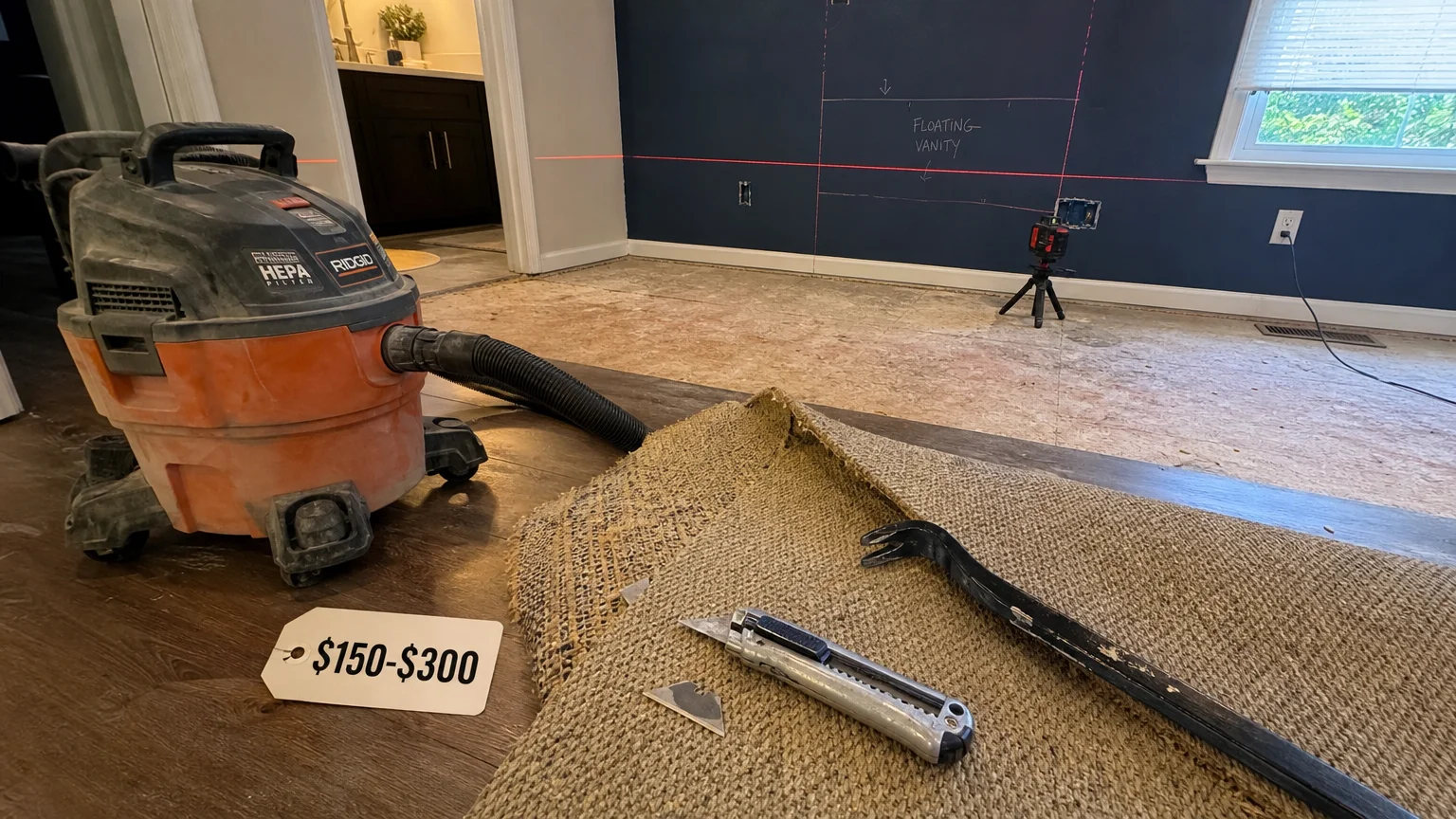
You need a reliable heavy-duty utility knife and replacement blades for slicing through old carpet and carpet padding. A pry bar and a claw hammer will help you remove baseboards and tack strips without damaging your drywall. Invest in a high-quality HEPA-filtered shop vacuum; these cost between $150 and $300 but are absolutely vital for capturing fine dust particles during demolition rather than recirculating them into your air. Keep a sturdy tape measure, a laser level for installing floating vanities or cabinets, and an oscillating multi-tool for making precise cuts around plumbing and trim.
Material Options and Approximate Costs:
Budgeting for these nine upgrades varies widely based on your home size and material selections. When replacing porous countertops, engineered quartz typically runs between $50 and $120 per square foot installed. If you are upgrading your paint, expect to spend $45 to $75 per gallon for premium zero-VOC formulations. For flooring replacements, solid hardwood or high-quality luxury vinyl plank usually costs $4 to $10 per square foot for materials, plus underlayment and installation. Ensure you have high-quality silicone sealants on hand—around $8 per tube—to seal gaps in wet rooms, completely locking out moisture and mold.
Prep and Safety Checklist:
Before you swing a hammer, map out your plumbing and electrical lines. Shut off the water supply before removing bathroom vanities or kitchen countertops, and flip the breaker before swapping out dust-catching chandeliers for flush-mount lights. Seal off your workspace with plastic sheeting and zipper doors to prevent construction dust from infiltrating the rest of your house. Finally, consult your local building code office; modifying plumbing for wall-mounted faucets or altering structural supports for heavy floating furniture often requires a permit and professional inspection.






Leave a Reply
You must be logged in to post a comment.