
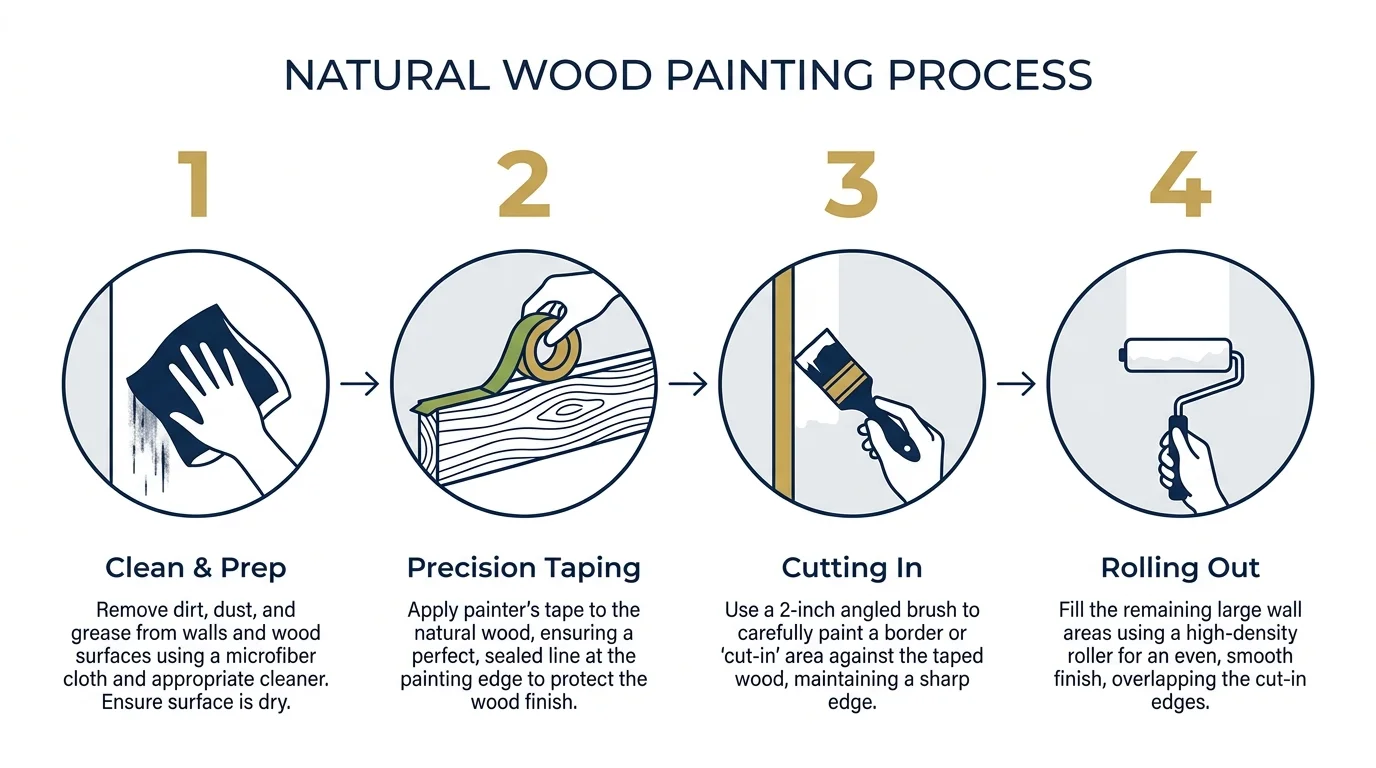
Step-by-Step Instructions
Begin your project by testing your natural wood paint ideas directly in the room. Lighting dramatically alters how paint reads against wood grain. Buy sample pots of your chosen colors and paint large, two-foot by two-foot squares on the walls directly next to your wood trim, cabinets, or floors. Observe these swatches over forty-eight hours. Notice how the morning light cools the color down and how warm artificial lamps affect the hue at night. Ensure the color balances the wood tone rather than clashing with it.
Once you verify your color choice, clear the room of furniture and lay down your canvas drop cloths. Wash the walls with your degreasing cleaner, paying special attention to the areas just above the baseboards and around door casings where grime accumulates. Let the walls dry completely. Take your medium-grit sanding sponge and lightly scuff the walls to promote paint adhesion; wipe away the resulting dust with your damp microfiber cloth.
Applying the painter’s tape requires patience. Press the tape firmly against the edge of the natural wood trim, ensuring no gaps exist where paint could seep through. Run a flexible putty knife over the edge of the tape to create a watertight seal. If you want absolute perfection, brush a microscopic layer of clear matte acrylic medium over the tape line; this fills any invisible voids and guarantees a flawless edge once removed.
Start painting by cutting in along the ceiling, corners, and your taped wood trim. Dip your angled brush into the paint, tap off the excess, and apply the paint in smooth, overlapping strokes. Work in small sections so the cut-in edges remain wet when you begin rolling. Load your roller evenly and apply the paint to the main wall areas using a W-shaped pattern to distribute the material, then finish with long, vertical strokes to smooth out the stipple. Apply two complete coats, waiting for the manufacturer’s recommended drying time between applications. Remove the painter’s tape while the second coat remains slightly damp—pulling the tape back at a 45-degree angle slices through the paint film cleanly, leaving a perfect boundary between your fresh wall colors for wood interiors and your natural timber.







Leave a Reply
You must be logged in to post a comment.