
Tools, Materials, and Prep Checklist
Achieving a flawless, designer-quality finish requires you to abandon bargain-bin supplies and invest in professional-grade tools. High-quality materials dramatically reduce your working time, prevent frustrating surface imperfections, and ensure your new colors look exactly as intended. For a standard medium-sized room, you should anticipate a total materials budget ranging between two hundred and three hundred dollars.
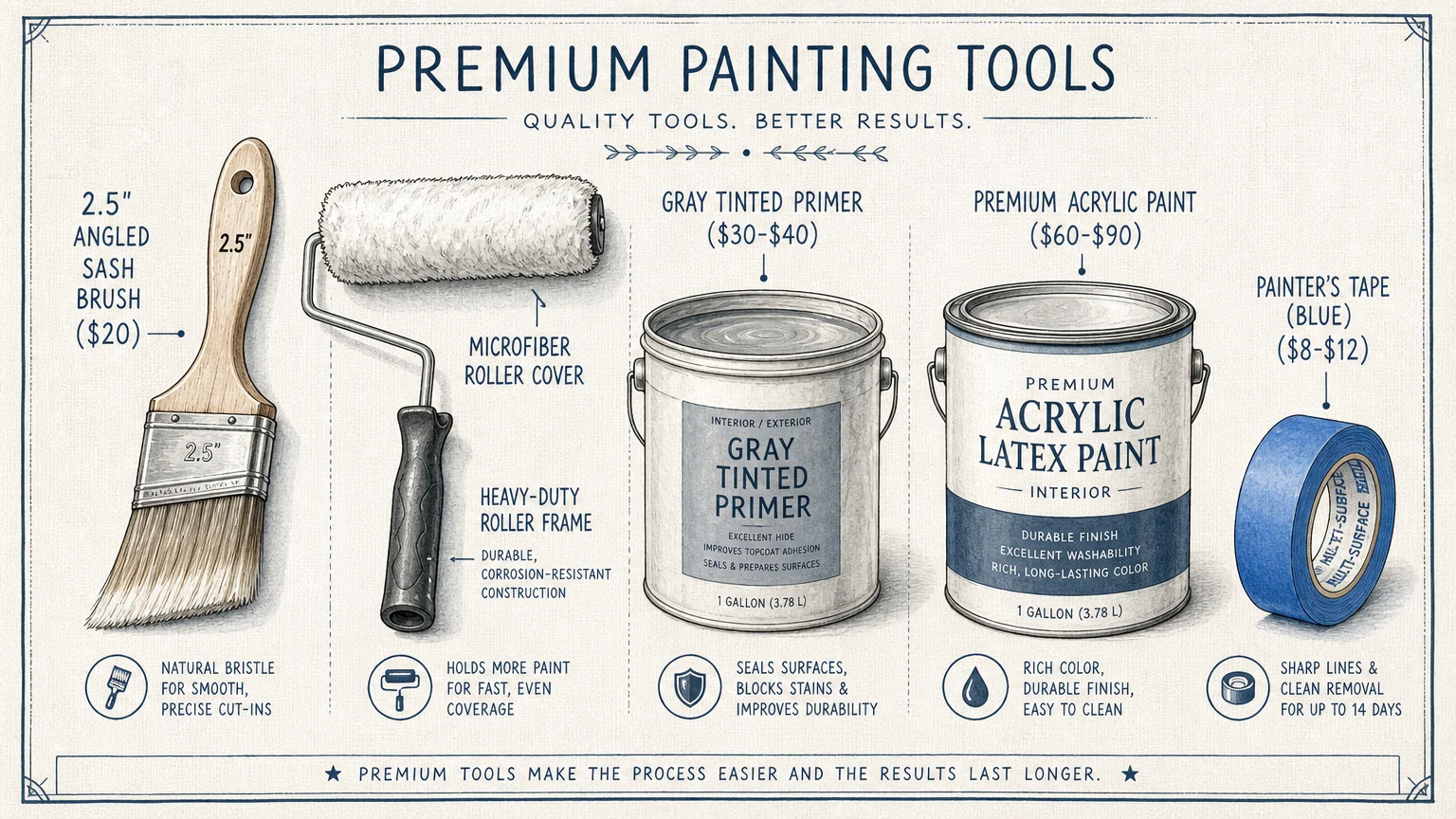
Premium Acrylic Latex Paint: You will need two gallons to comfortably apply two coats in a standard room. Expect to spend between sixty and ninety dollars per gallon for premium formulations. These top-tier paints contain higher volumes of titanium dioxide, which provides superior coverage, better hide over your old white walls, and exceptional washability.
High-Quality Primer: Purchase one gallon of high-adhesion interior primer, costing roughly thirty to forty dollars. If you plan to apply a very dark or rich color, ask the paint counter to tint your primer gray. Tinted primer drastically reduces the number of topcoats you need to achieve full opacity.
Brushes and Rollers: Invest in a two-and-a-half-inch angled sash brush specifically designed for acrylic paints; this will cost around twenty dollars and gives you absolute control when cutting in around trim. For rolling, purchase a heavy-duty roller frame and several half-inch nap microfiber roller covers. Microfiber holds a massive amount of paint and releases it smoothly, eliminating frustrating stipple marks.
Preparation Supplies: You must protect your floors with heavy canvas drop cloths rather than slippery, dangerous plastic tarps. Canvas absorbs accidental spills instantly, whereas wet paint on plastic creates an immediate slip hazard. You also need three rolls of premium painter’s tape, a tub of lightweight spackle, a flexible putty knife, and fine-grit sanding sponges.
Safety Gear and Protocols: Painting involves chemical exposure and physical risks. You must ensure proper ventilation by opening cross-room windows and running a box fan directed outdoors. Always wear a NIOSH-approved respirator mask when sanding dried spackle to protect your lungs from fine particulate dust. Furthermore, if your home was built before 1978, you must assume the existing base layers contain lead. Before you scrape or sand any peeling paint in an older home, consult the Environmental Protection Agency (EPA) lead-safe guidelines and use an approved lead testing kit. Finally, review basic ladder safety rules; never stand on the top rung of a stepladder while cutting in your ceiling line.







Leave a Reply
You must be logged in to post a comment.