
Tools, Materials, and Prep Checklist
A successful tile installation relies on gathering the right supplies before you mix a single drop of mortar. Attempting to run to the hardware store halfway through the job leads to dried-out thinset and misaligned tiles. Below is your comprehensive checklist, featuring approximate costs and quantities for a standard 50-square-foot tub surround or vanity accent wall.
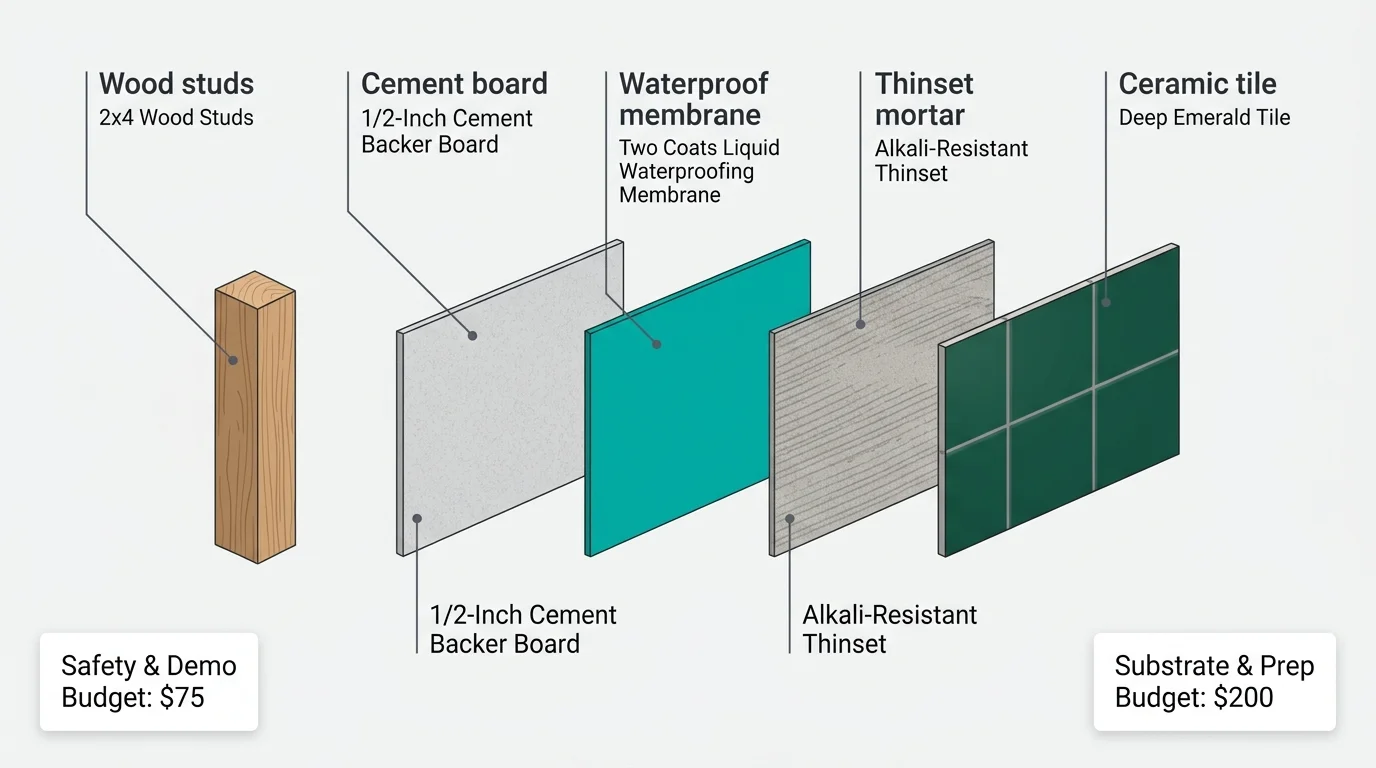
Safety Gear and Demolition Supplies (Approximate Budget: $75)
Protect your lungs and eyes during tear-out. You need N95 respirators, impact-resistant safety glasses, heavy-duty leather work gloves, a sturdy pry bar, a utility knife, and a framing hammer. Older homes may contain hazardous materials behind the walls; if your home was built before 1978, test your drywall and paint for lead and asbestos before beginning demolition.
Substrate and Waterproofing Materials (Approximate Budget: $200)
Never tile directly over standard drywall in a wet area. You need 1/2-inch cement backer board or a specialized waterproof foam board. Secure these boards using alkali-resistant mesh tape and specialized cement board screws. For absolute peace of mind, purchase a bucket of liquid waterproofing membrane. Applying two thick coats over your cement board guarantees water cannot penetrate your wall studs. You can review industry standards for wet-area moisture barriers through the Tile Council of North America.
Tile Setting Tools (Approximate Budget: $350 – $500)
Precision requires proper equipment. Rent or purchase a wet saw equipped with a continuous-rim diamond blade to make clean cuts through hard porcelain. You also need a manual snap cutter for straight, simple cuts, a laser level to establish your layout lines, and a standard tape measure. To apply the mortar, buy a 1/4-inch by 1/4-inch square-notch trowel and a smaller margin trowel for scooping. Finally, you need a high-quality rubber grout float and several large grouting sponges.
Tiles, Mortar, and Grout (Approximate Budget: $500 – $1,200)
Purchase your deep emerald or midnight blue ceramic or porcelain tiles. Always calculate your square footage and add 15 percent extra to account for cuts, waste, and future repairs. You need two 50-pound bags of modified thinset mortar (ensure it is suitable for your specific tile type). Select a high-performance grout—sanded for joints larger than 1/8 inch, or unsanded for tighter joints. Pick up a bag of 1/8-inch horseshoe shims or a tile leveling system, and color-matched silicone caulk for the corners and changes in plane.
Preparation Phase
Before you begin, shut off the water supply to the bathroom. Remove all fixtures, plumbing trim, and the toilet if you are tiling the floor. Cap the plumbing lines securely. Strip the existing wall surfaces down to the bare studs to inspect the framing for mold, rot, or water damage. If you discover compromised lumber, replace those studs immediately to ensure your heavy new tile structure has a solid, supportive foundation.








Leave a Reply
You must be logged in to post a comment.