
Step-by-Step Instructions
Installing premium countertop materials requires precision. Engineered quartz, sintered stone, and granite demand professional fabrication. However, you can entirely handle the demolition, prep work, and installation of butcher block slabs yourself. Follow these phases to manage your project safely.
Phase 1: Shut Off Utilities and Disconnect Plumbing
Start by clearing out the cabinet underneath your sink. Locate the shut-off valves for your hot and cold water supply and turn them clockwise until they stop. Turn on the faucet to bleed out remaining water pressure. Use an adjustable wrench to disconnect the supply lines. Unplug your garbage disposal and disconnect the dishwasher drain hose. Loosen the plastic slip nuts on the P-trap to separate the sink drain from your plumbing branch. Slice the silicone bead around your drop-in sink with a utility knife, push the sink upward, and lift it out.
Phase 2: Safely Demolish the Old Surface
Check inside your base cabinets for hidden fasteners. Builders often drive wood screws upward through the corner blocks directly into the countertop substrate. Use your cordless drill to remove every visible screw. Next, deeply score the caulk line where the countertop meets the backsplash. This step prevents you from tearing the delicate drywall paper. Wedge your putty knife into the seam between the cabinet box and the countertop, tapping it gently to break the adhesive bond. Slide your pry bar into the gap and lever the countertop upward. Enlist a helper to lift the surface off the cabinets and carry it outside.
Phase 3: Level and Prepare the Base Cabinets
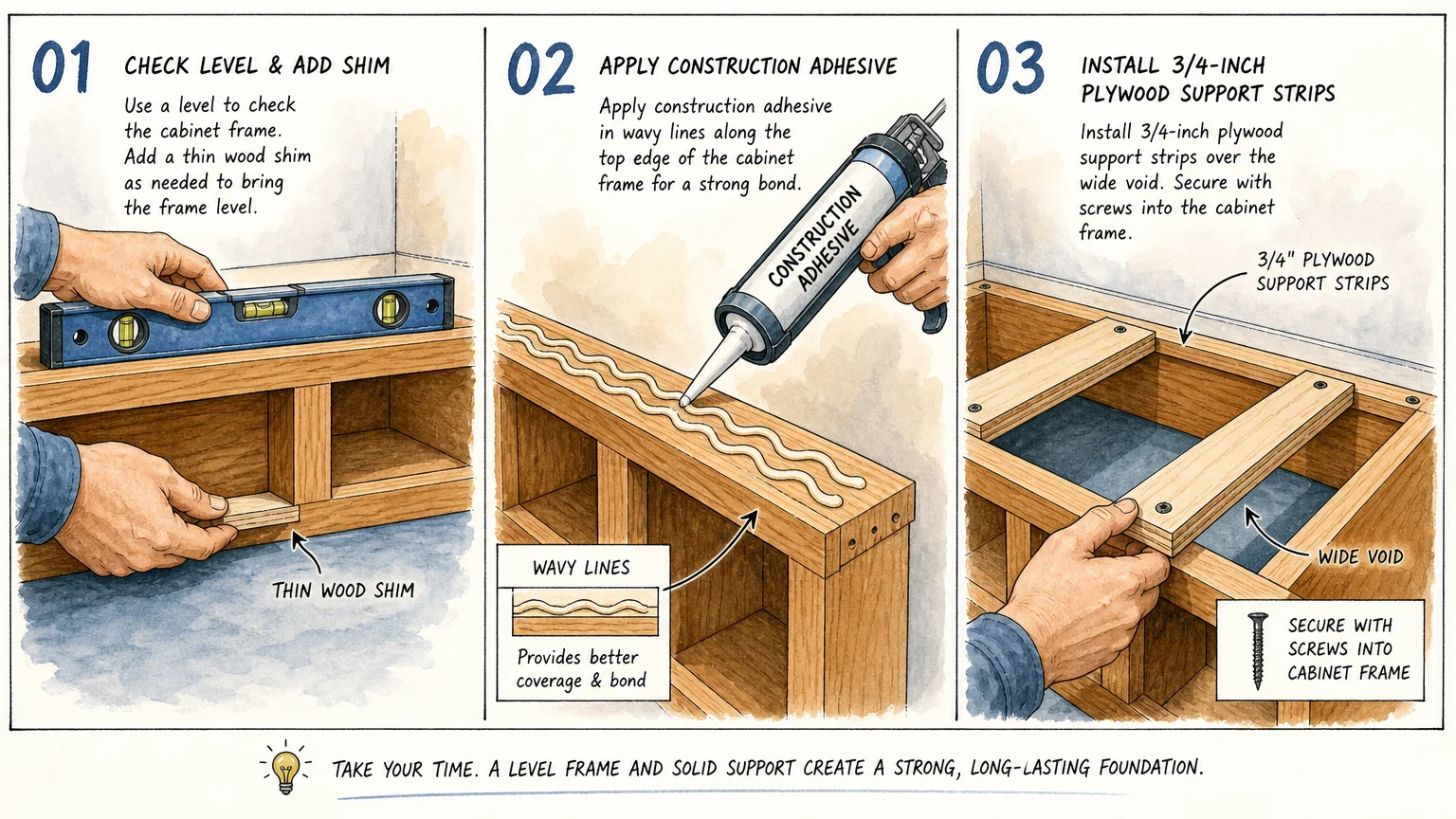
Heavy countertop materials will crack if installed on an uneven surface. Place your 4-foot level across the tops of your base cabinets, checking side-to-side and front-to-back orientations. If you discover dips, tap wooden shims under the base cabinets at the floor line to bring the entire run into perfect alignment. Once the cabinets sit perfectly level, secure them to the wall studs using cabinet screws. Sweep the top edges clean to ensure no debris interferes with the new countertop.
Phase 4: Manage the Installation Process
If you purchased butcher block, cut your material to the exact dimensions using a circular saw with a carbide blade. Apply construction adhesive to the top edges of your base cabinets, position the wood, and drive screws up through the corner braces to lock it down. If you hired professionals to install heavy stone, clear a wide path from your driveway to your kitchen. Installers carry slabs weighing upwards of 800 pounds. Keep children and pets out of the work zone entirely. Once installers dry-fit the stone, they will apply color-matched epoxy to the seams, polish the joints flat, and run a protective bead of silicone along the wall.








Leave a Reply
You must be logged in to post a comment.