
Step-by-Step Instructions
Break your remodeling efforts into distinct phases. Focusing on one system at a time prevents the kitchen from feeling overwhelmingly chaotic.
Phase 1: Safely Removing Outdated Lighting
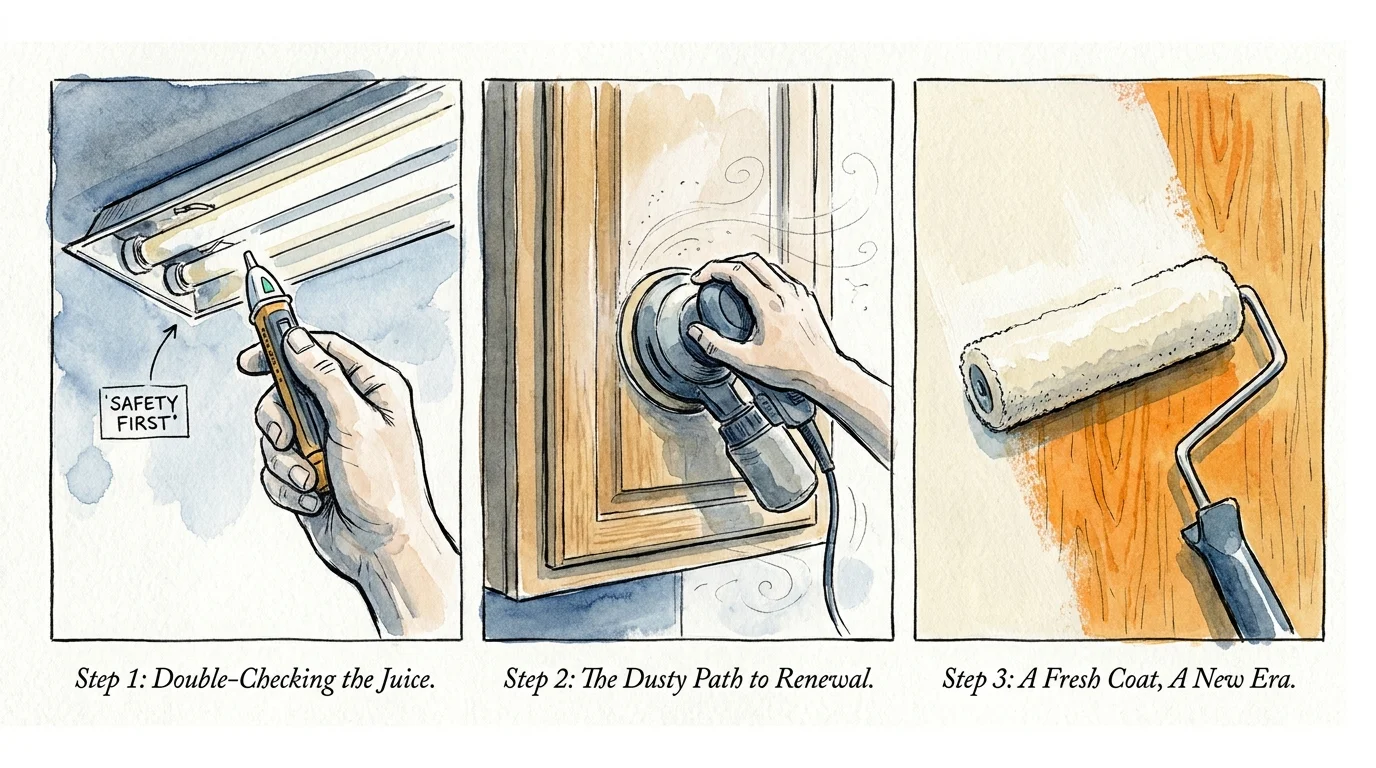
Begin with the most impactful change—removing the fluorescent box. Safety First: Locate your main electrical panel and turn off the breaker supplying power to the kitchen ceiling lights. Use your non-contact voltage tester on the wiring inside the fixture to confirm the power is completely dead before touching any wires.
Unscrew the acrylic panels and remove the fluorescent tubes. Disconnect the wiring, cap the ceiling wires with wire nuts, and carefully unscrew the heavy metal housing from the ceiling joists. You will likely face drywall patching where the box used to sit. Apply drywall compound, feather the edges, sand it smooth, and paint the ceiling flat white. Install modern, low-profile LED flush mounts or a sleek track lighting system following the manufacturer guidelines and local National Electrical Code regulations.
Phase 2: Prepping and Painting Honey Oak Cabinets
Remove all cabinet doors, drawers, and hinges. Number each door and its corresponding cabinet box using a piece of tape—this ensures perfect realignment during reassembly. Remove all ornate, heavy hardware.
Scrub every wooden surface with TSP or a heavy-duty degreaser. Kitchen cabinets accumulate years of invisible grease; paint will not adhere to grease. Once dry, lightly scuff all surfaces using your random orbital sander and 120-grit paper. You do not need to strip the wood bare, but you must remove the glossy clear coat. Wipe away the dust with a damp microfiber cloth.
Apply one coat of high-adhesion bonding primer using a foam roller for flat surfaces and a synthetic brush for the recesses. Let it dry completely. Follow up with two thin coats of cabinet enamel, lightly sanding with 220-grit paper between coats. Thin coats prevent drips and cure to a factory-like finish.
Phase 3: Banishing the 4-Inch Backsplash
To modernize your counters without replacing the stone, remove the short 4-inch granite lip. Score the caulk line where the granite meets the wall and the counter using your utility knife. Gently tap a stiff putty knife behind the granite lip and pry it away from the drywall. Work slowly to minimize drywall damage.
Scrape away the old silicone on the flat counter surface. Patch any torn drywall with spackle. Now you have a clean slate to install a modern subway tile or a solid sheet backsplash that extends all the way from the counter to the bottom of your upper cabinets, visually elongating the room.
Phase 4: Installing Modern Hardware
If you are switching from a two-hole pull to a single-hole knob, fill the old holes with wood filler before priming and painting your cabinets. Once the final coat of enamel cures (wait at least 48 hours), use a cabinet hardware jig to drill precise, uniform holes for your new modern hardware. Install the new matte black or unlacquered brass pulls to complete the transformation.









Leave a Reply
You must be logged in to post a comment.