
Style & Finishing Touches
Choosing the right hue shifts your home exterior from ordinary to unforgettable. Color behaves differently outdoors than it does in a controlled indoor environment; bright sunlight washes out pale colors, while deep shadows under a porch overhang can make dark colors read as black. Here are eight front door colors that feel incredibly fresh right now, along with the design secrets most people never realize about them.
1. Vibrant Coral
Many homeowners shy away from pink undertones, fearing their house will look like a tropical novelty. What people never realize is that coral acts as a sophisticated neutralizer against dark, moody exteriors like charcoal or navy blue. It brings a profound sense of warmth to gray siding and pairs exceptionally well with unlacquered brass hardware, which develops a beautiful patina over time. Coral signals an energetic, welcoming household.
2. Deep Navy Blue
Navy blue offers the gravitas and classic appeal of a black door without the harsh, heavy contrast. It is a chameleon color that shifts beautifully depending on the time of day. Under direct noon sunlight, the blue undertones shine brilliantly, while evening shadows turn it into a rich, velvety slate. Navy is the ultimate choice for red brick homes, as the cool tones of the blue balance the aggressive warmth of the masonry.
3. Earthy Sage Green
If you want your house to feel integrated into its environment, sage green bridges the gap between architecture and nature. What most people miss about sage is its ability to visually expand the front porch. Because the color mimics the surrounding foliage, the eye travels smoothly from the lawn and bushes right up to the entryway. It pairs flawlessly with natural cedar shingles, stone facades, and matte black hardware.
4. Mustard Yellow
Homeowners often complain about deep, covered entryways feeling like dark caverns. Mustard yellow solves this structural problem effortlessly by acting as an artificial light source. A vibrant, ochre-leaning yellow pulls the eye into the shadows and creates a cheerful focal point. This color is a staple for mid-century modern renovations, especially when accented by sleek brushed nickel or chrome door levers and minimalist house numbers.
5. Soft Charcoal Black
Pure, jet black can look intimidating and show every speck of dust. Soft charcoal, however, offers an elegant compromise. A dark gray-black grounds a light-colored home exterior and hides daily wear and tear beautifully. The secret benefit of a charcoal door is how it functions from the inside; when the door is open, the dark interior edge frames your view of the front yard like a high-end mat board on a photograph.
6. Pale Slate Blue
Coastal and calming, pale slate blue carries gray undertones that prevent it from looking like a nursery room pastel. This is one of the best door color ideas if you live in a region with heavy pollen or dusty winds, as the dusty blue-gray hue naturally camouflages environmental dirt. It looks incredibly fresh against bright white siding and softens the rigid lines of modern farmhouse architecture.
7. Rich Terracotta
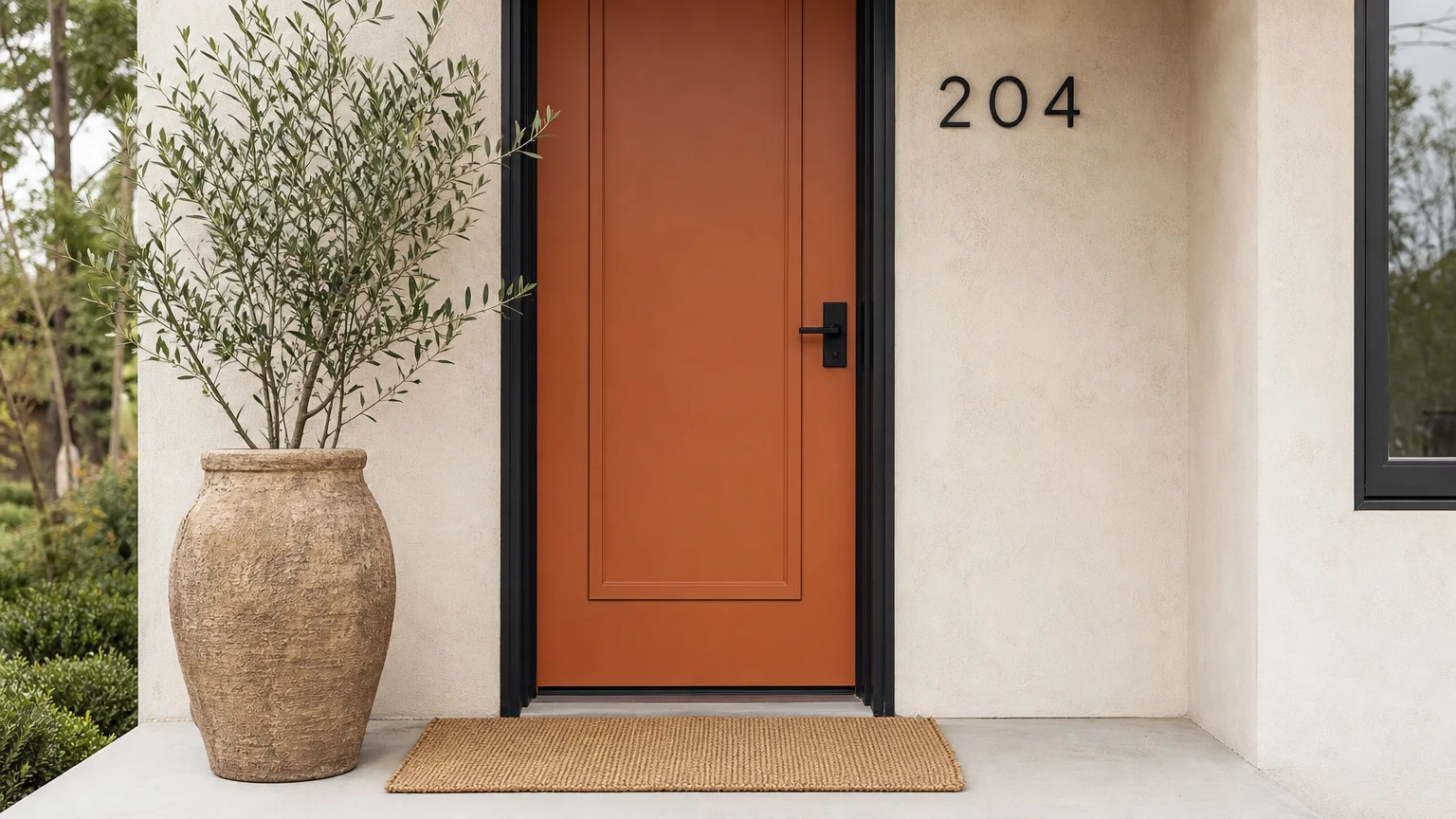
Moving away from the stark, cool grays of the last decade, warm earth tones are reclaiming the residential landscape. Terracotta bridges the difficult gap between cool-toned siding and warm-toned roofing materials like brown shingles or Spanish tile. It offers a Southwestern vibrancy that warms up a sterile white house and looks spectacular alongside oversized terracotta planters flanking the stoop.
8. Deep Plum
Plum is the most unexpected color on this list, yet it delivers unparalleled elegance. From the street, a deep aubergine or plum reads as a sophisticated, custom black. It is only as visitors walk up your path that the rich, purple-red undertones reveal themselves. This color flatters taupe, cream, and olive green exteriors perfectly. Pair a plum door with polished silver or polished nickel hardware to make the door look like a piece of fine jewelry.





Leave a Reply
You must be logged in to post a comment.