Tools, Materials, and Prep Checklist
Proper preparation separates a successful furniture revival from a frustrating ordeal. Before you begin sourcing or restoring vintage items, you must gather the correct supplies. Using harsh modern chemicals on aged finishes will destroy the patina and permanently devalue the piece. Assemble this toolkit to safely handle almost any vintage find.
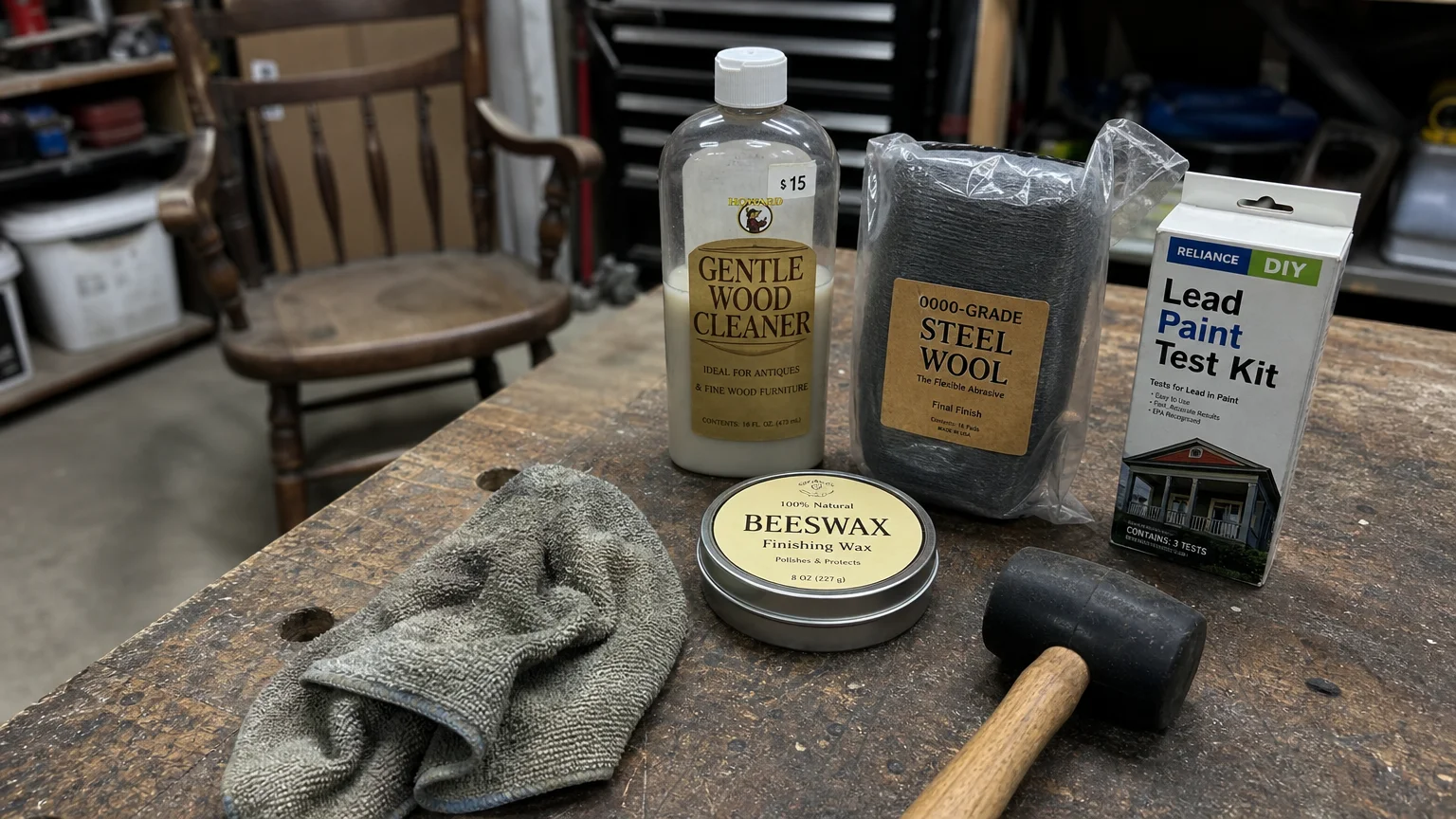
Gentle Wood Cleaner: $10 to $15. Skip silicone-based dusting sprays; they leave a cloudy buildup over time. Choose a soap-based wood cleaner formulated specifically for antique finishes.
Restoring Oil or Wax: $15 to $20. Feed dry wood with boiled linseed oil, teak oil, or high-quality beeswax. This prevents cracking and restores the natural depth of the grain.
Microfiber Cloths and Fine Steel Wool: $15. Use microfiber for daily wiping and 0000-grade extra-fine steel wool for gently buffing out superficial water rings or light scratches.
Lead Paint Test Kits: $15. Safety always comes first. Older painted pieces may contain hazardous lead. Always test the surface before you attempt any sanding or scraping.
Upholstery Extractor or Steam Cleaner: $100 to $150 to purchase, or $40 to rent. Decades of dust and odors require professional-grade extraction, especially for heavy velvet or woven fabrics.
Basic Hand Tools: $30. You need flathead and Phillips screwdrivers, pliers, and a rubber mallet to tighten loose hinges, adjust drawer glides, and tap loose joints back into place.
When inspecting a potential project piece, check the structural integrity first. Wiggle the legs, pull the drawers, and look underneath for signs of rot or active insect damage. Termite trails or tiny piles of sawdust indicate an active infestation. Leave those pieces behind unless you plan to hire a professional exterminator. If the structural bones remain solid, you can easily tackle the cosmetic restoration.