
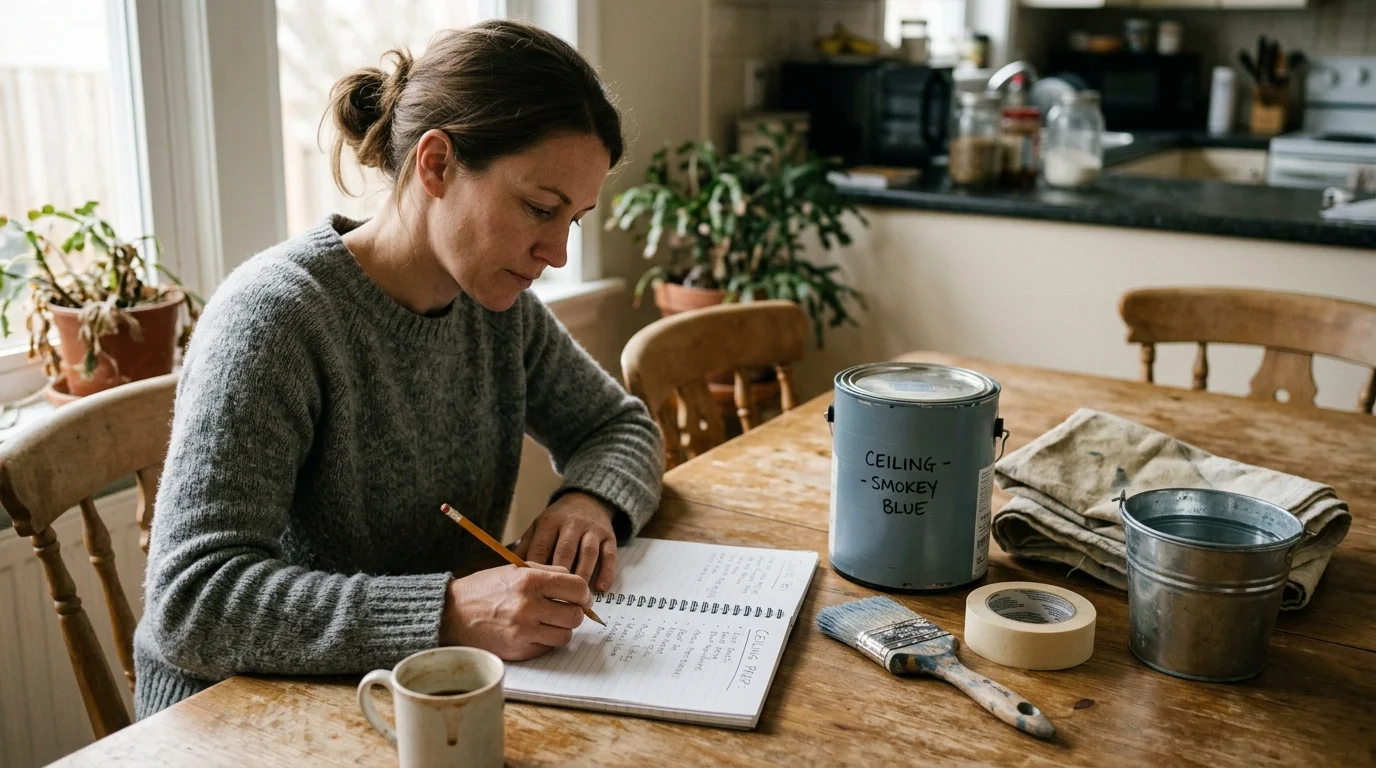
Tools, Materials, and Prep Checklist
To execute this project flawlessly, you must gather specific tools and materials before you ever pry open a paint can. Success relies entirely on your preparation, and using the right equipment prevents physical fatigue and sloppy results. Your primary purchase involves premium interior paint; budget approximately fifty to seventy dollars for a high-quality gallon that includes a built-in primer. Always buy an extra quart if you plan to cover heavy textures, as popcorn or heavily stippled ceilings absorb significantly more product than smooth drywall.
Next, invest in a sturdy fiberglass extension pole. A quality pole usually costs around twenty-five dollars and saves your back, neck, and shoulders from the extreme fatigue of climbing up and down a step ladder every few minutes. You also need a heavy-duty, nine-inch roller frame and two three-eighths-inch nap microfiber roller covers. Microfiber covers hold an exceptional amount of paint to ensure smooth, continuous coverage while minimizing the annoying micro-splatters that traditional woven covers tend to spray across the room.
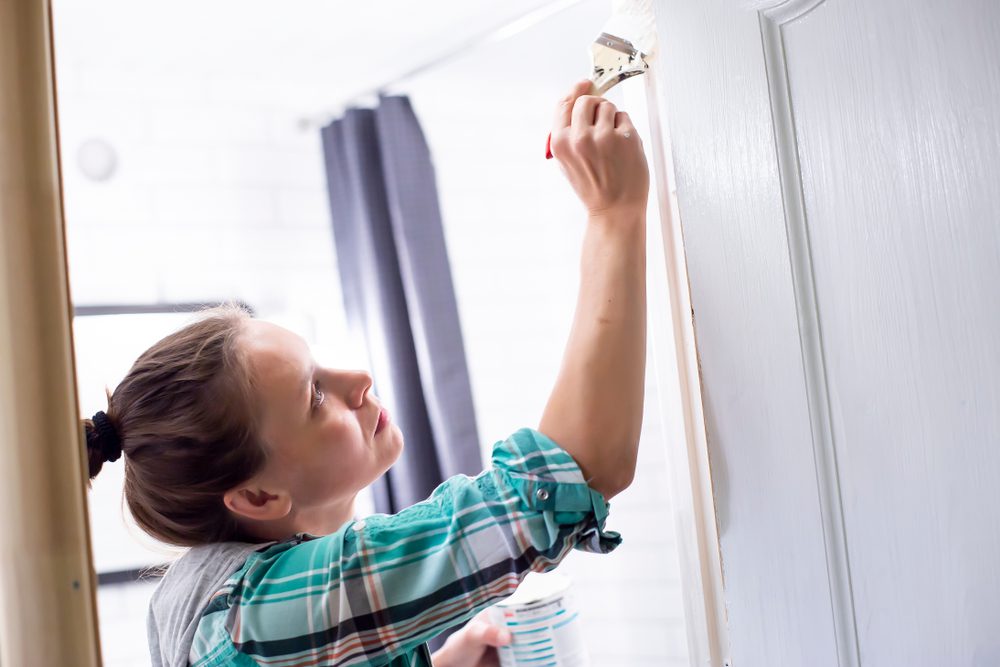
For precise edges where the ceiling meets your existing walls, purchase a two-and-a-half-inch angled synthetic sash brush. Do not forget your safety gear; wrap-around safety goggles protect your eyes from inevitable drips, and a lightweight N95 dust mask keeps your lungs clear if you need to sand any rough patches. If your home was built before 1978, you must verify the absence of lead paint before disturbing the surface, following guidelines from the Environmental Protection Agency to keep your family safe.
Finally, secure heavyweight canvas drop cloths to protect your flooring, alongside three rolls of high-quality painter tape to mask off your crown molding and light fixtures. Plastic drop cloths pose a severe slip hazard when draped over hard flooring, so always spend the extra ten dollars on absorbent canvas alternatives. Grab a wide spackle knife, a small tub of lightweight patching compound, and a medium-grit sanding sponge to repair any minor cracks or nail pops before you apply the first coat of color.






Leave a Reply
You must be logged in to post a comment.