
Step-by-Step Instructions
Protecting your kitchen requires strict adherence to daily safety protocols. You must permanently banish the following six items from your microwave to prevent permanent equipment damage, toxic chemical contamination, and dangerous explosions.
1. Keep Aluminum Foil and Metal Trim Out
Metal surfaces reflect electromagnetic waves rather than absorbing them. When you place a piece of aluminum foil, a stainless steel fork, or a plate adorned with a metallic gold rim into the heating chamber, the waves bounce erratically off the shiny material. This violent reaction causes electrons to accumulate rapidly on sharp edges or creases, eventually jumping through the air and creating intense electrical sparks—a phenomenon known as arcing.
Arcing instantly burns the interior plastic walls of your appliance and stands as a leading cause of kitchen appliance fires. Even a tiny staple left behind on a takeout tea bag can ignite dry paper within seconds. Always transfer your meals to appropriate glass or ceramic dishes before touching the start button, and meticulously inspect older dishware for hidden metallic paint.
2. Ditch the Styrofoam Takeout Containers
Expanded polystyrene, commonly known as Styrofoam, offers excellent insulation for transporting hot food from a restaurant to your dining table. However, it lacks the structural integrity required to survive an electromagnetic heating cycle. Styrofoam melts at relatively low temperatures compared to the boiling point of the food it holds.
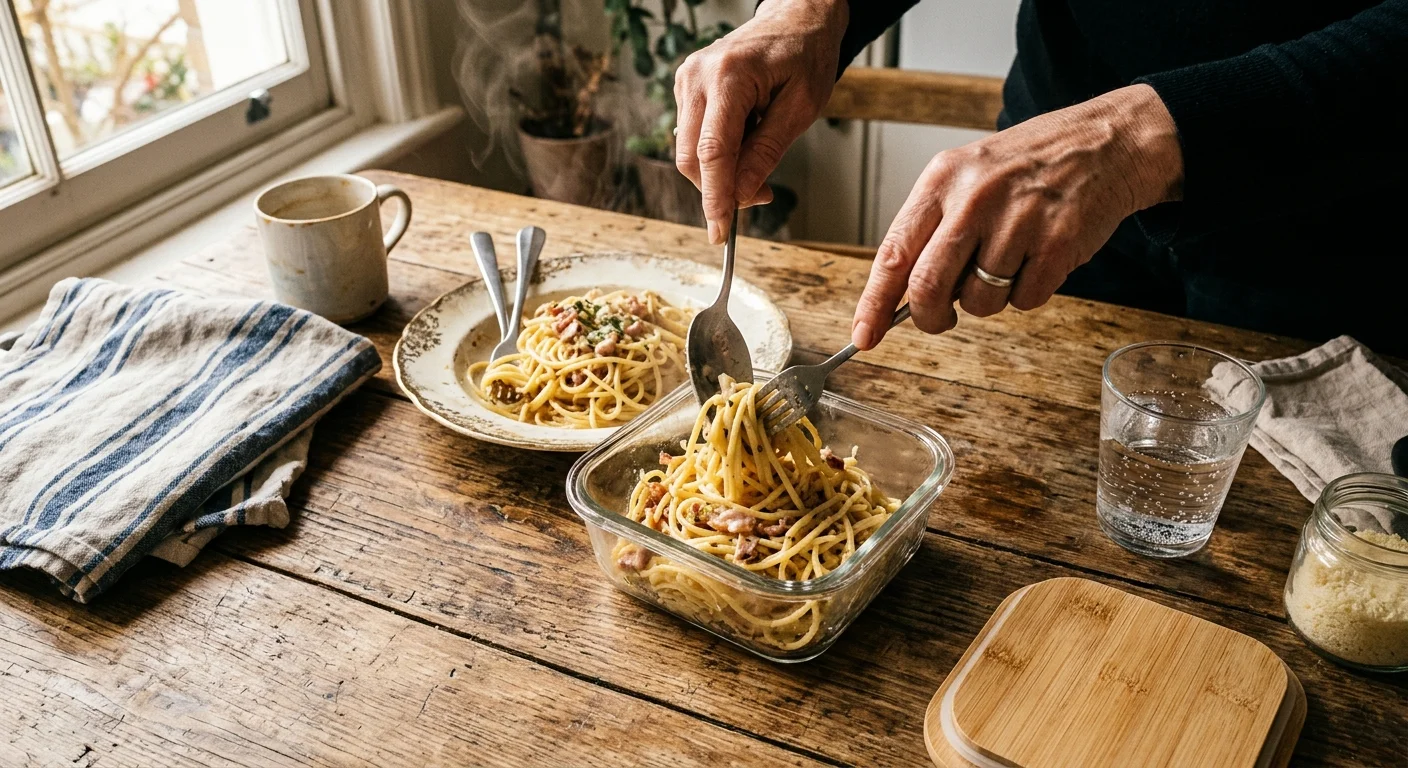
When the fats and sugars in your leftovers heat up rapidly, they melt right through the bottom of the container, creating a sticky, ruined mess on your turntable. More importantly, as the material degrades, it releases styrene gas and other harmful toxins directly into your meal. Always take the extra thirty seconds to move your restaurant leftovers onto a ceramic plate; your health and your taste buds will thank you.
3. Ban Single-Use Plastics and Grocery Bags
You might think a quick ten-second blast to warm up a pastry inside a plastic grocery bag is harmless, but single-use plastics degrade instantly under electromagnetic radiation. Thin plastics, like yogurt tubs, butter containers, and grocery bags, warp, melt, and ignite with alarming speed.
Furthermore, heating food in unauthorized plastic containers accelerates the leaching of bisphenol A (BPA) and phthalates into your dinner. These industrial chemicals disrupt the human endocrine system and compromise long-term health. Look strictly for heavy-duty plastics explicitly stamped with a microwave-safe icon, or better yet, transition entirely to glass storage solutions to eliminate this risk completely.
4. Never Heat Insulated Travel Mugs
When your morning coffee goes cold in a stainless steel travel mug, placing it in the microwave seems like a logical quick fix. You must resist this urge immediately. The stainless steel exterior acts as a highly effective shield, completely blocking the electromagnetic waves from reaching the cold liquid inside.
Because the liquid cannot absorb the energy, the waves bounce relentlessly around the chamber. They ultimately deflect back into the magnetron itself. This causes the internal components to overheat and short-circuit, potentially destroying a $300 appliance in less than two minutes. Pour your beverage into a standard ceramic mug, heat it to your desired temperature, and pour it safely back into your insulated travel container.
5. Avoid Running the Appliance Empty
Perhaps you accidentally brushed against the control panel, or perhaps a child pressed the start button out of curiosity. Running a microwave without anything inside serves as one of the fastest ways to destroy it completely. The appliance relies on water molecules to absorb the energy it generates.
When the chamber sits completely empty, the waves have zero targets. They bounce off the internal metal walls and shoot directly back into the magnetron. This intense feedback loop overheats the delicate internal machinery almost instantly, causing a catastrophic failure that requires a professional repair or a total unit replacement. Always keep the door open or unplug the unit if you suspect your control board is malfunctioning and starting the appliance randomly.
6. Stop Cooking Whole Eggs in the Shell
Social media platforms frequently showcase viral cooking hacks, but boiling eggs in the microwave ranks among the most dangerous kitchen tips on the internet. As the raw egg heats up, the moisture inside the yolk and egg white rapidly turns into steam. The dense outer shell acts exactly like a miniature pressure cooker with a locked release valve.
Because the steam has absolutely nowhere to escape, pressure builds until the shell violently ruptures. This explosion often happens inside the appliance, forcing you to scrub hardened egg bits out of every vent and crevice. Even worse, the egg might wait to explode until you pierce it with a fork on your plate, sending scalding hot steam and shrapnel into your face and hands. Stick to the stovetop for hard-boiled eggs.






Leave a Reply
You must be logged in to post a comment.