
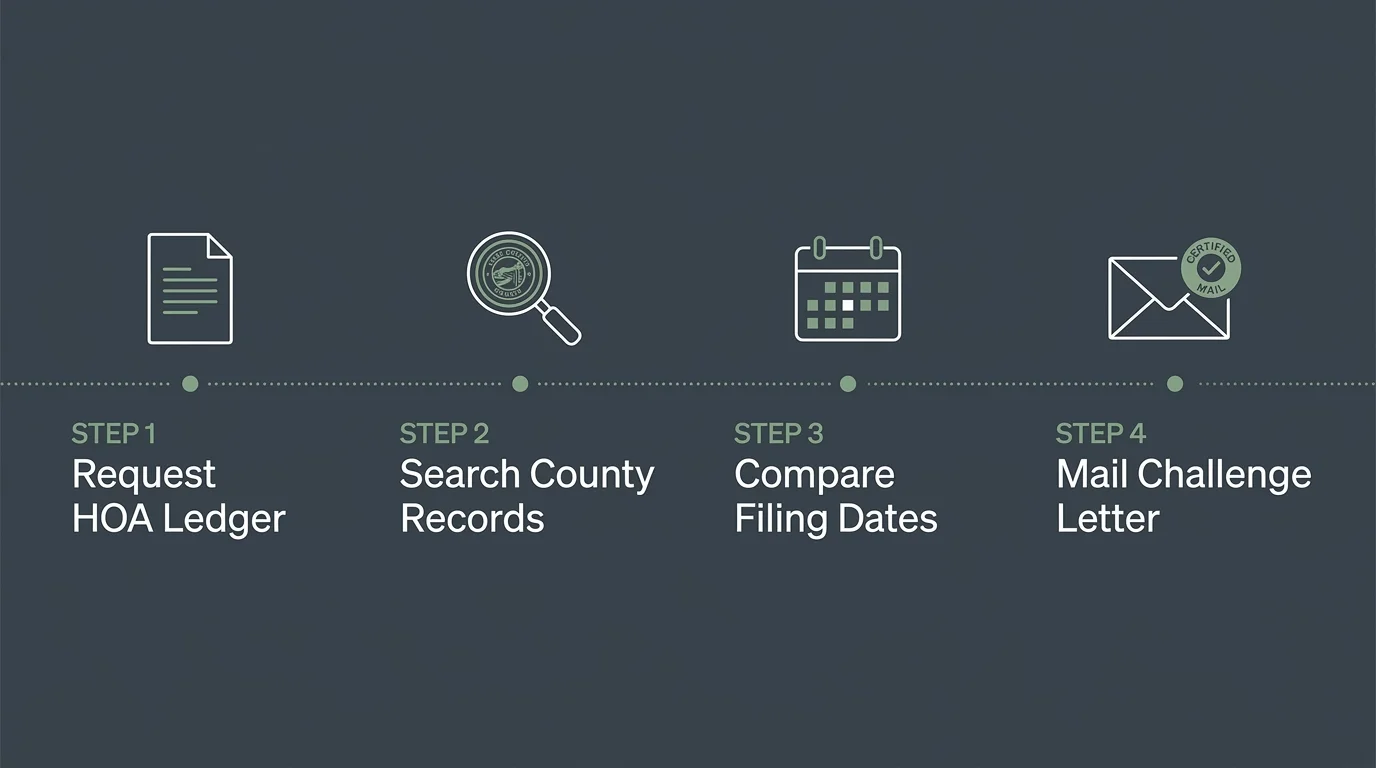
Step-by-Step Instructions
Disputing unauthorized charges requires a methodical approach. Follow these phases to dismantle improper fees and force your association to comply with the law.
Phase 1: Secure the Official County Records
Do not rely on the PDF your property manager emails you or the booklet they handed you at closing. Navigate to your county clerk’s official website and access the public records database. Type in the legal name of your homeowners association. Download the original Master Deed or CC&Rs, plus every single amendment filed since the community’s inception. Look closely at the margins of these documents; valid documents feature a time-stamped barcode or a formal seal from the county recorder. If a collection policy or fee schedule lacks this official county stamp, it is not legally recorded.
Phase 2: Cross-Reference the Homeowners Association Rules
Print the documents your HOA sent you regarding your debt and place them side-by-side with the county-stamped documents. Read the sections pertaining to HOA collections and delinquent accounts. You are looking for discrepancies. Did the board send you a 2024 policy that claims they can charge 18% interest, but the county records only show a 2010 document capping interest at 10%? If the new policy never made it to the county clerk, they cannot legally enforce the 18% rate. Highlight these missing links.
Phase 3: Audit Your Ledger
Review the payment ledger provided by the management company. Identify the exact date your account became past due. Calculate the base assessment amount you actually owe. Then, highlight every line item labeled as a late fee, collection cost, interest charge, or legal fee. Compare these charges against the officially recorded documents. If the recorded documents do not explicitly grant the association the right to recover HOA attorney fees for collections, they cannot legally pass their lawyer’s bills on to you.
Phase 4: Draft and Send the Dispute Letter
Write a formal, emotionless letter addressed to the HOA board of directors and the property management company. State clearly that you are disputing the validity of the interest and legal fees added to your account. Cite the specific missing filings. For example, state: “According to the county clerk’s records, the collection policy enacting these attorney fees was never legally recorded, rendering these specific charges unenforceable.” Offer to pay the undisputed base assessments immediately to resolve the issue. Mail this letter via certified mail with a return receipt requested.
Safety and Legal Callout: If you receive a formal lawsuit, a summons, or a notice of foreclosure, do not attempt to handle the process entirely on your own. Deadlines in foreclosure actions are absolute. Hire a local real estate attorney who specializes in HOA defense immediately to ensure you do not lose your home while disputing the fees.









Leave a Reply
You must be logged in to post a comment.