
Step-by-Step Instructions
Transforming your laundry routine requires knowing exactly when and how to deploy this powerful household acid. Follow these eleven practical methods to utilize vinegar in laundry for maximum cleanliness and fabric preservation.
1. Replace Your Fabric Softener
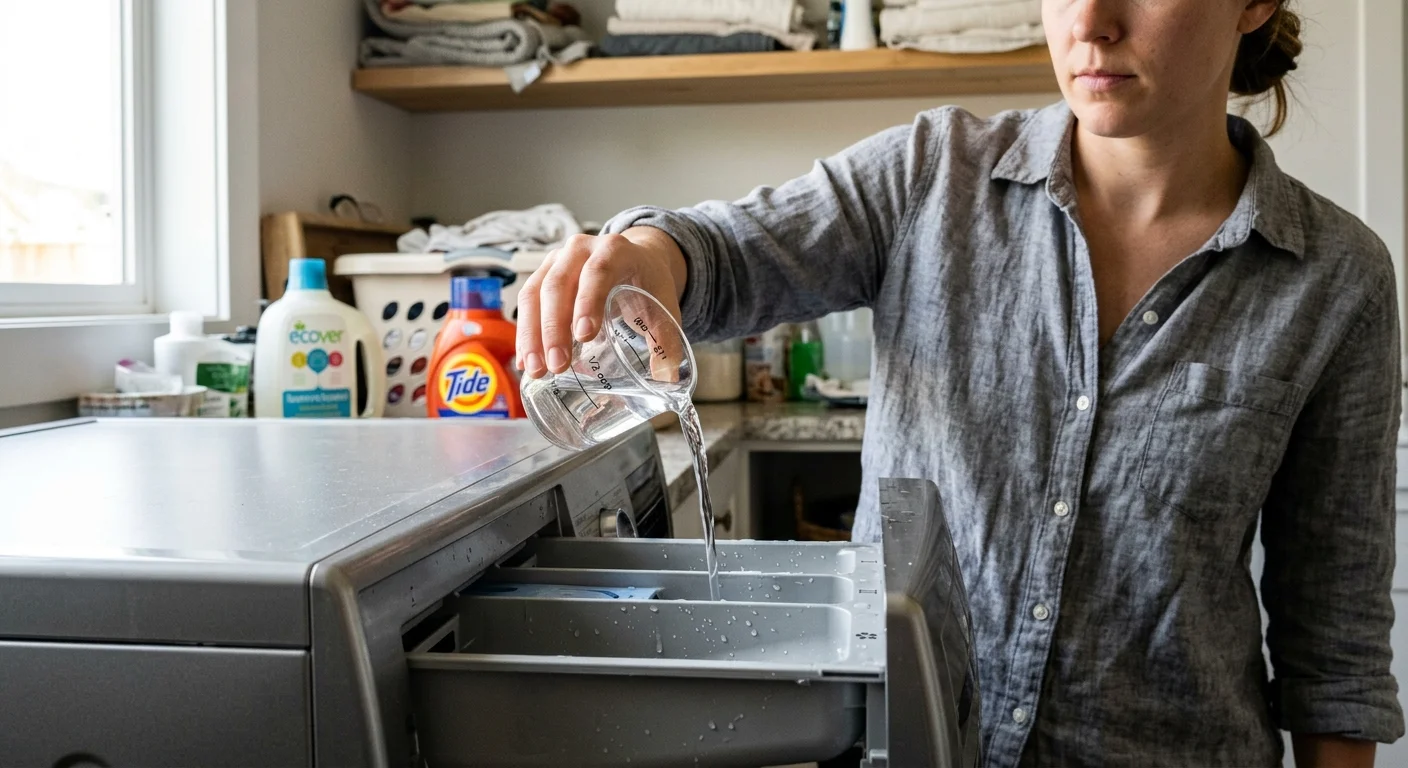
Commercial fabric softeners coat your clothes in a slick, water-resistant film. This residue makes towels less absorbent and traps bacteria in synthetic workout gear. Pour one-half cup of distilled white vinegar into your washing machine’s designated fabric softener dispenser. The vinegar releases during the final rinse cycle, stripping away detergent residue and leaving your clothes naturally soft. The faint vinegar scent dissipates entirely as the garments dry.
2. Banish Mildew Odors from Towels
Damp towels left in a hamper or a poorly ventilated bathroom quickly develop a sour, musty smell that regular detergent cannot remove. To fix this, place the offending towels in the washing machine and add one full cup of white vinegar directly to the drum. Run a complete wash cycle using hot water without any detergent. Once finished, run a second hot water cycle using one-half cup of baking soda. This two-step process destroys the mildew spores and restores the fresh scent of your linens.
3. Brighten Dull Whites
Chlorine bleach weakens fabric fibers and often turns white clothing yellow over time. You can safely brighten your white garments by adding one-half cup of vinegar to the wash cycle. For heavily soiled white socks or dingy undershirts, boil a large pot of water, add one cup of vinegar, remove the pot from the heat, and soak the garments overnight before washing them normally.
4. Erase Yellow Underarm Stains
Deodorant builds up on clothing fibers and reacts with body salts to create stubborn yellow stains on the armpits of white shirts. Spray undiluted white vinegar directly onto the stained area. Let the liquid saturate the fabric for ten minutes; then, gently scrub the area with a soft-bristled brush. Wash the shirt immediately. The mild acid dissolves the aluminum compounds found in antiperspirants.
5. Reduce Lint and Pet Hair Cling
Static electricity causes pet hair and environmental lint to weld themselves to dark clothing. The acetic acid in vinegar naturally reduces static charge within fabrics during the rinse cycle. Add one-half cup of vinegar to your rinse dispenser. Your clothes will emerge from the dryer with significantly less static cling, allowing pet hair to easily detach and fall into the dryer’s lint trap.
6. Restore the Color of Dark Clothes
Black jeans and navy sweaters often look faded not because they have lost dye, but because they are coated in microscopic layers of soap scum. Adding one-half cup of vinegar to the final rinse cycle dissolves this cloudy alkaline residue, revealing the original, deep colors of your dark clothing.
7. Clean the Washing Machine Itself
A dirty washing machine transfers grime and musty smells right back onto your clothes. Every three months, pour two cups of white vinegar directly into your empty washing machine drum. Run the machine on its hottest, longest cycle. The heated vinegar dissolves hard water scale, breaks down trapped soap scum, and flushes out the hidden drain lines.
8. Eliminate Smoke Odors
Whether you spent the weekend at a smoky campfire or visited a cigar lounge, smoke odors embed themselves deeply into fabric weaves. Add one full cup of vinegar to your standard wash cycle to neutralize the carbon particles causing the smell. For dry-clean-only items, hang the garment in a closed bathroom, place a bowl of undiluted vinegar on the floor, and let the ambient evaporation absorb the smoke odors overnight.
9. Soften Stiff New Denim
Manufacturers treat new jeans with heavy starches and chemical sizing agents to keep them crisp during shipping. These chemicals make the denim feel stiff and abrasive. Submerge your new jeans in a cold water bath mixed with one cup of white vinegar for one hour before their first wash. This process breaks down the chemical sizing, softens the cotton fibers, and helps lock in the indigo dye to prevent premature fading.
10. Hand-Wash Delicate Fabrics Safely
Harsh alkaline detergents easily ruin expensive silks, delicate lace, and thin wools. Create a gentle hand-washing bath by mixing one teaspoon of a mild, EPA-certified gentle detergent and two tablespoons of white vinegar into a basin of lukewarm water. The vinegar ensures the detergent rinses out cleanly without requiring aggressive wringing or agitation that could stretch delicate seams.
11. Create a Wrinkle-Release Spray
Skip the expensive, heavily perfumed ironing sprays. Mix one part distilled white vinegar with three parts water in a glass spray bottle. Lightly mist this solution over wrinkled garments and gently tug the fabric taut. As the garment hangs and dries, the wrinkles will naturally fall out. This trick works exceptionally well for cotton button-down shirts and linen trousers when you are traveling and lack access to a proper iron.









Leave a Reply
You must be logged in to post a comment.