
Tools, Materials, and Prep Checklist
Executing a flawless paint job requires gathering the right supplies before you open a single can of paint. Professional painters know that preparation accounts for eighty percent of a successful project. Below is your comprehensive shopping list and budget guide for a standard residential hallway.
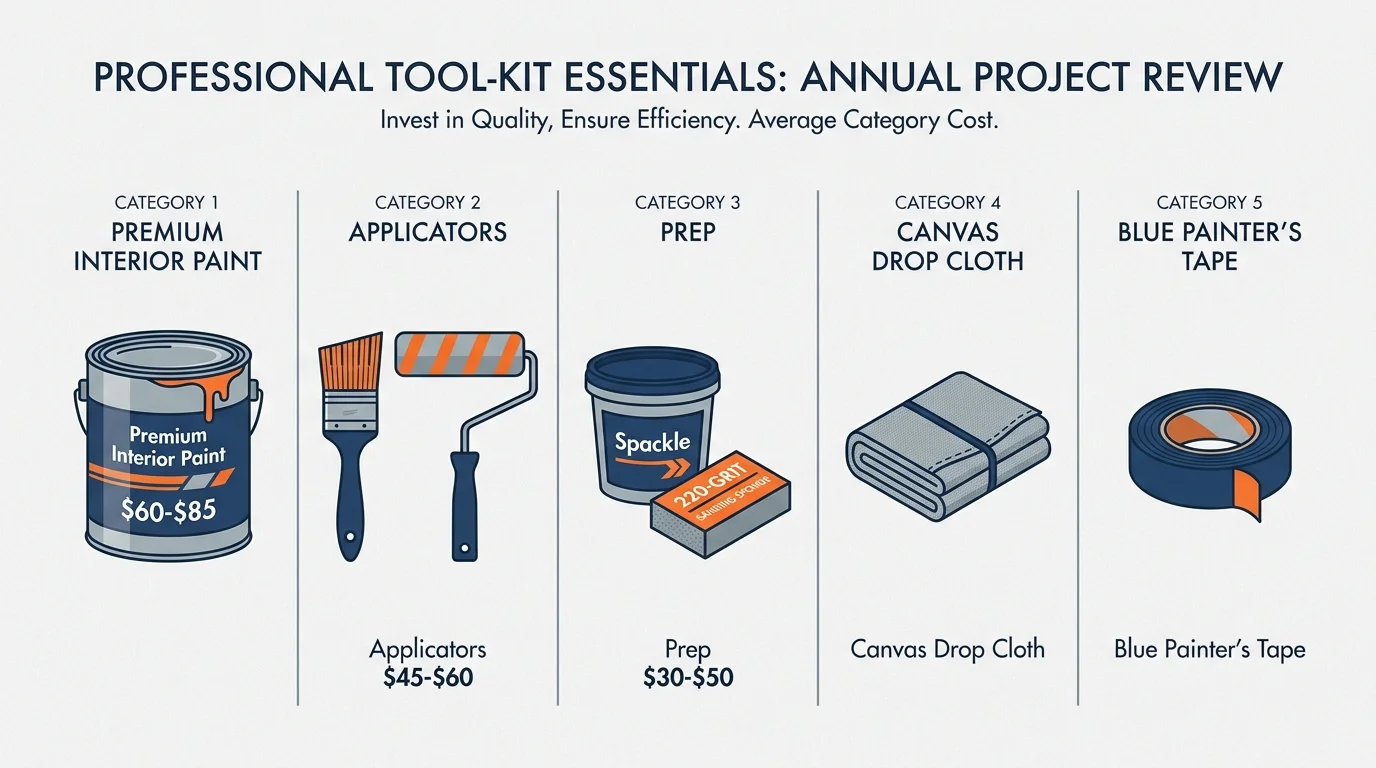
Premium Interior Paint ($60—$85 per gallon): You need roughly two gallons for an average hallway, depending on the length and ceiling height. Opt for a 100-percent acrylic latex formula in an eggshell or satin finish. These sheens offer the perfect balance between hiding drywall imperfections and resisting scuffs.
High-Quality Bonding Primer ($25—$40 per gallon): Never skip the primer in a high-traffic zone. One gallon provides ample coverage for most hallways. Primer ensures proper adhesion, seals old stains, and provides a neutral base so your new color shows its true hue.
Applicators and Brushes ($45—$60 total): Purchase a 2.5-inch angled synthetic bristle brush for cutting in along baseboards and door frames. You also need a sturdy 9-inch roller frame and three high-density, 3/8-inch nap roller covers to apply the paint smoothly without leaving a heavy orange-peel texture.
Patching and Prep Materials ($30—$50 total): Invest in a tub of lightweight spackle, a flexible putty knife, and several 220-grit sanding sponges. You need reliable painter’s tape to protect trim and door hinges. Buy two heavy-duty canvas drop cloths rather than cheap plastic tarps; canvas stays firmly in place on hard floors and absorbs accidental spills.
Cleaning Supplies ($15 total): Grab a mild degreasing soap, a bucket, and a few microfiber cloths. Paint refuses to adhere to greasy handprints or pet dander, making a thorough wall wash non-negotiable.
Safety Gear and Precautions: Pick up a well-fitting dust mask or N95 respirator for the sanding phase, plus safety goggles to protect your eyes from falling paint splatter when rolling near the ceiling. If your home was built before 1978, you must test existing surfaces for lead paint. Disturbing lead paint poses severe health risks, so always consult the EPA guidelines on lead safety before sanding old walls.





Leave a Reply
You must be logged in to post a comment.