
Tools, Materials, and Prep Checklist
Successful tile installations rely entirely on thorough preparation and the right equipment. Attempting to cut corners on tools or substrate materials guarantees a frustrating experience and a substandard finish. You must gather all your supplies before demolition begins so you maintain momentum throughout the project. The following items represent the essential toolkit for handling 2027’s advanced tile materials safely and efficiently.
Essential Tools: Rent a high-capacity, diamond-blade wet saw for approximately $50 to $70 per day to execute precise, chip-free cuts on dense porcelain. You need a reliable angle grinder equipped with a diamond continuous-rim blade for plunging cuts around plumbing fixtures. Purchase a heavy-duty mixing drill and a paddle attachment; mixing thick modified thin-set by hand causes fatigue and results in lumpy, inconsistent mortar. To handle large-format tiles, invest in heavy-duty vacuum suction cups—these run about $40 each and prevent catastrophic drops. Finally, secure a specialized tile leveling system containing reusable wedges and breakaway clips to eliminate edge lippage between oversized tiles.
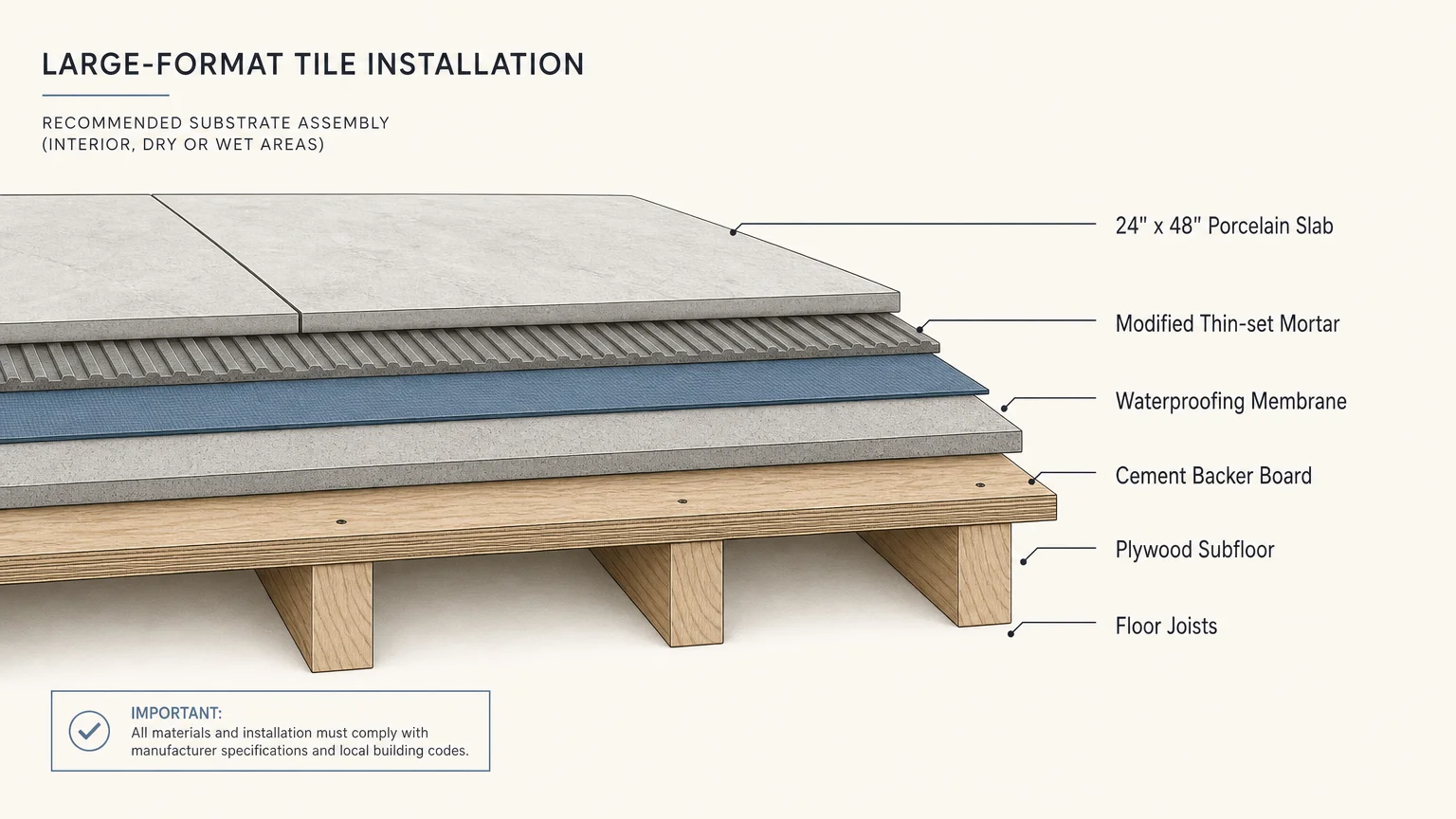
Required Materials: Calculate your square footage and order your chosen tile, adding an additional 15 percent to account for waste, cuts, and future repairs. You need waterproof cement backer board or a dense foam backing system for your wall substrates, costing roughly $15 to $25 per sheet. Purchase uncoupling membrane rolls for the floor to prevent foundation shifts from cracking your new tile. Select a premium, polymer-modified thin-set mortar designed explicitly for large and heavy tiles; expect to spend around $25 per 50-pound bag. Finally, choose an epoxy or advanced urethane grout, as these formulas resist stains and never require sealing.
Preparation and Safety Checklist: First, wear a NIOSH-approved respirator and safety goggles whenever cutting tile or mixing mortar to protect your lungs from hazardous silica dust. Shut off the main water supply and drain your pipes before removing old plumbing fixtures. Strip the existing walls down to the bare studs to inspect for hidden mold, wood rot, or compromised framing. Verify your walls are perfectly plumb and your floors are level; if they deviate by more than 1/8 inch over a 10-foot span, apply a self-leveling underlayment. Smooth, structurally sound framing forms the mandatory foundation for any modern tile ideas you plan to implement.






Leave a Reply
You must be logged in to post a comment.