
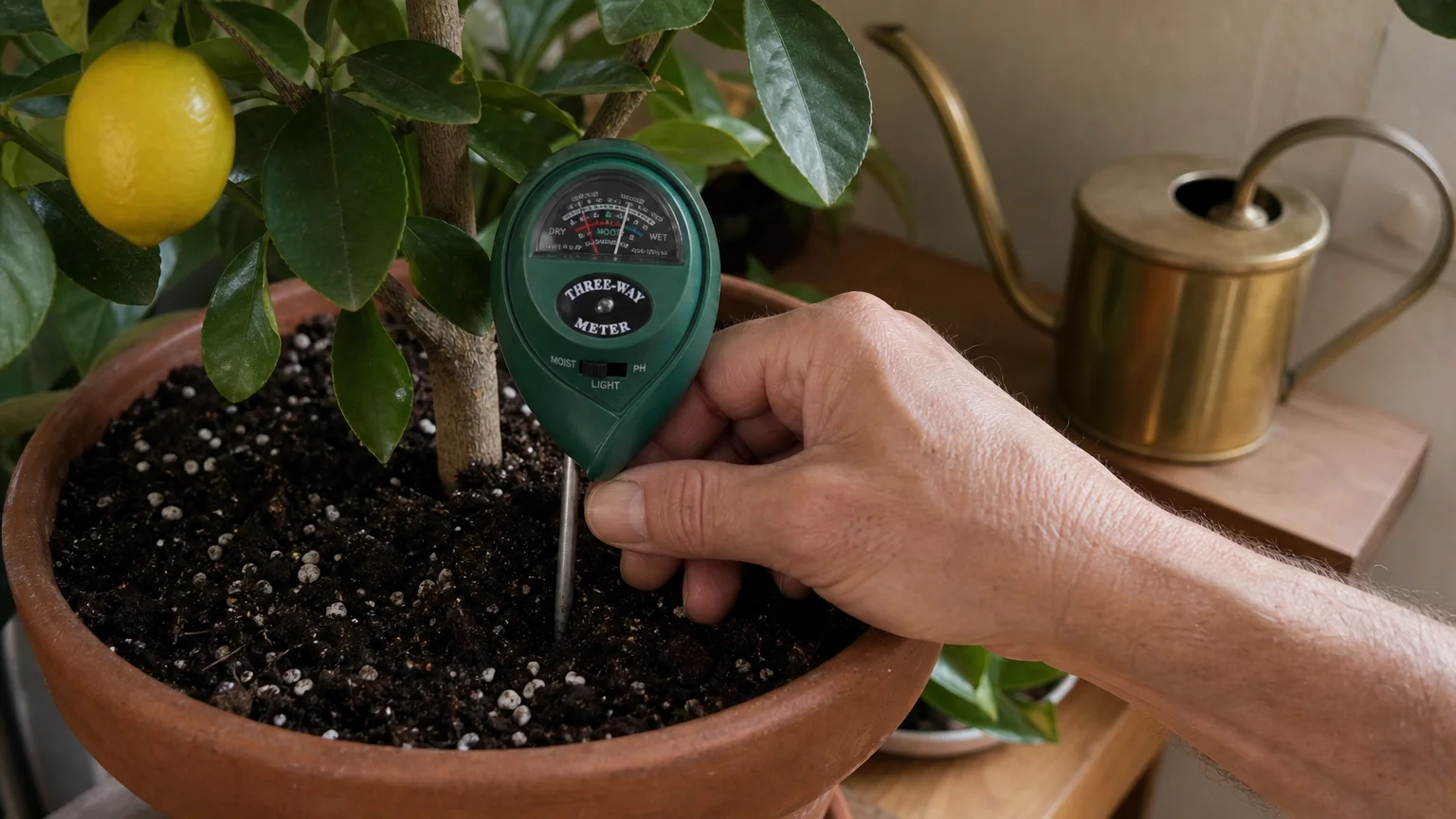
Maintenance & Long-Term Care
Keeping an indoor fruit harvest productive requires consistent, proactive maintenance. Pruning is your most powerful tool for managing size and encouraging robust fruit production. Use clean, sharp bypass pruning shears to remove dead, crossing, or weak branches. Trimming away dense inner foliage allows vital light and air to penetrate the center of the canopy. Always make your cuts at a 45-degree angle just above a leaf node. Do your heavy pruning in the early spring before the plant expends energy pushing out new growth.
Pest management demands vigilance, as indoor environments lack natural predators like ladybugs. Inspect the undersides of leaves weekly for common indoor pests like spider mites, aphids, or scale. If you spot fine webbing or sticky residue, isolate the plant immediately. Treat the infestation by wiping the leaves with a damp cloth and thoroughly spraying the foliage with organic neem oil or an insecticidal soap. Keep fungus gnats at bay by allowing the top layer of soil to dry out completely between watering sessions.
As your trees mature, they will eventually outgrow their containers. You must repot them every two to three years. Move them into a container just two inches wider than the current one. Upgrading to a massively oversized pot encourages the soil to stay wet too long, inviting root rot. If you prefer to keep the plant in its existing decorative pot, you can perform root pruning—trimming away the outer two inches of the root ball and replenishing the container with fresh, nutrient-dense potting soil.



Leave a Reply
You must be logged in to post a comment.