
Step-by-Step Instructions
Applying these clever home tips transforms tedious chores into quick, satisfying victories. Follow these detailed methods to maximize the utility of your wax paper across every room in your house.
1. Restore the Glide to Antique Wooden Drawers
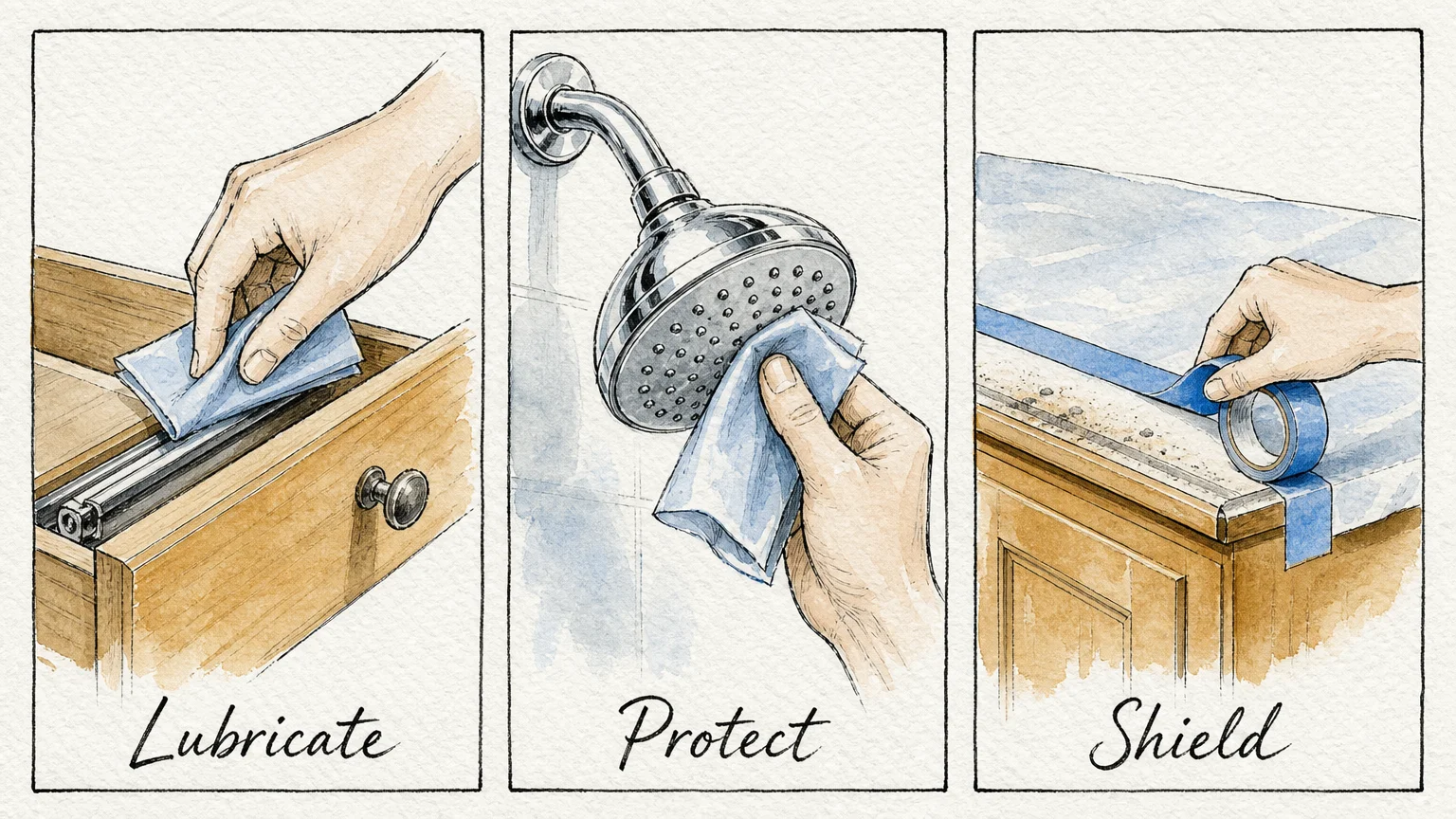
Wooden drawers in older dressers and cabinets frequently swell with seasonal humidity changes, causing them to bind and screech. Empty the drawer completely and pull it out of the furniture frame. Wipe the wooden tracks and the bottom runners of the drawer with a damp cloth, then let the wood dry entirely. Crumple a sheet of wax paper tightly to create a sturdy pad. Vigorously rub the wadded paper along the wooden tracks and runners. The friction melts a microscopic layer of paraffin into the wood grain, creating a slick, dry surface that restores a smooth, silent glide without attracting dust.
2. Banish Hard Water Spots on Bathroom Fixtures
Chrome and brushed nickel faucets accumulate unsightly hard water stains almost immediately after you clean them. Eliminate this daily frustration by applying a preventative wax barrier. First, clean the fixture using a vinegar solution to dissolve existing mineral deposits. Dry the metal thoroughly with a microfiber towel. Tear off a small sheet of wax paper and polish the metal exactly as you would with a buffing cloth. The transferred wax repels water droplets, forcing them to roll off into the sink rather than drying on the metal and leaving calcium deposits behind.
3. Shield Upper Cabinets from Airborne Grease
The space above your upper kitchen cabinets acts as a magnet for dust and atomized cooking oil, creating a sticky, stubborn grime that requires heavy-duty degreasers to remove. Bypass this chore completely by lining the cabinet tops. Measure the depth and width of your upper cabinets. Cut lengths of wax paper to fit, overlapping the seams by an inch. Secure the corners with small loops of painter’s tape. The paper catches all the airborne debris. Every six months, simply peel up the dirty paper, throw it away, and lay down a fresh layer.
4. Silence Squeaky Door Hinges Safely
Liquid lubricants stop hinge squeaks, but they frequently drip down the door frame, staining your baseboards and attracting pet hair. Wax paper provides a clean, dry alternative. Use a flathead screwdriver and a mallet to tap the metal pin out of the squeaking hinge. Wipe the pin clean to remove old grease and metal dust. Wrap a piece of wax paper tightly around the bare pin, applying firm pressure as you twist the pin back and forth. The steel absorbs the wax. Tap the pin back into the hinge barrel for immediate, mess-free silence.
5. Prevent Wood Glue from Ruining Your Workbench
Woodworking requires heavy clamps and generous amounts of wood glue, which inevitably drips onto your expensive workbench. Dried polyurethane or aliphatic resin glue ruins work surfaces. Before you begin your next glue-up, roll out a layer of wax paper across your work area. Tape down the edges so the paper stays taut. Wood glue cannot bond to the hydrophobic paraffin surface. Once your project cures, simply lift it off the workbench; any hardened glue drips peel away effortlessly with the paper.
6. Unstick Stubborn Outdoor Zippers
Patio furniture cushion covers and heavy canvas storage bags feature robust zippers that frequently bind up after exposure to rain and fluctuating temperatures. Forcing a stuck zipper usually breaks the pull tab. Instead, run the edge of a folded piece of wax paper up and down the metal or heavy plastic zipper teeth. Make sure to rub both the inside and outside tracks. The wax coats the interlocking mechanisms, allowing the zipper slider to glide smoothly without leaving behind an oily residue that could stain the fabric.
7. Line Paint Roller Trays for Zero-Cleanup Color Changes
Washing out plastic paint trays wastes water and dumps micro-plastics and acrylic polymers down your drain. Buying custom-fit disposable plastic liners adds unnecessary costs to your project. Cut a sheet of wax paper roughly twice the length of your paint tray. Press it firmly into the basin, smoothing it into the corners, and fold the excess over the exterior edges. Secure the overhanging paper to the outside of the tray with masking tape. Pour your paint directly onto the wax paper. The paper holds up perfectly against latex paint. When you finish, carefully un-tape the edges, bundle the wet paper around the leftover paint residue, and discard it.
8. Speed Up Your Manual Snow Shovel
Heavy, wet snow naturally sticks to the plastic or metal blade of your snow shovel, doubling the weight of every scoop and exhausting your lower back. Prevent this dangerous fatigue by winterizing your shovel. Bring the shovel inside and let the blade dry completely. Crumple a large sheet of wax paper and vigorously buff the entire front face of the shovel blade. The wax drastically reduces the surface tension, causing heavy, slushy snow to slide right off the blade as you toss it.
9. Lubricate Sticky Wooden Window Sashes
Double-hung windows featuring traditional wooden sashes often jam during the humid summer months. Prying them open risks shattering the glass. To ensure they operate safely in an emergency, open the window and clean the vertical side channels. Fold a sheet of wax paper several times to create a stiff, thick pad. Rub this pad aggressively up and down the wooden window tracks. The dry wax lubricates the wood without expanding the grain, allowing the sash to slide effortlessly.
10. Smooth Out a Scorched Clothes Iron
If you accidentally iron over a synthetic fabric or a printed decal using high heat, the melted material binds to the metal soleplate of your iron, creating a rough surface that snags delicate clothing. Turn your iron to its lowest heat setting and disable the steam function. Sprinkle a tablespoon of coarse sea salt onto a large sheet of wax paper. Run the warm iron over the salted paper in circular motions. The salt acts as a gentle abrasive to scour away the melted debris, while the wax re-coats and smoothes the metal plate.
11. Protect Hardwood Floors During Heavy Furniture Moves
Dragging heavy bookcases, sofas, or credenzas across hardwood floors guarantees deep gouges and expensive refinishing bills. If you do not own felt furniture sliders, wax paper works perfectly in a pinch. Cut thick, multi-layered squares of wax paper. Lift each corner of the furniture piece and slide a wax paper square underneath, positioning the waxy side face down against the floor. The paraffin significantly reduces the friction coefficient, allowing you to gently push the heavy item across the room without leaving a single scratch on the clear coat.
12. Prevent Garden Tool Rust During Winter Storage
Carbon steel garden shears, shovels, and hand trowels succumb to rust rapidly if stored in a damp shed or unheated garage over the winter. Protect your investment by sealing the metal. Wash your tools to remove dirt and sap, then dry them completely. Rub a fresh sheet of wax paper over all the exposed metal surfaces. The wax deposits a micro-thin, waterproof seal over the steel, blocking atmospheric moisture and preventing oxidation until spring arrives.
13. Quiet Squeaking Closet Rods
Sliding metal coat hangers across a wooden closet dowel produces a harsh, vibrating screech that echoes through the bedroom. You can silence this daily annoyance in less than a minute. Run a piece of wax paper firmly along the top ridge of the wooden closet rod. The wax fills the microscopic pores in the wood, creating a smooth barrier that allows the metal hanger hooks to glide silently across the dowel.





Leave a Reply
You must be logged in to post a comment.