
Maintenance & Long-Term Care
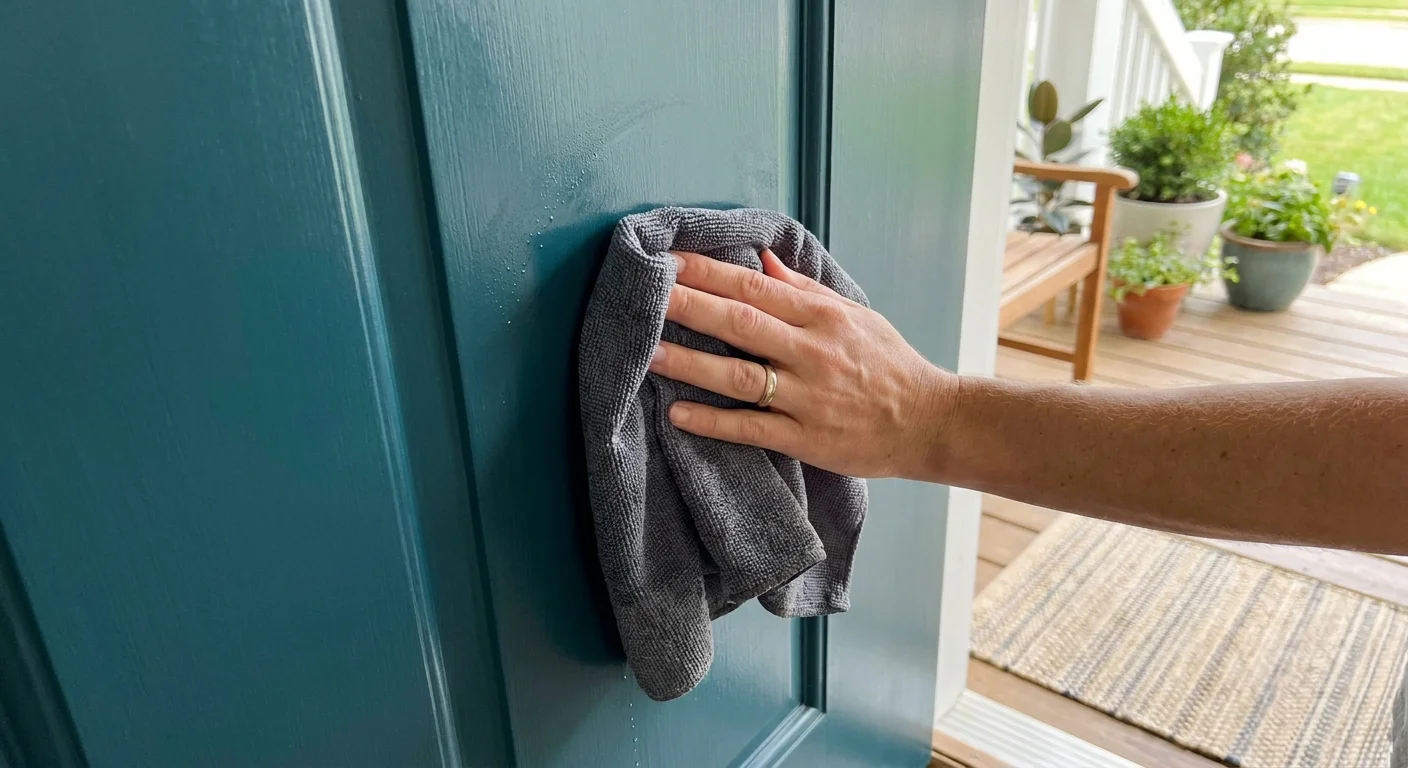
Protecting your exterior investment requires minimal but consistent upkeep. Once your paint fully cures—a chemical process that can take up to thirty days—you must establish a routine cleaning schedule to preserve the vibrant finish.
Wash the door twice a year using a gentle solution of warm water and mild dish soap; avoid abrasive chemical cleaners that strip the protective clear coat and dull the paint sheen. Use a soft sponge to wipe down the panels and a clean microfiber cloth to dry the surface completely, preventing hard water stains from forming.
Seasonal temperature fluctuations cause wood and fiberglass doors to expand and contract, which can occasionally lead to micro-cracking at the joints. Inspect the structural integrity of your door every spring and fall.
If you notice tiny hairline cracks in the paint, clean the area and apply a small touch-up using an artist’s detailing brush to prevent moisture infiltration. Addressing these minor blemishes immediately stops wood rot before it takes hold.
Furthermore, inspect the weather stripping around the frame. The Energy Star program emphasizes that replacing worn seals not only protects your interior from drafts and lowers energy bills but also prevents the door from heavily rubbing against the jamb and chipping your fresh paint job. By dedicating just ten minutes to seasonal maintenance, your standout color will maintain its flawless factory finish for years to come.
FAQ
Does my front door need to match my window trim?
No, your front door does not need to match the surrounding trim. In fact, painting the door a contrasting color creates a distinct focal point that dramatically enhances your overall curb appeal. Many designers recommend keeping the trim a neutral shade, like bright white or soft cream, to frame the doorway and allow the bold door color to take center stage.
Should I paint both the inside and outside of the door the same color?
Homeowners frequently choose entirely different colors for the interior and exterior of the door. The exterior color should complement your facade and landscaping, while the interior color should align seamlessly with your interior entryway decor. You can easily transition the paint colors along the inside edge of the door so the exterior hue only shows when the door is closed from the outside.
What finish is best for an exterior door?
Semi-gloss and satin finishes perform best on exterior doors. Semi-gloss provides a highly durable, easy-to-clean surface that highlights architectural details and stands up well to frequent physical handling. Satin offers a slightly softer sheen that hides surface imperfections better than high-gloss options, making it ideal for older doors that carry minor dents or dings.
Do I really need to use primer if my paint claims to be a paint-and-primer-in-one?
Yes, you absolutely should use a dedicated exterior primer. While combination products save time on interior bedroom walls, front doors endure extreme temperature shifts, harsh ultraviolet radiation, and constant physical contact. A separate, high-quality primer ensures maximum adhesion, prevents the old underlying color from bleeding through, and provides a stable foundation that significantly extends the lifespan of your topcoat.





Leave a Reply
You must be logged in to post a comment.