
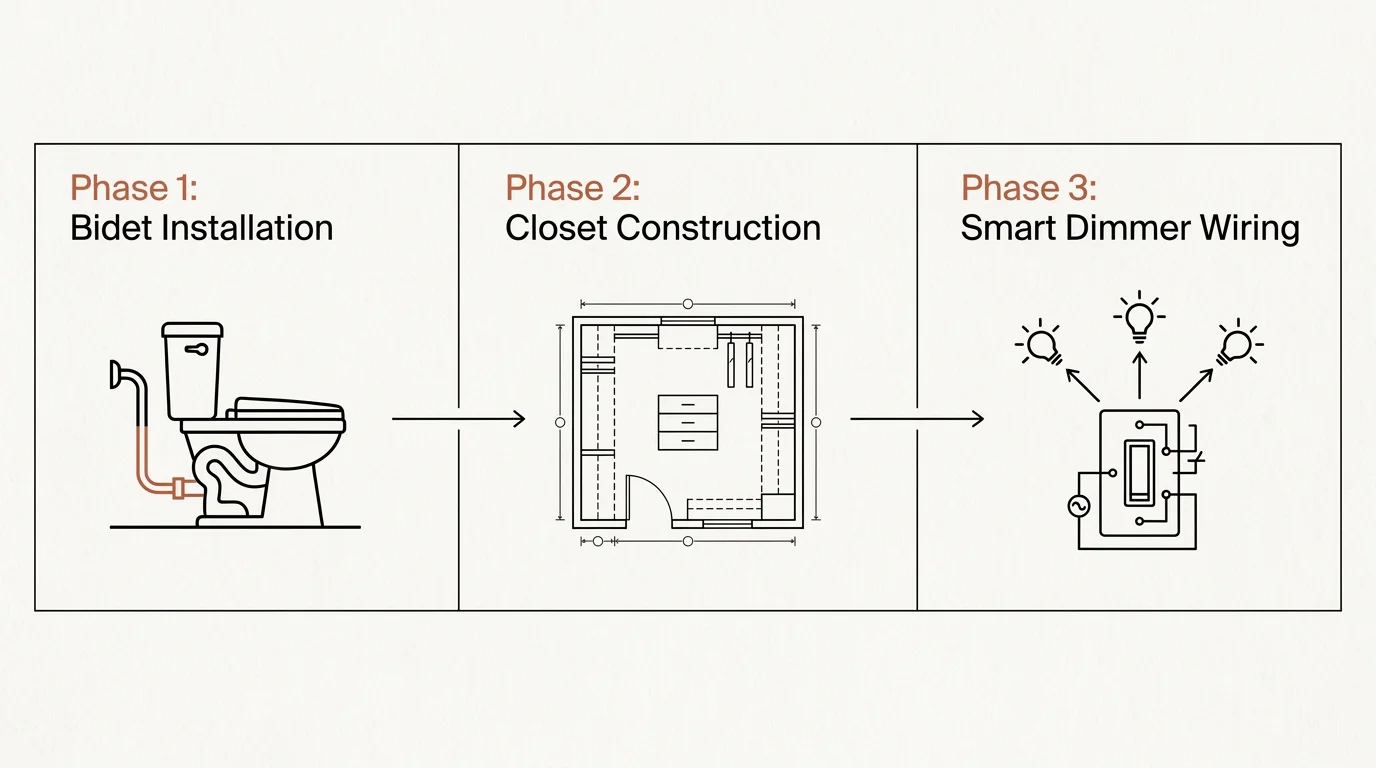
Step-by-Step Instructions
Executing these upgrades requires patience and a strict adherence to safety protocols. Do not rush the preliminary steps; ensuring your power and water are fully secured is paramount.
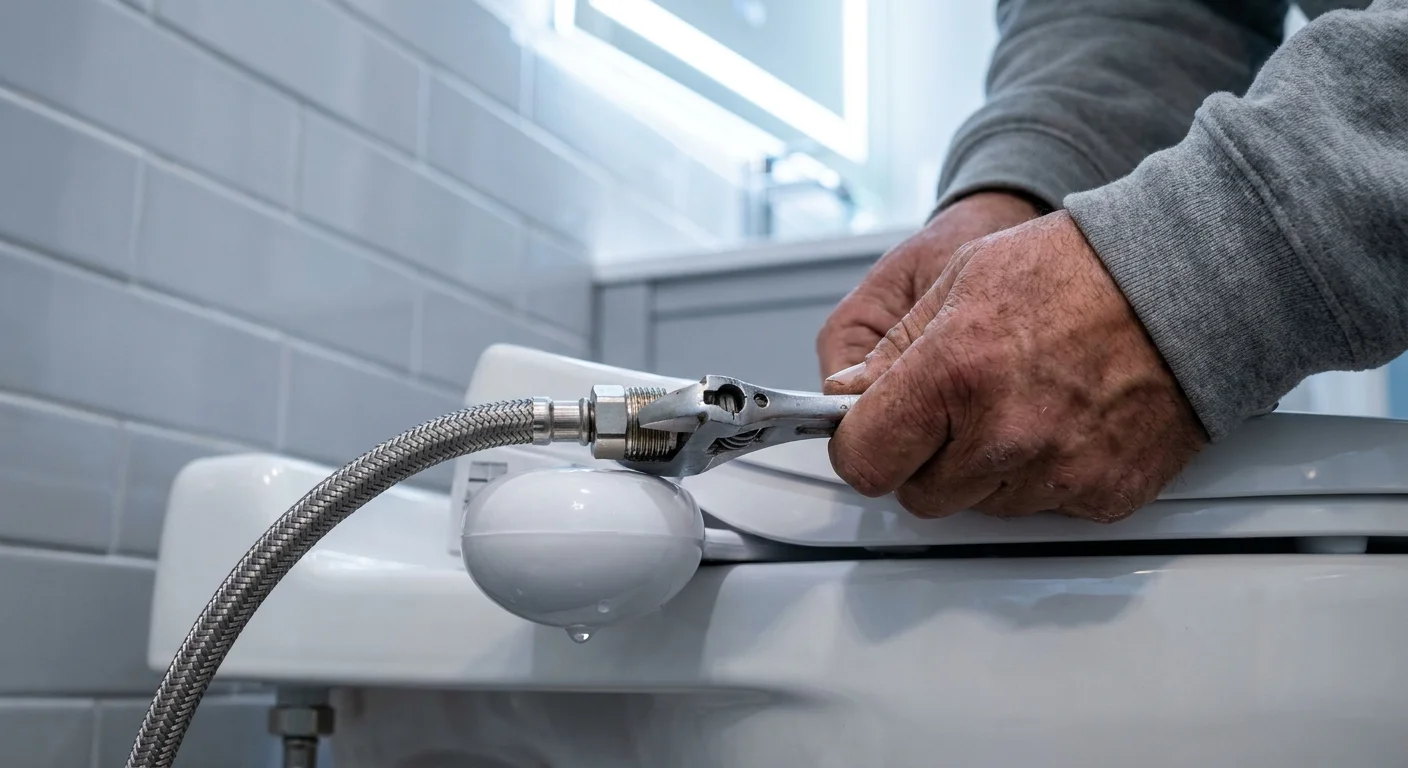
Phase 1: Installing the Luxury Bidet Seat
Begin by locating the shut-off valve behind your toilet and turning it clockwise until it stops. Flush the toilet and hold down the handle to drain the tank completely. Lay a towel beneath the water line and use your adjustable wrench to disconnect the flexible supply hose from the base of the toilet tank. Keep your bucket handy, as a small amount of trapped water will spill out.
Next, remove your existing toilet seat by popping off the plastic hinge covers and unscrewing the mounting bolts. Clean the porcelain surface thoroughly. Position the bidet’s mounting plate over the bolt holes, insert the provided brackets, and tighten them down. Slide the new bidet seat onto the mounting plate until you hear it click securely into place.
Take the provided T-valve and wrap the threads twice with Teflon tape. Attach the T-valve to the base of the toilet tank, hand-tightening it before giving it a final quarter-turn with your wrench. Reconnect your main water supply line to the bottom of the T-valve, and attach the bidet’s specific supply hose to the side port. Slowly turn the water valve back on, monitoring all three connection points for drips. Once verified leak-free, plug the seat into your GFCI outlet and run the manufacturer’s self-cleaning cycle to prime the system.
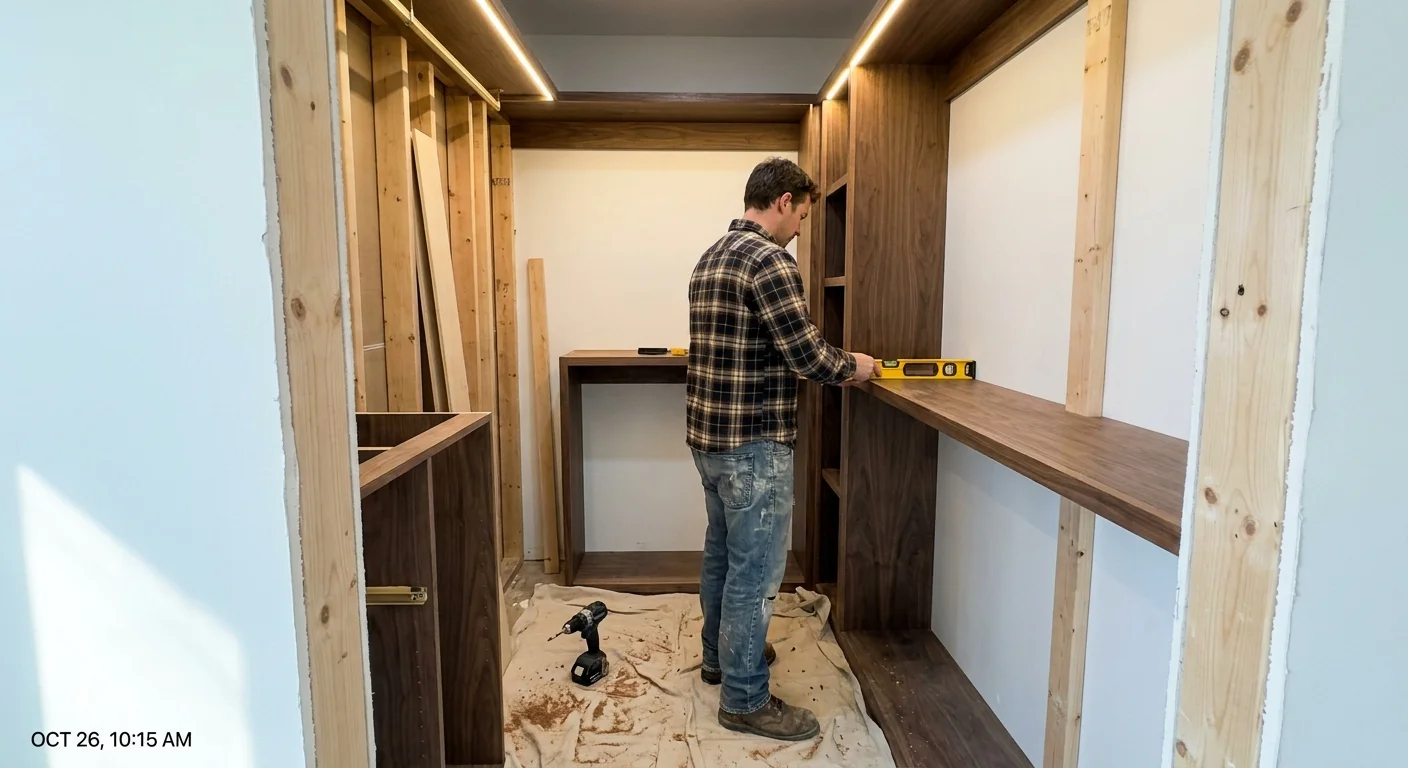
Phase 2: Building the Custom Walk-In Closet
Clear the entire closet, patching and painting any holes left by the old wire shelving. Starting with a blank, freshly painted canvas instantly elevates the final look. Use your stud finder to locate and mark every vertical wall stud along the perimeter.
Most luxury modular systems utilize a top hanging rail. Measure and draw a perfectly level horizontal line across the wall at the manufacturer’s specified height—usually around 84 inches from the floor. Secure the metal hanging rail to the wall, driving robust structural screws directly into every stud you marked. If a section of the rail does not intersect a stud, use high-capacity toggle bolts to anchor it safely to the drywall.
Once the rail is mounted and verified level, hook the vertical support standards onto the track. Space them according to your specific drawer and shelf widths. Assemble the base drawer units first, sliding them into place and using wood shims beneath the toe kicks to ensure the drawers glide smoothly without binding. Finally, install your shelf brackets, lay the wooden shelves in place, and attach the heavy-duty hanging rods.
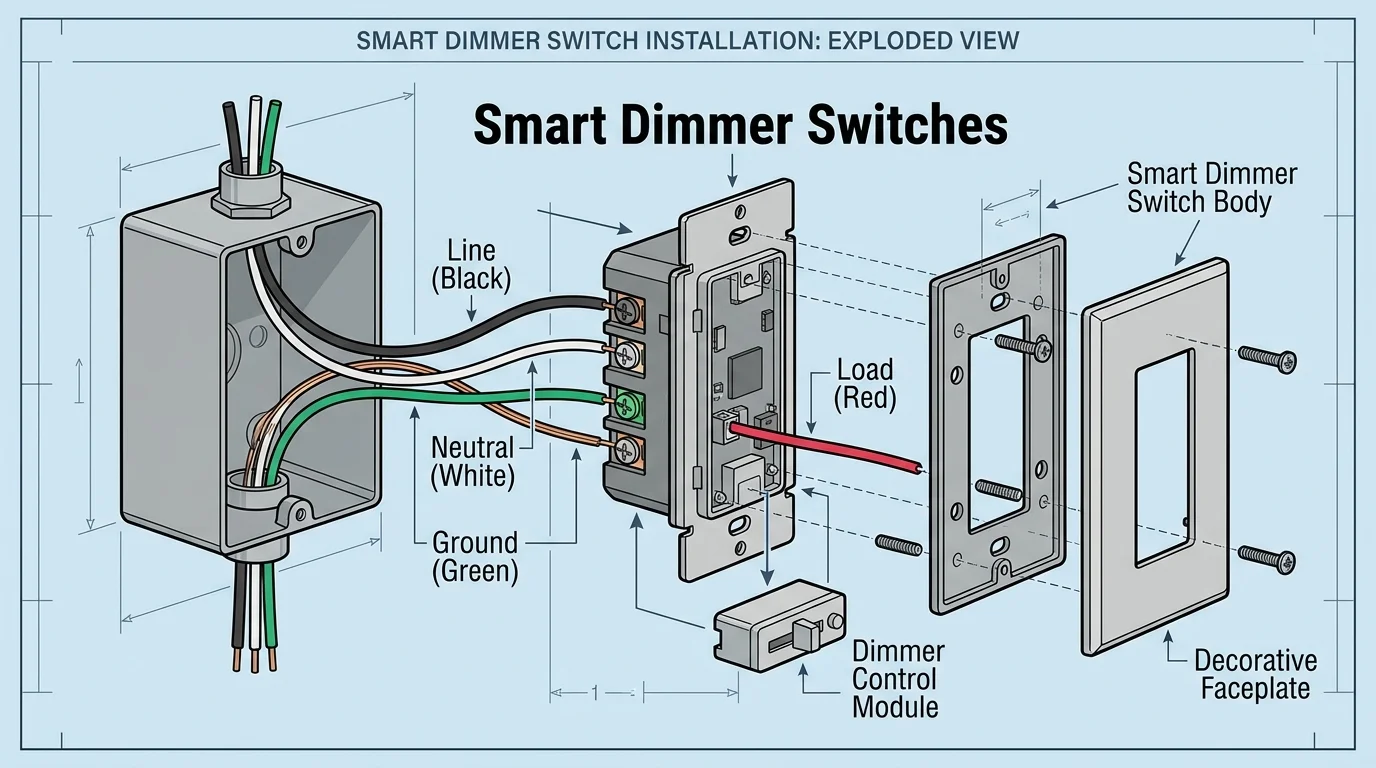
Phase 3: Wiring Smart Dimmer Switches
Navigate to your main electrical panel and completely shut off the breaker controlling the room’s lighting. Return to the room and test the switch with your non-contact voltage tester to guarantee the power is definitively off. Remove the plastic faceplate and unscrew the old switch from the junction box, pulling it gently forward.
Identify your wires: the bare copper or green wire is your ground, the black wires are your line and load, and the bundle of white wires in the back is your neutral. Disconnect the old switch. Take your new smart switch and connect the green ground wire first using a wire nut. Next, connect the switch’s neutral wire to the bundle of white wires. Connect the line wire to the incoming power wire, and the load wire to the wire leading to your light fixture.
Wrap electrical tape around the base of each wire nut for added security. Carefully fold the wires back into the junction box like an accordion—do not forcefully jam them. Screw the smart switch into the box, attach the modern screwless faceplate, and restore power at the breaker. Follow the manufacturer’s smartphone application instructions to connect the switch to your home Wi-Fi network.





Leave a Reply
You must be logged in to post a comment.