The American House

  • Home
  • DIY
  • Garden
  • Tips & Tricks

10 Home Repairs That Get Much More Expensive If You Wait

May 6, 2026 · Home
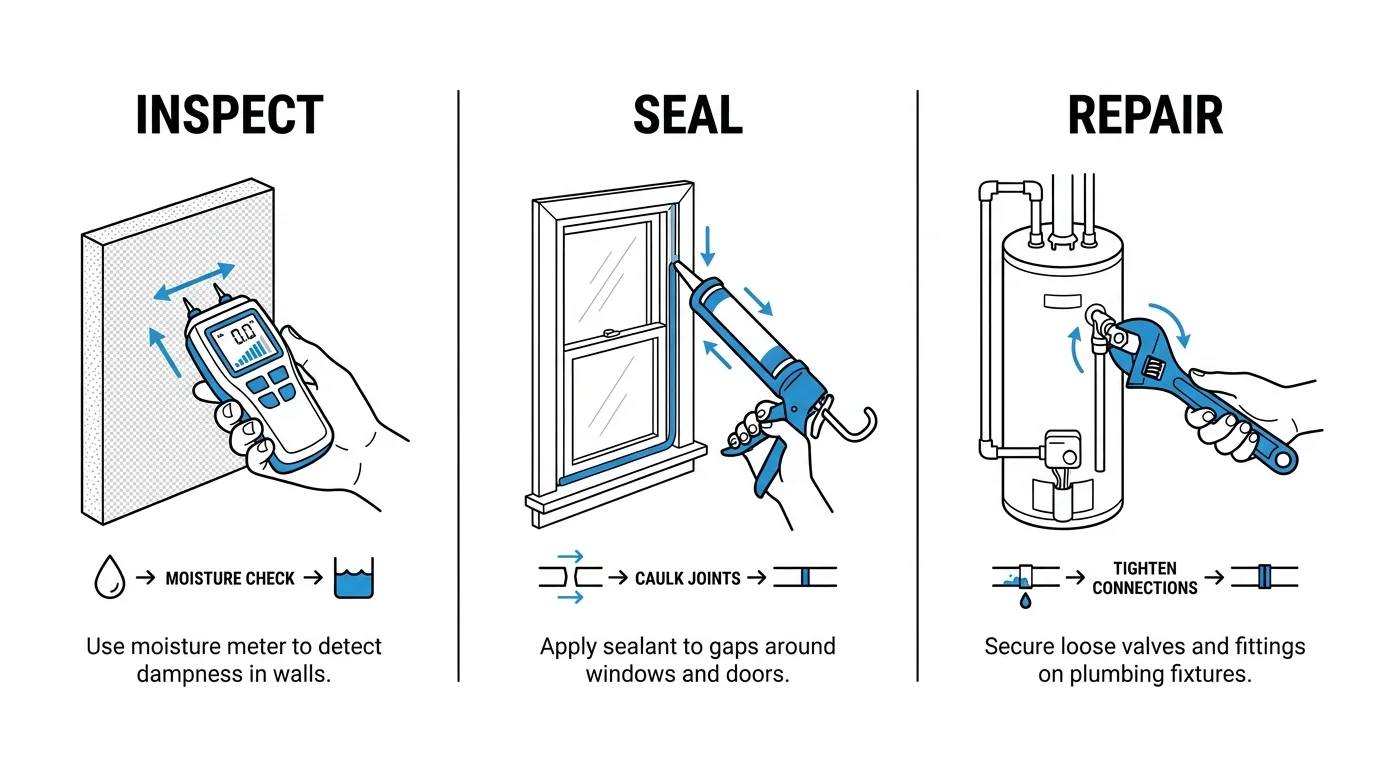
A three-panel diagram showing the steps of inspecting with a meter, sealing with caulk, and repairing a valve.
Follow these simple steps to inspect for moisture, seal window gaps, and repair leaky plumbing fixtures.

Step-by-Step Instructions

Walk through your property systematically, tackling these ten critical repairs that demand immediate attention. If you catch them early, you spend pennies on the dollar compared to professional remediation.
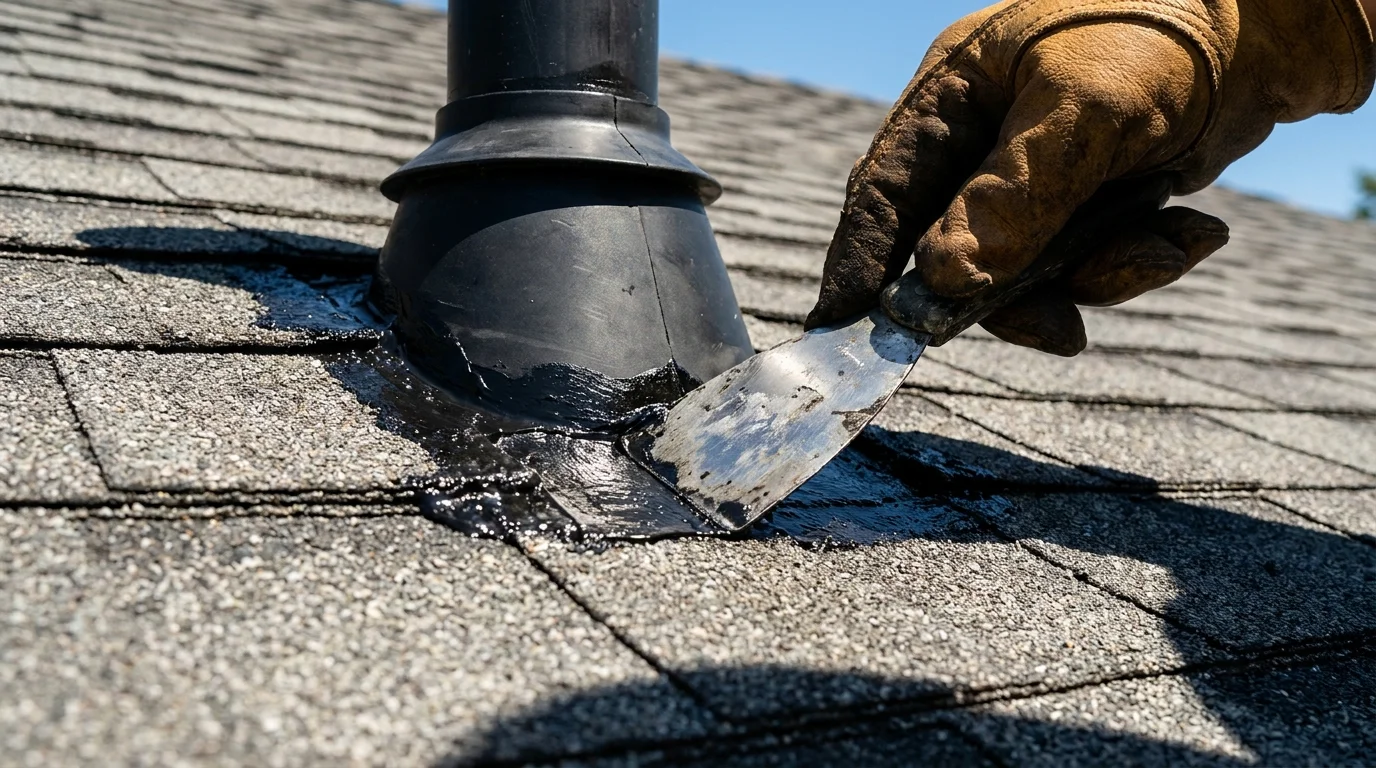
A gloved hand applying black roofing cement to seal the base of a plumbing vent pipe on an asphalt shingle roof.
A gloved hand applies sealant around a roof vent boot to prevent costly water damage and leaks.

1. Sealing Roof Flashing and Vent Boots

Sunlight aggressively degrades the rubber gaskets surrounding your rooftop plumbing vents. When these boots crack, rainwater runs directly down the exterior of the pipe, rotting your attic subfloor and staining your ceilings. Inspect your roof visually using binoculars; if you spot cracked rubber, safely access the roof and apply a generous layer of roofing cement around the base of the boot. Replacing the boot entirely costs about $15 in materials, whereas repairing a collapsed, water-logged ceiling easily exceeds $1,500.
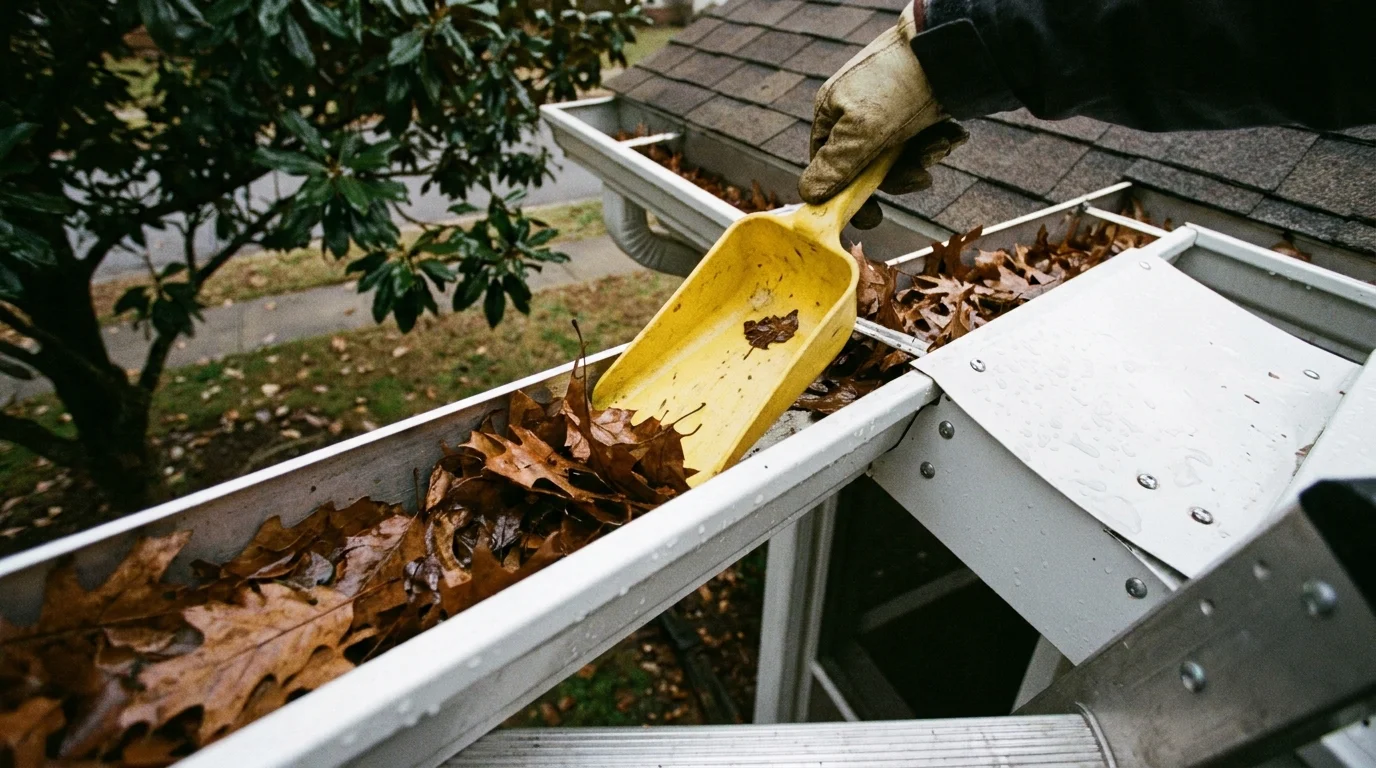
Looking down into a rain gutter being cleared of leaves with a plastic scoop.
A gloved hand uses a yellow scoop to clear leaves from gutters and prevent costly water damage.

2. Clearing Gutters and Extending Downspouts

Clogged gutters cause water to overflow and wash down your home’s exterior walls, rotting the wood fascia and saturating the soil directly against your foundation. Clean your gutters twice a year using a plastic gutter scoop to prevent scratching the metal finish. Just as importantly, check your downspout extensions. Water must discharge at least six feet away from the foundation wall. Purchase corrugated plastic extensions ($10 each) to redirect the flow and prevent thousands of dollars in basement waterproofing repairs.
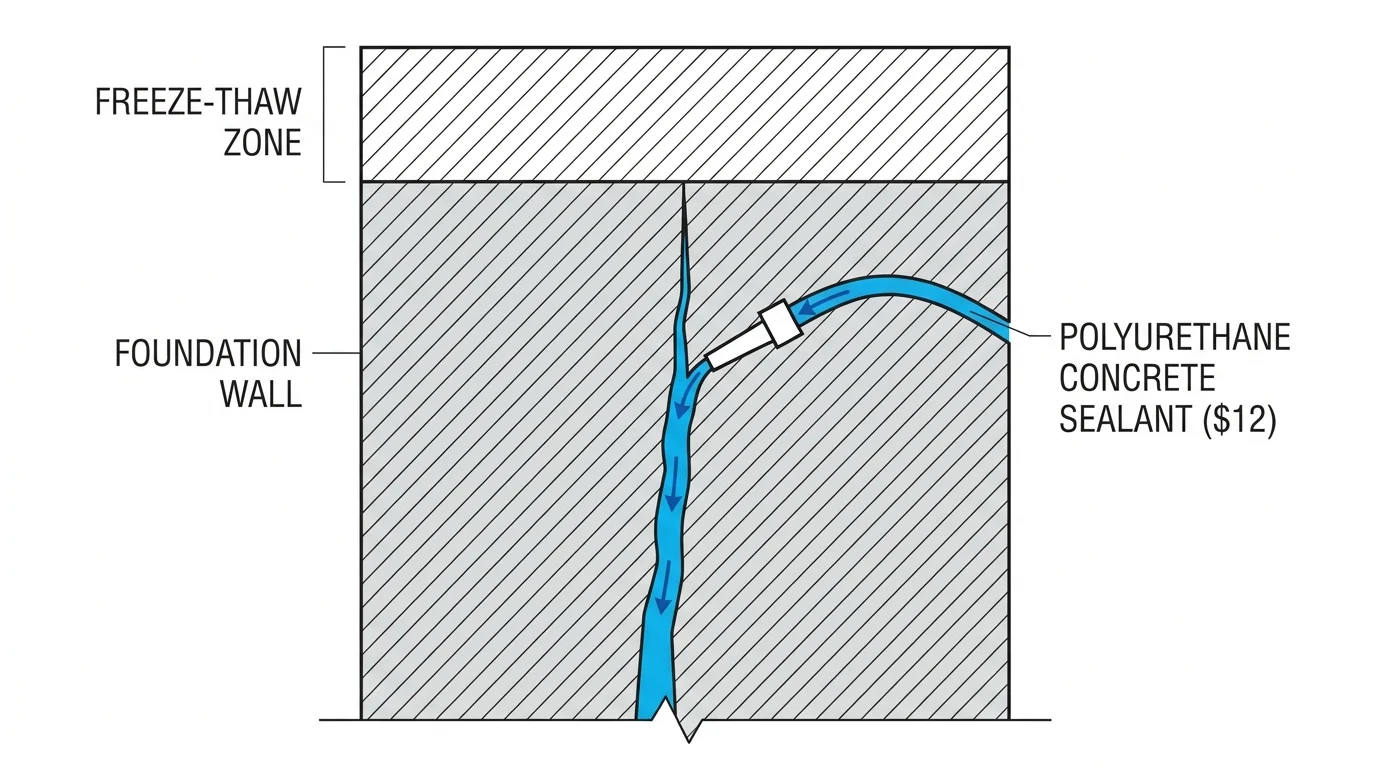
A cross-section diagram showing how polyurethane sealant fills a crack in a concrete foundation wall.
Stop costly structural damage by filling foundation cracks with polyurethane sealant before the next freeze-thaw cycle.

3. Filling Foundation Shrinkage Cracks

Concrete naturally shrinks and cracks over time, but leaving vertical hairline cracks exposed allows groundwater to seep into your basement. Use a wire brush to clean loose debris from the crack, then inject a polyurethane concrete sealant into the fissure. Polyurethane remains flexible, expanding and contracting with the seasonal temperature shifts. Note: If you observe horizontal cracks or gaps wider than a quarter inch, stop immediately and hire a structural engineer; these indicate severe structural failure.

An adjustable wrench tightening a leaking chrome pipe under a kitchen sink with a drip bucket underneath.
A hand uses a wrench to tighten a leaky pipe joint as water drips into a bucket.

4. Fixing Minor Plumbing Drips

A dripping faucet or a weeping supply valve beneath a bathroom sink seems harmless, but continuous moisture breeds mold and destroys cabinetry. The EPA WaterSense program notes that minor household leaks waste up to 10,000 gallons of water annually. Tighten loose slip-nut connections on sink traps by hand. For dripping supply valves, shut off the main water line, unscrew the valve, wrap the threads with fresh plumber’s tape, and reattach it firmly with an adjustable wrench.
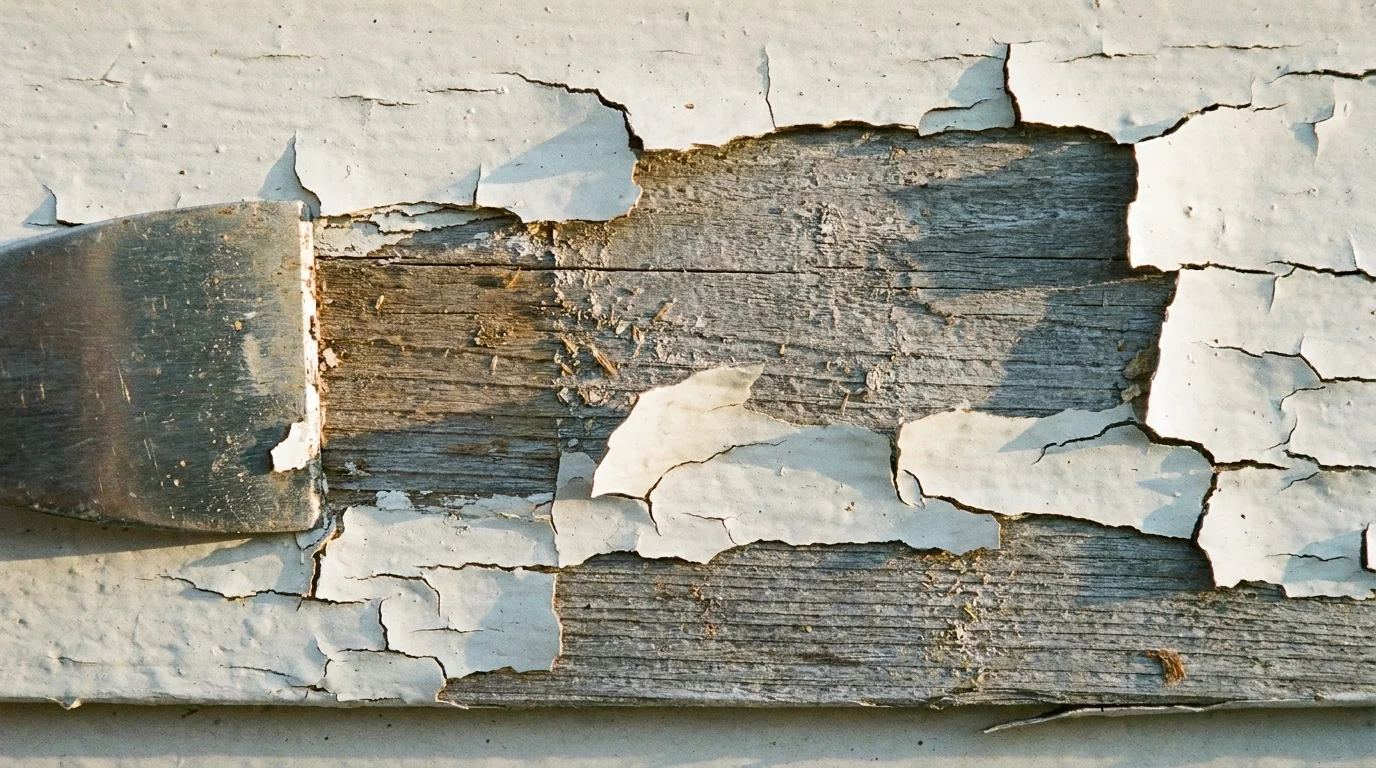
Macro shot of peeling white paint on wood siding, showing the weathered wood grain underneath.
A metal scraper peels back flaking white paint to reveal weathered wood that needs urgent protection.

5. Remedying Peeling Exterior Paint

Paint acts as your siding’s protective skin. Once it flakes away, bare wood absorbs moisture, leading to severe dry rot. Scrape away all loose, flaking paint using a carbide scraper. Sand the edges smooth, apply a high-quality oil-based bonding primer to the bare wood, and finish with a premium exterior acrylic latex paint. Replacing rotten wood siding costs upwards of $10,000, while a quart of primer and paint runs about $40.
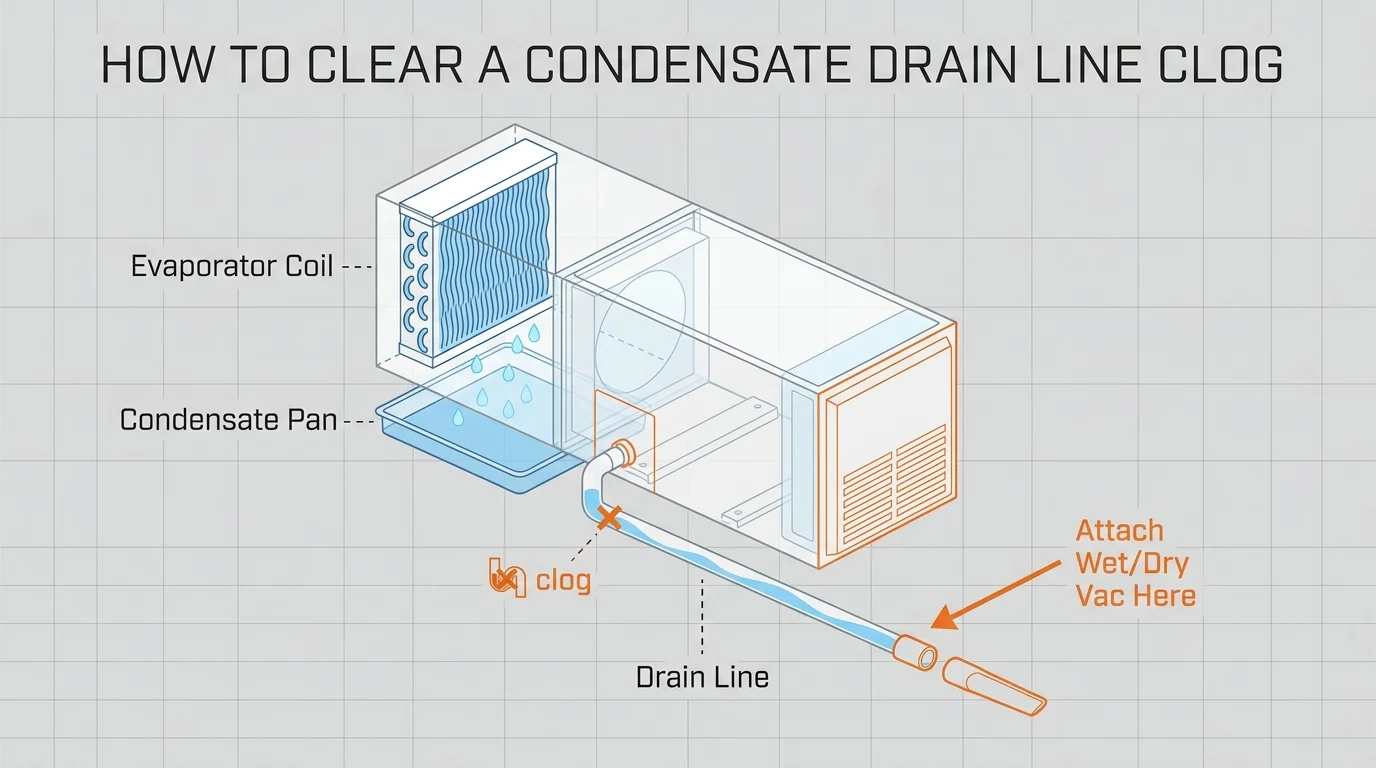
An exploded view diagram of an HVAC unit showing the path of the condensate drain line and where to clear clogs.
Clear a clogged HVAC condensate drain line with a wet/dry vacuum to avoid expensive water damage.

6. Clearing the HVAC Condensate Drain

Your air conditioner pulls massive amounts of humidity out of the air, producing condensation that drips into a drain pan and flows outside through a PVC pipe. Algae and sludge frequently clog this pipe, causing the pan to overflow into your attic or utility closet. Once a year, pour one cup of distilled white vinegar down the condensate drain access port to kill algae buildup. This one-minute chore prevents catastrophic water damage and expensive HVAC service calls.

A cross-section diagram of a water heater comparing a corroded anode rod to a new one, with a multimeter testing the unit.
Replacing a corroded anode rod with a new one prevents sediment buildup and expensive tank failure.

7. Replacing the Water Heater Anode Rod

Your water heater features a sacrificial magnesium or aluminum anode rod designed to attract corrosive elements in the water, rusting the rod instead of the tank’s steel lining. When the rod fully depletes, the water aggressively attacks the tank, leading to a sudden, catastrophic rupture. Turn off the water and power to the heater, drain a few gallons to relieve pressure, and use a 1-1/16 inch socket wrench to unscrew the hex head on top of the tank. Drop in a flexible replacement rod ($30) to double the lifespan of your $1,500 appliance.
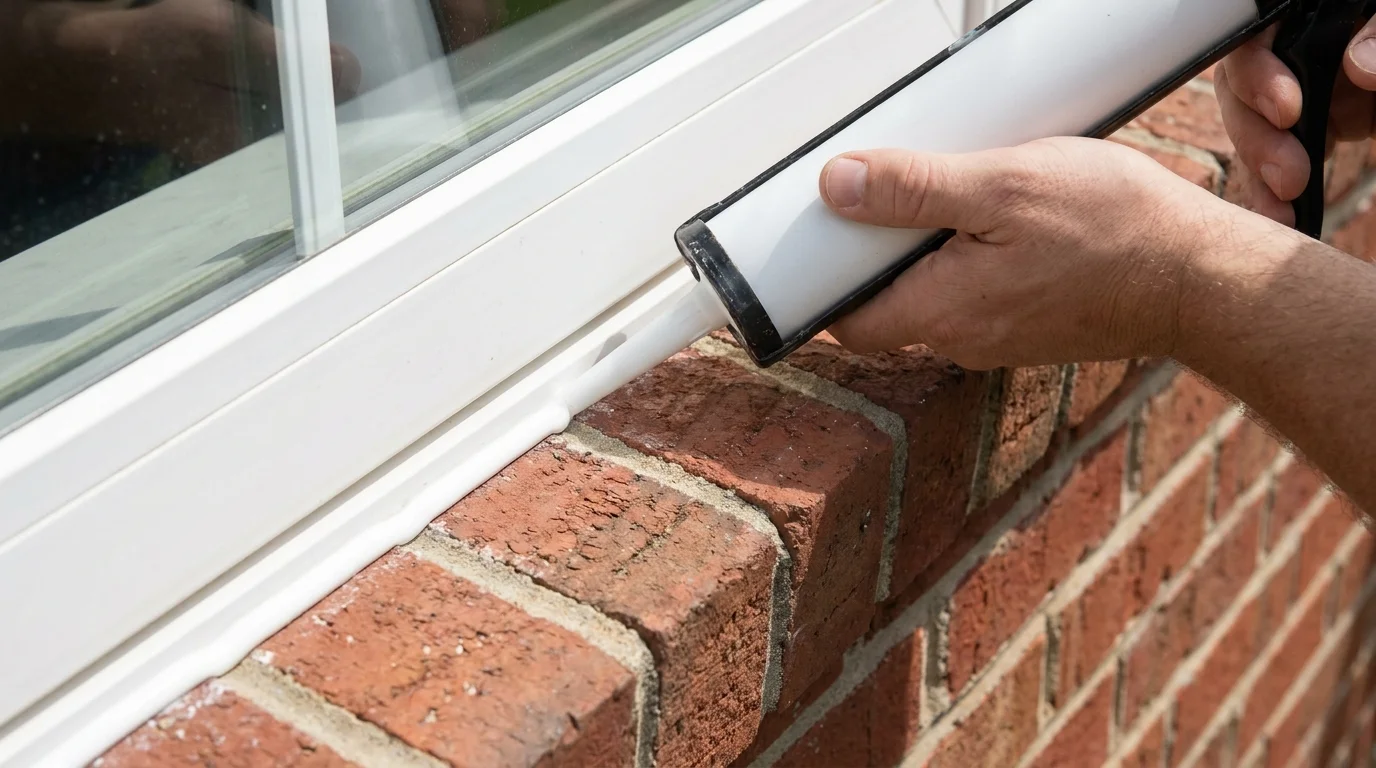
A steady hand applying a white bead of caulk to the joint between a window frame and a brick wall.
Applying fresh white caulk between window frames and brick prevents moisture from causing expensive structural damage.

8. Re-Caulking Windows and Doors

Drafty windows drive up utility bills, but failing caulk also permits rainwater to seep into the wall framing. Inspect the exterior perimeter of all windows and doors. If the existing caulk looks dry, cracked, or is pulling away from the siding, slice it out using a utility knife. Clean the joint thoroughly and apply a continuous bead of exterior-grade silicone caulk. Smooth the bead with a damp finger to ensure it fully bridges the gap between the window trim and the siding.
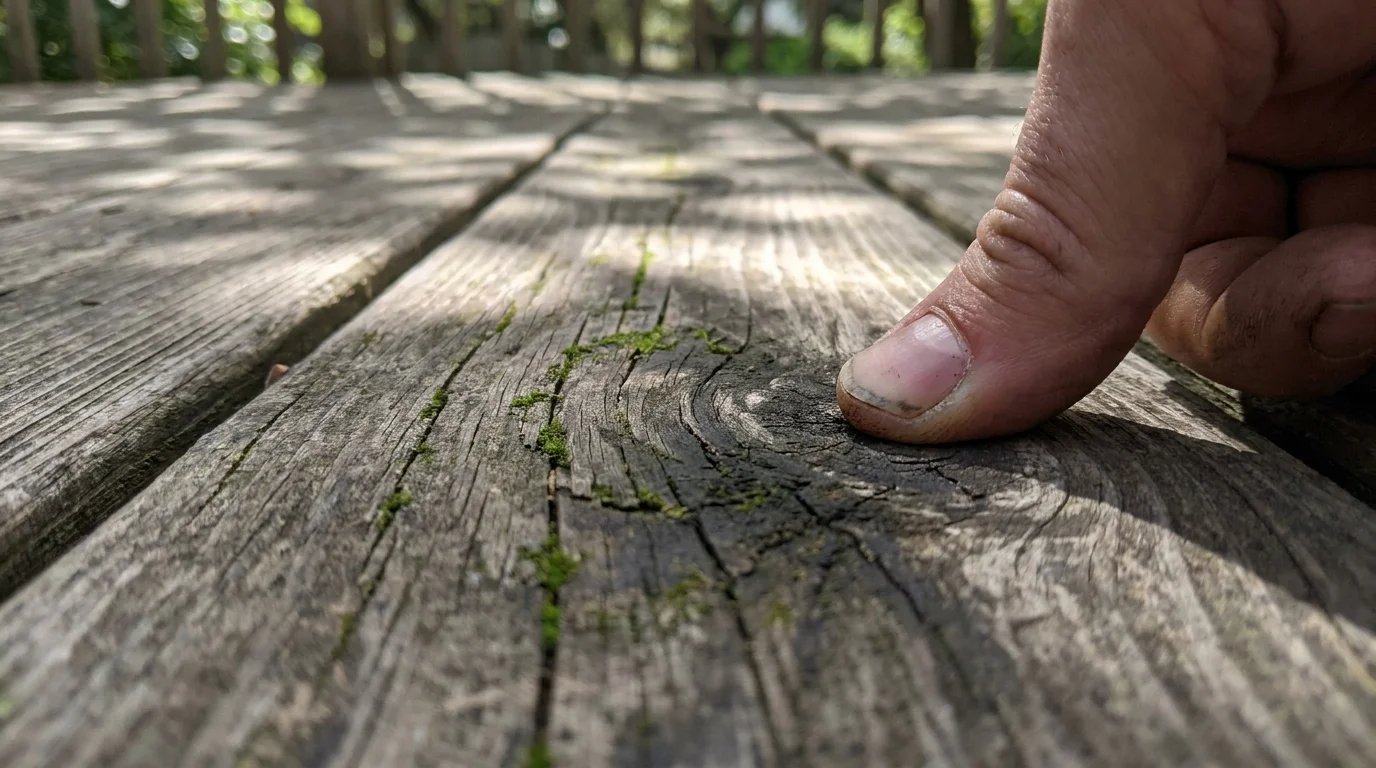
A close-up of a hand pressing into a soft, rotting spot on a weathered wooden deck board.
Pressing a thumb into weathered, mossy wood helps identify soft spots before they become expensive repairs.

9. Treating Spongy Deck Boards

Wooden decks take a beating from UV rays and standing water. Walk your deck slowly and use a screwdriver to probe any discolored or soft spots in the wood. If the screwdriver sinks easily into the timber, rot has set in. Remove the affected boards immediately to stop the fungus from spreading to the structural joists underneath. Apply copper naphthenate wood preservative to the exposed joists before installing replacement decking to ensure longevity.
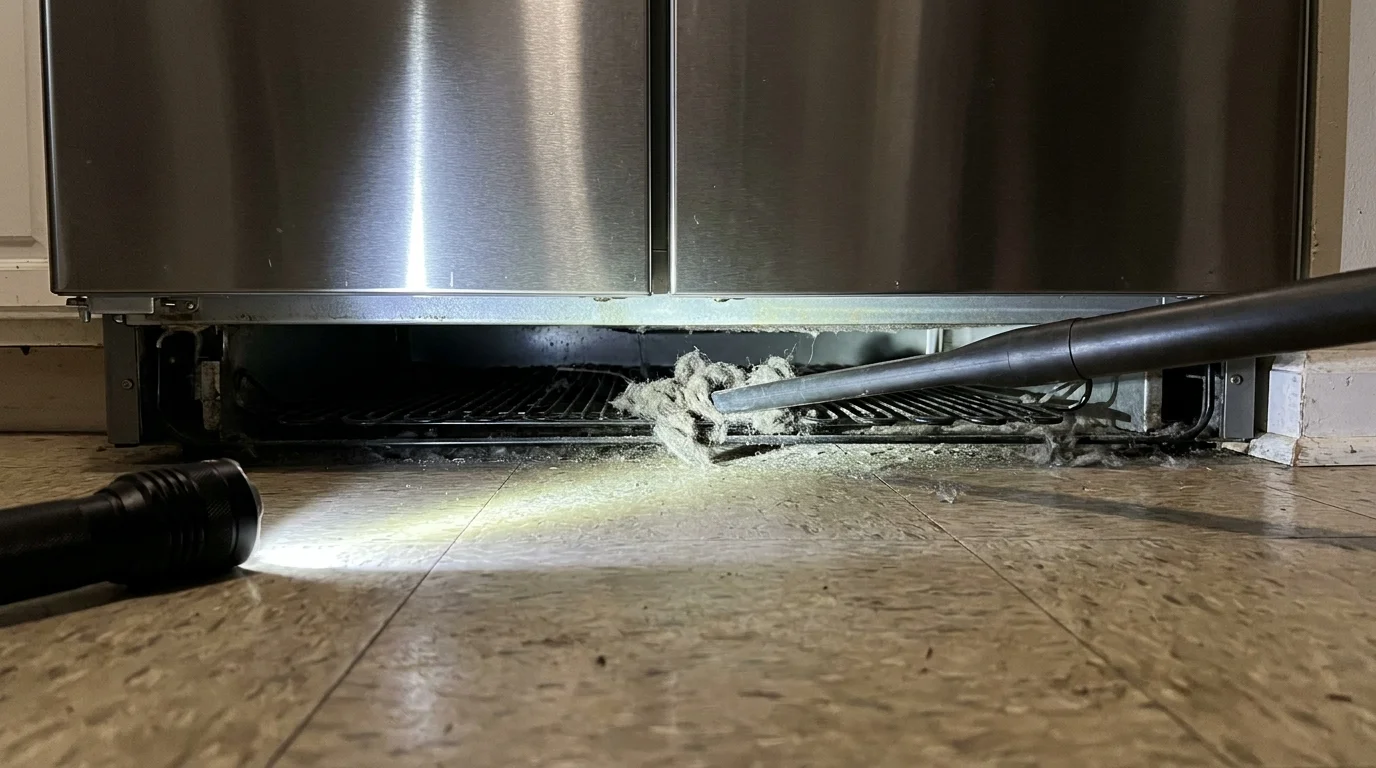
A vacuum cleaner attachment clearing dust from the condenser coils underneath a stainless steel refrigerator.
Clear thick dust from refrigerator coils with a vacuum and flashlight to prevent a costly appliance breakdown.

10. Cleaning Refrigerator Condenser Coils

Dust, lint, and pet hair rapidly blanket the condenser coils located at the back or beneath your refrigerator. This insulation layer traps heat, forcing the compressor to run continuously to maintain food-safe temperatures. The overworked compressor eventually burns out, demanding a costly replacement or forcing you to buy a new appliance entirely. Unplug the refrigerator, remove the base grille, and use a specialized coil brush ($10) combined with a vacuum attachment to clear the debris.


Pages: 1 2 3 4 5 6 7

Share this article

Facebook Twitter Pinterest LinkedIn Email

Leave a Reply Cancel reply

You must be logged in to post a comment.

Latest Posts

  • A wide-angle editorial photo of a luxury open-concept kitchen with a large marble island and soft morning sunlight. 9 Luxury Home Features That Were Once Considered Weird
  • A close-up photograph of a hand replacing an old ornate bronze handle with a modern matte black pull on a honey oak kitchen cabinet. 9 Kitchen Features That Quietly Age Your Home
  • A person pulling back old beige carpeting to reveal natural oak wood flooring in a sunlit room. 9 Homes Features That Feel Outdated To Younger Buyers
  • A close-up of a hand turning a polished brass handle on a navy door in a sunlit, clean entryway. 9 Home Features Guests Secretly Notice First
  • A wide-angle shot of a freshly painted front door opening into a bright, clean foyer with light wood floors and brass hardware. 8 Home Features Buyers Instantly Notice During Showings
  • A homeowner using a digital moisture meter to check a basement wall for leaks under a copper pipe, illuminated by a flashlight. 10 Home Repairs That Get Much More Expensive If You Wait
  • A senior man in a home workshop sanding a cedar birdhouse on a sunny afternoon. 8 Beginner Woodworking Projects Seniors Can Build Over a Weekend
  • A bright, clean windowless hallway with white walls and hardwood floors, showing light reflecting from an adjacent room. 10 Best Paint Colors for Hallways With No Windows
  • Half-Bath 12 Half-Bath Ideas That Will Change the Game for You
  • Bathroom Cleaning Mistake 11 Bathroom Cleaning Mistakes You Don't Even Know You're Making

Related Articles

home design trends

7 Home Design Trends You’ll See Everywhere Next Year

Check out the hottest home design trends! Trends come and go. This is the natural…

Read More →
Forgotten Cleaning Tip

18 Genius but Forgotten Cleaning Tips From the Past

These forgotten cleaning tips worked wonders in the past! Cleaning our homes nowadays usually seems…

Read More →
Renovation

7 Expensive Renovations Homeowners ALWAYS Regret

A Bedroom Converted Into A Walk-In Closet The kids have moved out. You never use…

Read More →
A close-up of a hand turning a polished brass handle on a navy door in a sunlit, clean entryway.

9 Home Features Guests Secretly Notice First

This nine-point impact map highlights key home features like lighting and hardware to impress your…

Read More →
brown furniture, deisgn

5 Colors That Go With Brown Furniture, According to Designers

Can we make brown furniture cool again? Do you want to decorate, or maybe redecorate,…

Read More →
Edible Landscaping

Edible Landscaping: 12 Best Plants to Include in Your Garden

Artichokes Artichokes are decorative plants worth growing in the landscape, even if you don’t want…

Read More →
kitchen windows

10 Solutions to Fix Your Drafty Windows

It’s winter, it’s cold, and we can’t stop making hot cocoa and covering ourselves in…

Read More →
rugs, budget-friendly hacks

6 Top Spots to Find Stylish and Affordable Rugs

Ready to buy some new rugs? Rugs are some items that are criminally underrated. If…

Read More →
ways to change your flooring

6 Cheapest and Easiest Ways to Change Your Flooring

2. Try vinyl decals If you are looking for the easiest way to change your…

Read More →

The American House

Inedit Agency S.R.L.
Bucharest, Romania

contact@theamericanhouse.com

Trust & Legal

  • Privacy Policy
  • Terms and Conditions
  • Do not sell my personal information
  • Subscribe
  • Unsubscribe
  • Contact
  • Request to Know
  • Request to Delete
  • CA Private Policy

Categories

  • DIY
  • Expert Tips
  • Garden
  • Tips & Tricks

© 2026 The American House. All rights reserved.