
10 Reasons Why Your Plant Leaves Are Turning Yellow:
When you notice the leaves of your plants turning yellow, that’s when you start panicking. Is it me? Is it the plant? Is it the country I live in? Just kidding. In reality, leaves turning yellow isn’t THAT terrible, and it can be seen more like a very usual occurrence, rather than immediate death to the beloved plant.
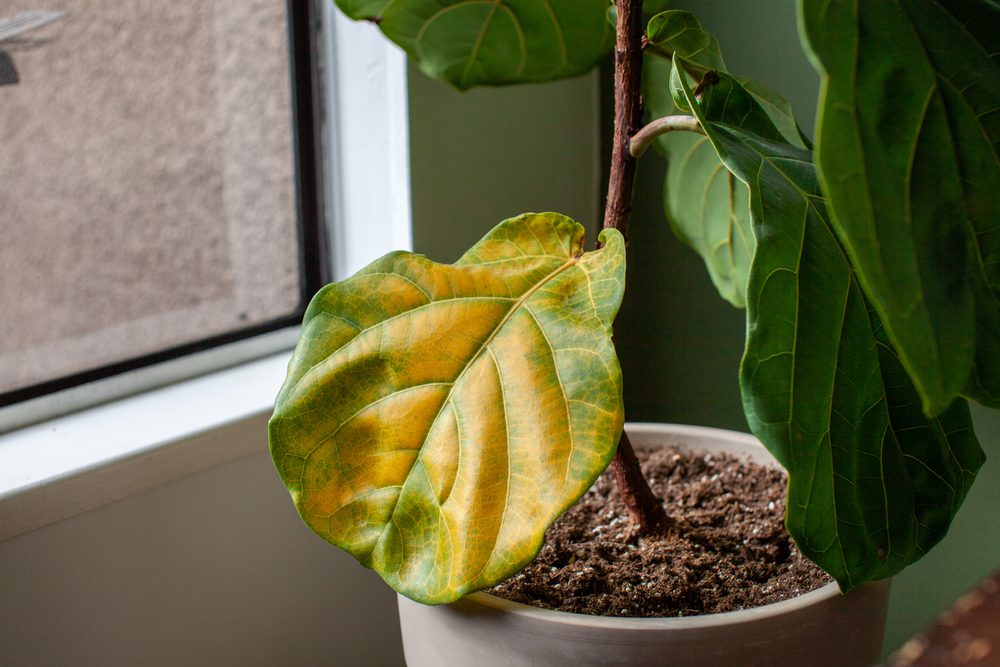
When the leaves of your outdoor plants are turning yellow, it’s mostly because of chlorosis, which is a symptom caused by the fact that the leaves aren’t producing enough chlorophyll. The pigment is highly essential for photosynthesis and is basically the one that gives the leaves their green color.
There are various reasons why chlorosis might occur, and it’s important to discuss all the possibilities, even if, overall, yellow leaves shouldn’t scare you.
Lack of light
Light is highly important for photosynthesis, so when a plant isn’t getting enough sunlight, it leaves the leaves (wink-wink) without a crucial element. That’s why it’s extremely important to do a little bit of research on the light requirements of your plant, so you can understand better if it needs to be put in full sun or if it can also tolerate partial shade.
For potted plants, the fastest remedy is to move them to a sunnier location, while altering the light situation of plants that are already planted in the ground might require more effort. For example, if there’s a tree nearby that’s casting shade, you can easily move a potted plant, while an inground plant might require transplanting it to a better spot in the sun.
Lack of water
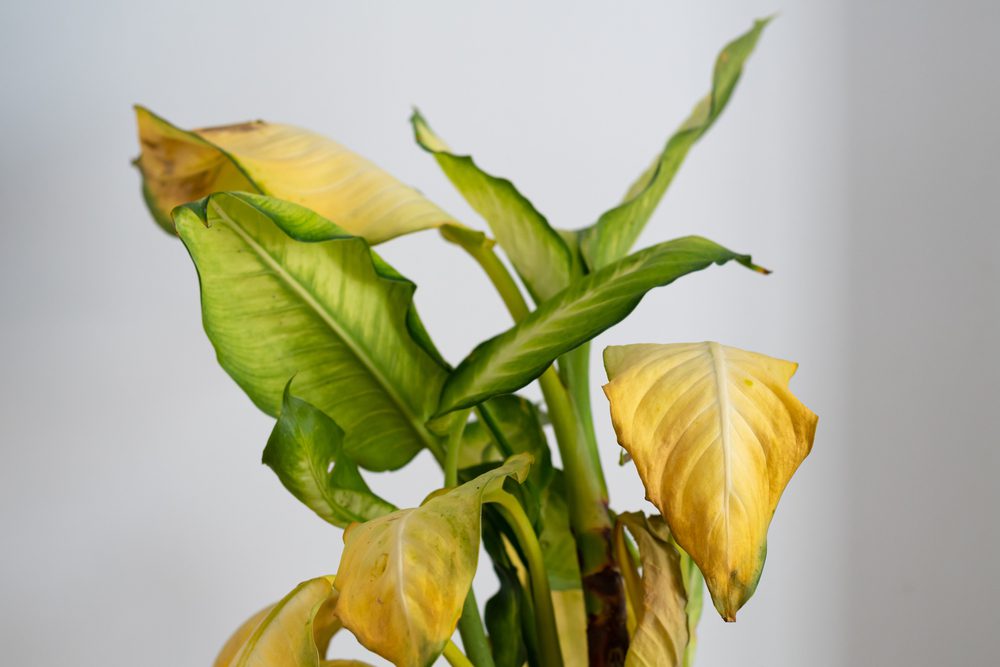
Most often, when a plant’s leaves turn yellow, it means the plant needs more water. And even more, it usually doesn’t require a real drought for that to occur. All it takes is a couple of hot days when the plant already loses more moisture through its leaves than the roots can absorb, and you’ve got yourself a couple of yellow leaves.
Be careful when you water it, as we strongly recommend you to water the plant as slowly and deeply as possible, and repeat as many times as needed, in order to keep the soil evenly moist.
Excess water
I’ve mentioned how lack of water can be the cause of yellow leaves, but too much water could also be the cause of it. Soils that suffer from poor drainages, like clay soils, can easily become tightly packed and waterlogged, especially when it rains, which will shut out oxygen.
Particularly in this type of environment, the plant roots can’t breathe properly, and sometimes, they can also get damaged or even compacted, which will cause the leaves to turn yellow and brown. That’s why it’s highly mandatory not to plant in spots with poor drainage, nor to amend the soil right before planting it. Another proper option for vegetable gardens is to consider raised beds.
Nutrient deficiency
Nitrogen is oftentimes the first nutrient that pops into our mind as the reason why leaves turn yellow, but it’s not the only one to blame. Yellowing leaves can also show that the soil is lacking other nutrients, like iron, manganese, and zinc.
You could understand which nutrient might be lacking by studying how the yellowing of the foliage is progressing, but a much more reliable option would be to perform a soil test. It will provide more precise info about the nutrient content, and the nutrient additions you should make.
High soil pH
Yellowing leaves can also appear because of the soil, as the soil could be too alkaline for the plants. Alkaline soil is strictly connected to nutrient deficiency. If a soil has a pH above 7, the nutrient iron will be less soluble, which means it will also be less available.
That’s why plants with a high iron need, like blueberries, rhododendrons, and azaleas, will require acidic soil in which they could absorb enough iron. All you have to do is combine a soil test with another pH test. This way, you will know which nutrients to add, while you also lower the pH by adding sulfur, to make these nutrients more reachable for the plants.
Fertilizer Burn
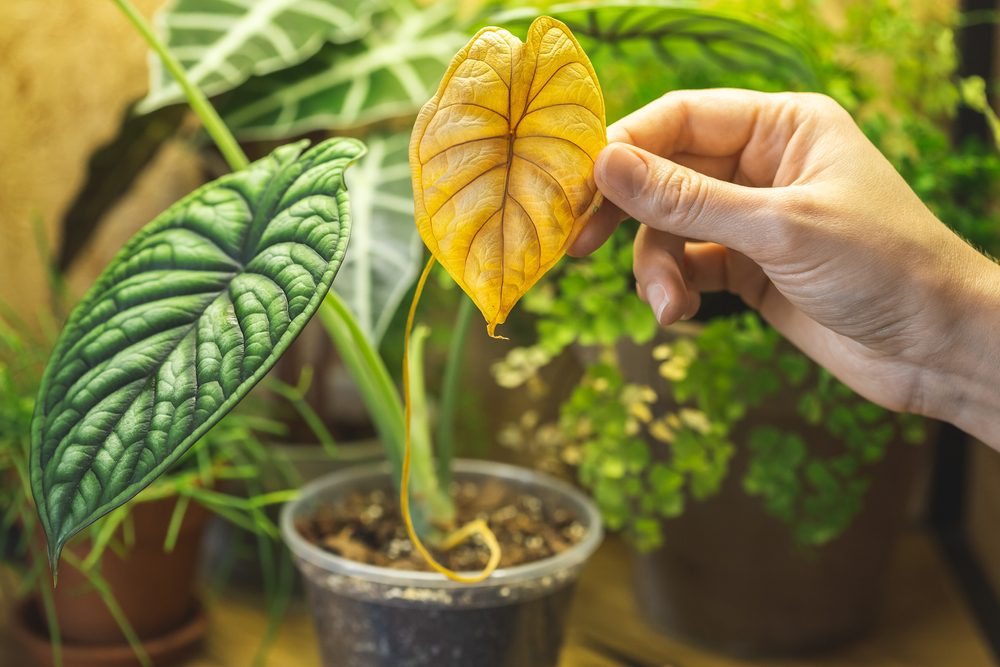
If the leaves look burned or a bit scorched, it could also be a sign that you overdid with the fertilizer. The damage might appear in two ways: when all those soluble salts in the fertilizer draw moisture from the plant’s roots, or when the fertilizer granules are spilled onto the leaves.
Not all the plants are just as sensitive to foliage fertilizer burn, so hot and dry weather might increase the damage. If you want to avoid this from happening, especially if you use granular fertilizers, you can make sure to water the plants right after that, so no granules would accumulate on the foliage.
You could also use slow-release organic fertilizer, but it’s less concentrated than the one that’s not organic.
Pesticide or Herbicide Burn
When you spray pesticides or insecticides in certain temperatures that are above 85 degrees F, in high humidity, the leaves can get burned easily. It can also happen when you spray the plants that are already stressed by drought, frost, pests, or even diseases.
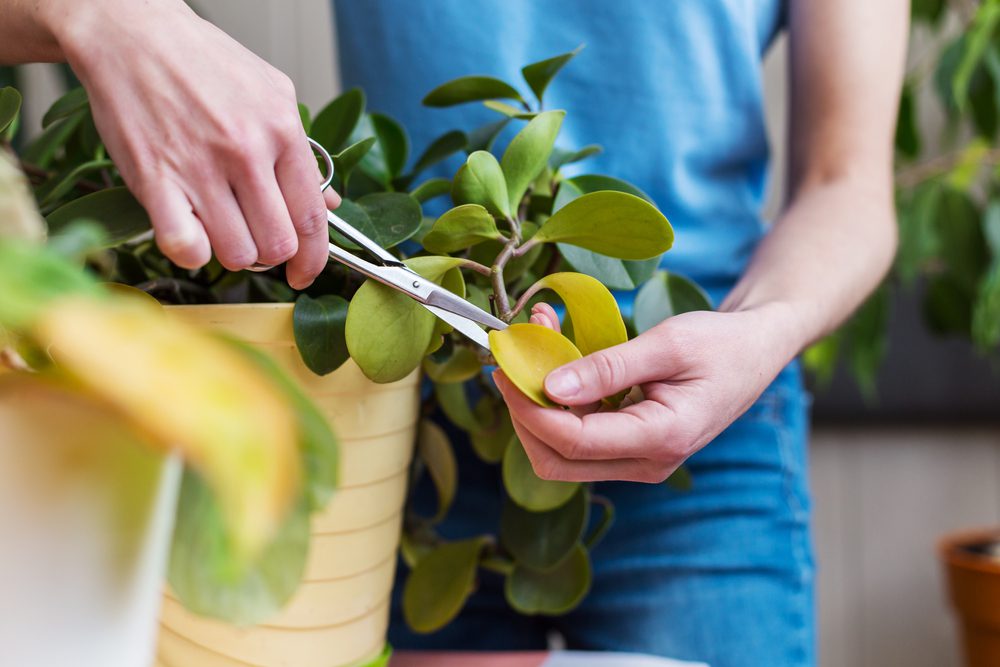
Plus, after the damage has been done already, there isn’t much else to do than to remove the affected parts of the plant. No matter if you try using organic or inorganic pesticides, like insecticidal soaps, you should select a day that’s dry, cool, and calm altogether.
These are the proper conditions in which the pesticide will dry rapidly on the plant, and the vapors won’t get the chance to drift with the hot air and wind. The same goes with herbicides, so you can avoid drifting from the weeds you’d want to get rid of.
Fungal or bacterial diseases
If you’re growing tomatoes, you should consider monitoring plants more closely, and look out for two fungal diseases that show their presence through yellow leaves, and eventually end up killing the plant. These two are known as early blight and fusarium wilt.
Early blight starts with yellow spots that later merge. In tomatoes that are affected by fusarium wilt, the leaves always turn yellow, often only on a specific side of the plant, or one side of the branch.
But once the disease hits, there isn’t much to do, rather than removing and destroying the plants. In order to avoid these two diseases, make sure you select resistant varieties, and practice proper garden hygiene, as the pathogens will remain in the soil over winter for a longer time.
Insect damage
The damage that’s caused by all kinds of insects can cause the yellowing of leaves, particularly in vegetables. Some of the most common culprits are usually harlequin bugs, spider mites, squash bugs, and whiteflies.
Even if they don’t necessarily kill the plants, it is highly important to monitor your vegetable garden, in order to spot any infestation early on and take the appropriate measures before they start spreading.
Normal aging
Leaves that are turning yellow and start falling subsequently from the bottom part of the plant, then worry no more! It can simply mean that it’s the business of the aging process. However, it entirely depends on the frequency and the number of leaves, but a couple of yellow leaves on a mature plant is definitely not something you should worry about.
If you enjoyed reading this article, we also recommend reading: 15 Most Effective CO2 Absorbing Houseplants




Leave a Reply
You must be logged in to post a comment.